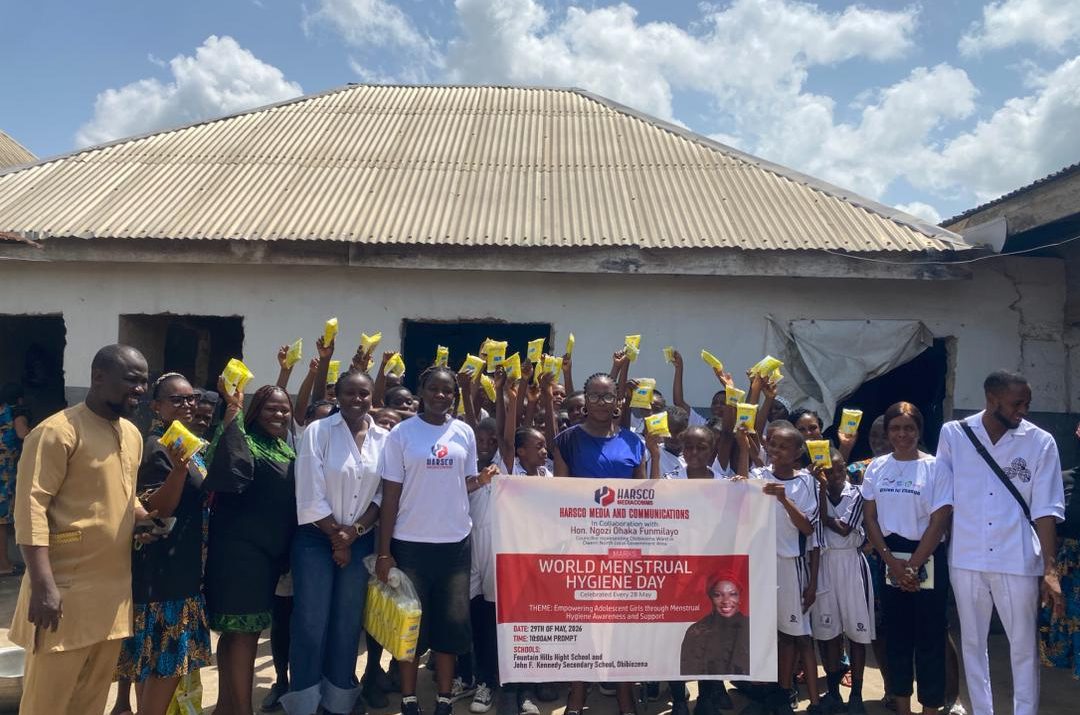

Hundreds of schoolgirls in Owerri North Local Government Area of Imo State received sanitary hygiene products and menstrual health education as part of activities marking World Menstrual Hygiene Day 2026.
The outreach, organised by Harsco Media and Communications in partnership with Ngozi Ohaka Funmilayo, reached more than 500 female students across three secondary schools in Obibiezena Ward.
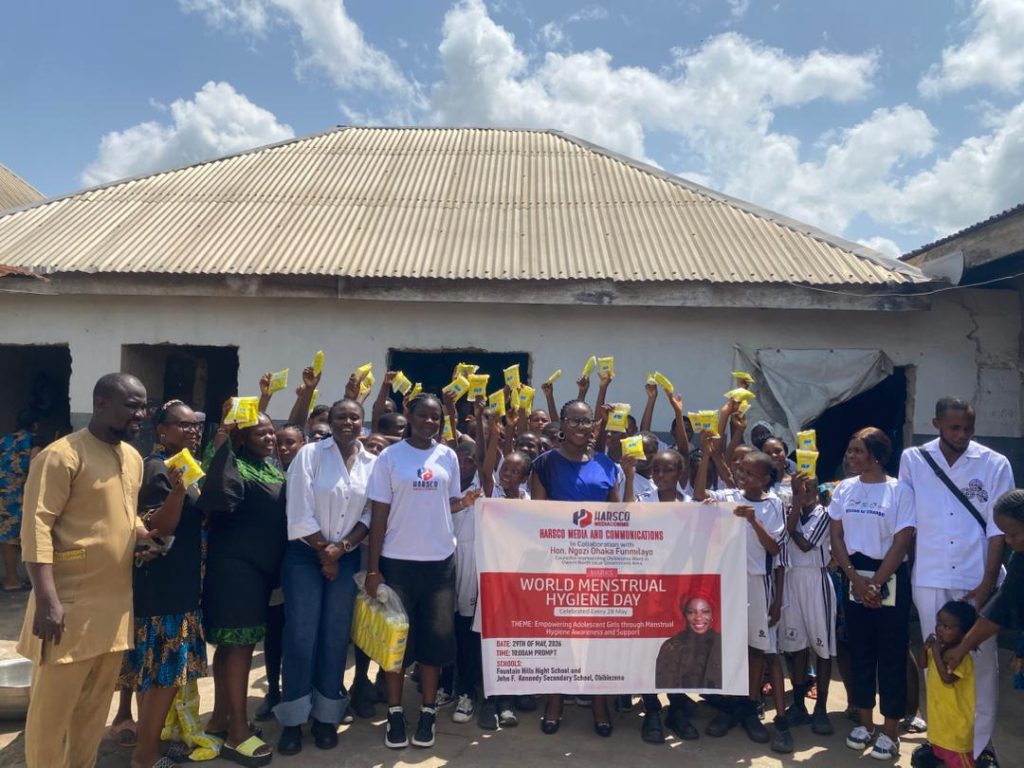
Beneficiaries included students of Fountain Hills High School, John F. Kennedy Secondary School, Obibiezena, and St. Theresa’s Comprehensive School, Obowo. Beyond the distribution of sanitary products, medical professionals also conducted awareness sessions on menstrual hygiene management, Sexual and Reproductive Health Rights (SRHR), and personal hygiene.
Addressing the students, Hon. Ngozi Ohaka Funmilayo described period poverty as a hidden crisis affecting the education, confidence, and wellbeing of many young girls, especially in rural communities.
She said no girl should be forced to stay away from school or suffer embarrassment simply because she cannot afford sanitary products.
“Menstruation is a natural biological process, yet many girls continue to face barriers in accessing basic menstrual hygiene products. As leaders, we have a responsibility to ensure that every girl has the support and resources needed to stay healthy, confident, and focused on her education,” she said.
The councillor stressed that menstrual hygiene advocacy should go beyond annual campaigns and become a sustained effort involving parents, schools, community leaders, and development partners.
Director of Harsco Media and Communications, Harriet Ijeomah, said she has spent more than seven years championing menstrual health interventions in rural communities.
Drawing from her personal experience growing up in a village under her grandmother’s care, Ijeomah said she understands the challenges girls face when they lack access to safe and affordable menstrual hygiene materials.
“Growing up, I witnessed firsthand how menstruation affected many girls who lacked access to proper sanitary products and accurate information. That experience shaped my commitment to supporting adolescent girls and ensuring that menstruation does not become a barrier to their education or self-esteem,” she stated.
She explained that the initiative aligns with global Sustainable Development Goals focused on quality education, gender equality, and good health and wellbeing. According to her, many girls still miss school due to poor access to menstrual hygiene products and education.
In addition to sanitary pads, the outreach team donated disinfectants, deodorants, shaving sticks, and other hygiene materials to school authorities to support improved hygiene practices among students.
Students also interacted with health professionals during question-and-answer sessions focused on adolescent wellbeing and menstrual health awareness.
Speaking on behalf of the participating schools, Rev. Fr. Ignatius Chioma commended the organisers for what he described as a timely intervention.
“We are grateful for this gesture. Beyond the products distributed, the knowledge shared today will empower these young girls to make informed decisions about their health and wellbeing. We encourage more organizations and public office holders to emulate this initiative,” he said.
World Menstrual Hygiene Day is observed globally every May 28 to promote awareness about menstrual hygiene management and advocate for a society where menstruation does not limit access to education, health, or opportunities for girls and women.