
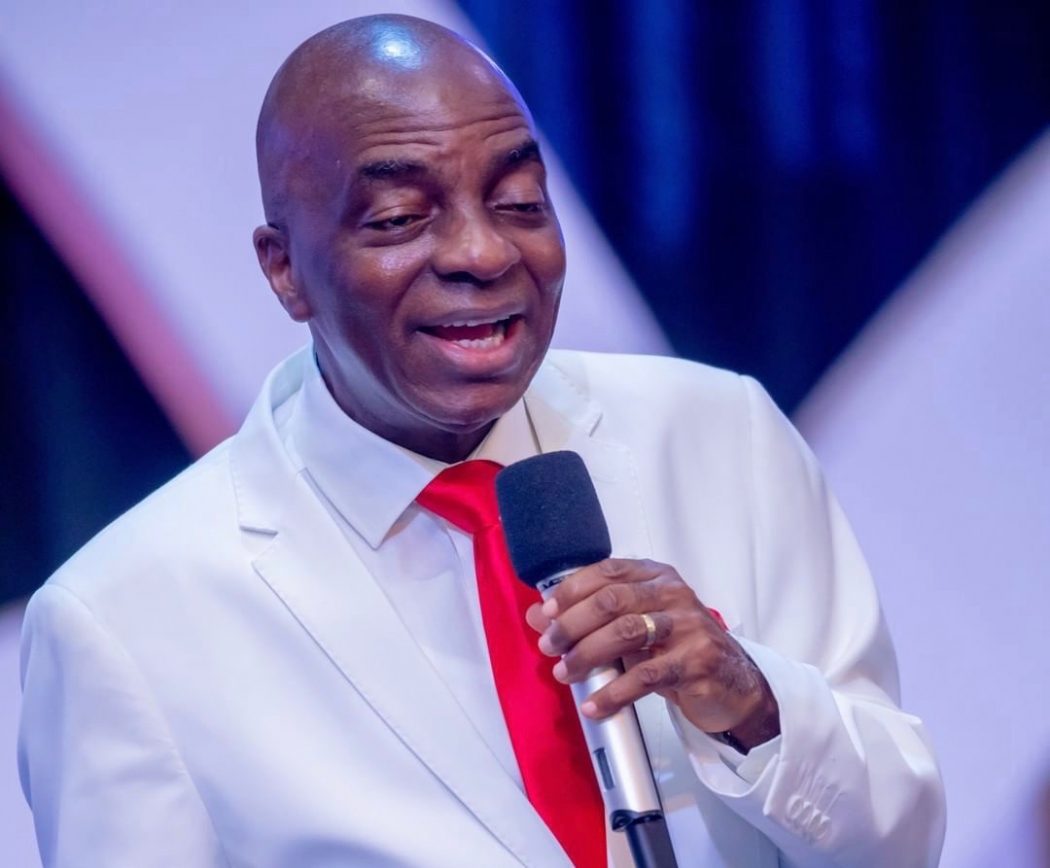
Founder of Living Faith Church Worldwide, Bishop David Oyedepo, has drawn widespread attention after advising church members to provide his phone number to kidnappers if they are ever abducted, during a recent church service.
The cleric made the statement while recounting past incidents involving members of his ministry who he said were kidnapped and later released. A video of the sermon has since circulated widely on social media, triggering fresh conversations about faith, security, and religious authority in Nigeria.
Oyedepo referenced what he described as a previous case involving a pastor within his church who was allegedly abducted and later freed. He claimed he instructed that his personal phone number be given to the kidnappers, alongside a warning linked to a time frame for the pastor’s release.
According to him, the outcome reinforced his confidence in spiritual authority. He told worshippers that the pastor was eventually released, attributing the development to divine intervention as he narrated the incident to the congregation.
In another part of the sermon, the bishop encouraged members not to give in to fear amid insecurity concerns. He urged Christians to remain firm in their faith, insisting that belief should override panic in dangerous situations.
He further advised congregants that in the event of abduction, they should hand over his contact details to their captors, suggesting that such action had worked in previous situations he described within his ministry.
Oyedepo also recounted a separate incident involving a female member of his church, whom he referred to as his spiritual daughter. He claimed she was abducted but confidently told her captors she would be released by a specific time, a declaration he said ultimately aligned with her release.
The remarks have since generated mixed reactions online, with supporters highlighting the message of faith and critics questioning the implications of such claims in the context of Nigeria’s ongoing security challenges.