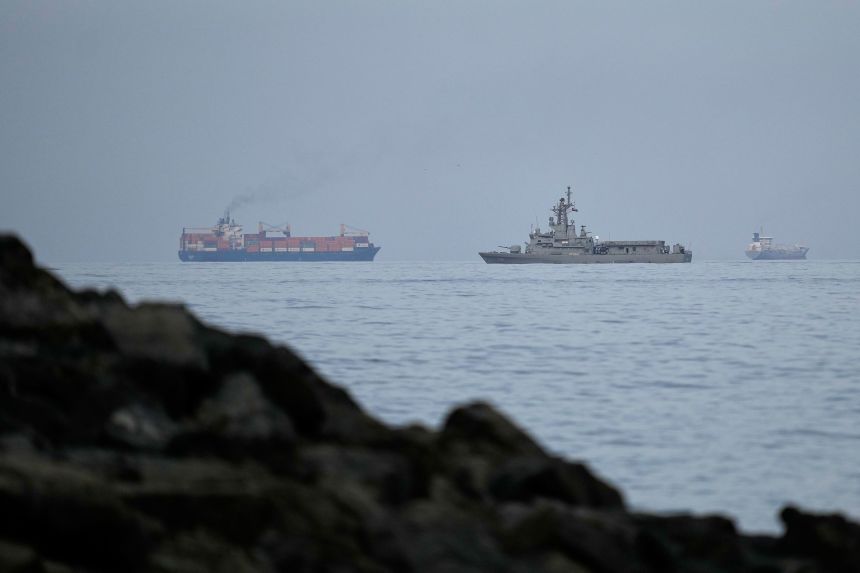

Around 30 Chinese vessels reportedly passed through the strategic Strait of Hormuz on Wednesday night as tensions continue to simmer between Iran and the United States over access to one of the world’s most critical oil shipping routes.
Iran’s semi-official Fars news agency reported that the ships were allowed to transit the waterway under what Tehran described as Iranian management protocols, despite the ongoing standoff affecting maritime movement in the Gulf region.
A senior official of the Islamic Revolutionary Guard Corps Navy reportedly confirmed that the vessels crossed through the strait after several countries accepted navigation arrangements designated by Iran.
The Strait of Hormuz remains one of the world’s most important energy corridors, linking Gulf oil producers to global markets. Any disruption in the narrow waterway immediately affects international oil prices and shipping activity.
Iranian Foreign Minister Seyed Abbas Araghchi insisted that Tehran has not blocked commercial shipping through the route. According to him, vessels are free to pass as long as they coordinate with Iranian naval authorities.
“Iran has not posed any obstacle to shipping through the strait,” Araghchi said, while accusing the United States of being responsible for the current blockade situation.
Iran tightened its control over the strait on February 28 after barring vessels linked to the United States and Israel following joint military strikes on Iranian territory. The move sharply escalated regional tensions and raised fears of supply disruptions in the global oil market.
Meanwhile, the White House disclosed that US President Donald Trump and Chinese President Xi Jinping discussed the importance of keeping the Strait of Hormuz open during their recent meeting. Both leaders reportedly agreed that uninterrupted energy flow through the route remains vital to the global economy.
Xi was also quoted as saying that the “rejuvenation of China” and Trump’s “Make America Great Again” agenda could coexist without direct rivalry between both powers.
Oil prices reacted to reports of possible easing in tensions. Brent crude, which earlier climbed to $107.13 per barrel, later dropped to $105.03 on Thursday amid hopes that shipping activity through the Gulf could stabilise.
According to the White House, Xi also expressed interest in increasing purchases of American oil to reduce China’s reliance on the Strait of Hormuz. China has not imported US crude since May 2025 following tariffs introduced during the trade dispute between both countries.
Shipping concerns in the Gulf remain high. Data from Kpler and LSEG showed that several oil tankers recently passed through the Strait of Hormuz with tracking systems switched off to avoid possible attacks linked to the regional conflict.
Among them were two very large crude carriers — Agios Fanourios I and Kiara M — each transporting two million barrels of Iraqi crude through the strait on Sunday.