
Imo Journalist Attacked by Demolition Task Force, CJID Report Validated on Worsening Press Freedom in Nigeria
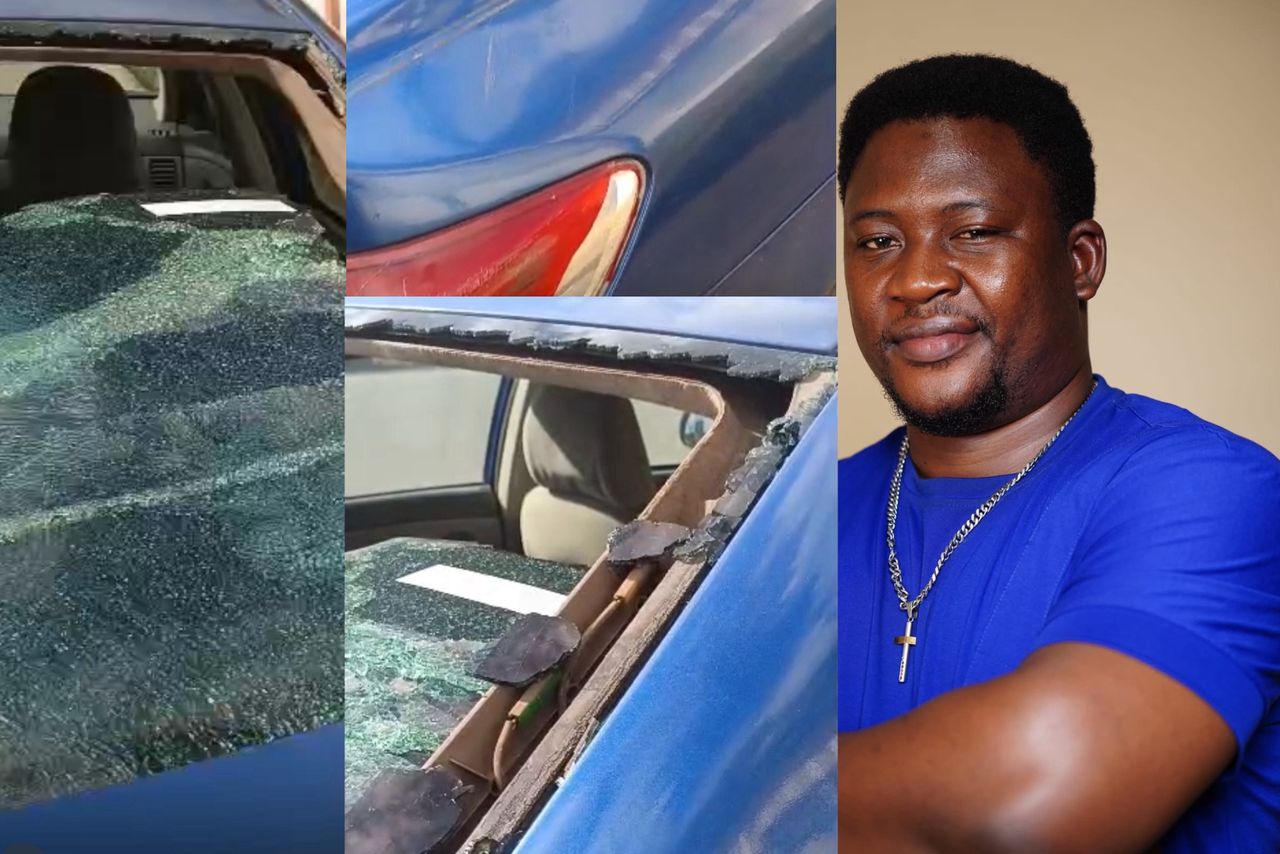
An Imo-based journalist and media personality, Olebara Uchechukwu Anthony, popularly known as Cool DJ Blaze, has narrated how he narrowly escaped mob assault by men allegedly linked to a state-enforcement team during a demolition exercise in Owerri, further validating growing concerns over press freedom and journalist safety in Nigeria.
Uchechukwu, who shared his ordeal on Facebook on Monday, said the incident occurred near the 40/40 Roundabout in New Owerri, where a demolition operation was underway opposite Rento Hotel. According to his account, the attack began after he identified himself as a journalist.
“He asked that I identify myself, I did — and immediately, upon hearing my name and profession, he grew furious, accusing me of recording their activities,” he wrote. “They began hitting my car with machetes, batons, sticks and stones. My back windshield was smashed, my door handle broken, my lights destroyed. I was lucky not to be hit.”
Uchechukwu said he had stopped only out of caution when he saw people running, unaware that he was driving into a volatile situation. He added that the officials, believed to be members of ENTraco, a task force associated with environmental enforcement in the state, denied responsibility after the incident, while the police offered no clear path toward justice.
“Now the question I keep asking myself is: what was my offense? Why was I attacked unprovoked? Why are these people not traceable or held accountable?” he lamented.
The journalist’s experience has reignited debate about the climate of fear and impunity confronting media workers across Nigeria, echoing findings from the Centre for Journalism, Innovation and Development (CJID) in its 2024 Openness Index Report titled “State of Press Freedom in Nigeria: 2024 Subnational Report.”
CJID Report: Nigeria’s Journalists Under Siege
The CJID’s report identified Imo, Bauchi, and Lagos States as the most dangerous environments for journalists, citing rising cases of harassment, arbitrary detention, and physical attacks by security operatives and state-linked actors.
The report warned that the culture of intimidation against journalists was worsening at the subnational level, where task forces and local agencies often operate with little oversight.
“What happened to me is exactly what the CJID described,” Uchechukwu said. “Journalists are facing intimidation, censorship and violence daily. We are scared in our own motherland.”
Media advocacy groups, including the International Press Centre (IPC) and the Nigerian Union of Journalists (NUJ), have condemned the recurring pattern of attacks, calling on the Imo State Government to investigate the incident and hold the perpetrators accountable.
A Cry for Accountability
Uchechukwu, however, insists he will pursue justice and use his platform to “sing it until our voices are heard.”
“Journalists are not enemies of the state. We sacrifice so much for a nation that often sees us as a threat. But this time, I won’t keep quiet,” he vowed.
His statement mirrors the larger question raised by the CJID report — whether Nigeria’s democracy can thrive while journalists continue to work under fear, violence, and denial of protection.