
The South East Council of Traditional Rulers has officially replaced the controversial Eze Ndigbo title for Igbo leaders living outside the South-East with Onyendu Ndigbo, marking a major shift aimed at ending years of disputes over diaspora traditional leadership.
The decision was implemented through the Committee on the Regularisation of Igbo Diaspora Traditional Title and Leadership (CRIDTTL) following growing concerns that the use of the Eze Ndigbo title in different parts of Nigeria and abroad created parallel traditional institutions and sometimes clashed with the authority of recognised monarchs in host communities.
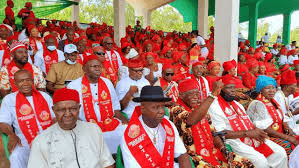
The new policy was reinforced during a ceremony held in Owerri, Imo State, where the South East Council of Traditional Rulers inducted 19 diaspora Igbo leaders as the second batch of Onyendu Ndigbo title holders. The council emphasised that the newly recognised leaders are cultural ambassadors, not traditional rulers, and are expected to promote Igbo heritage while respecting the customs and laws of their host communities.
Speaking at the event, the Chairman of the Imo State and South East Councils of Traditional Rulers, Eze E. C. Okeke, urged the inductees to demonstrate integrity, accountability and exemplary leadership. He charged them to uphold Igbo values, foster unity among Igbo communities in the diaspora and maintain zero tolerance for corruption and abuse of office.
Eze Okeke also commended the Committee on the Regularisation of Igbo Diaspora Traditional Title and Leadership, chaired by Charles Odunukwe with Prince Ubochi Ubochi serving as secretary, for developing a framework that standardises diaspora leadership while preserving Igbo cultural identity.
The royal father acknowledged the support of Ohanaeze Ndigbo Worldwide, led by President-General Senator John Azuta-Mbata, who was represented at the event by Vice President-General John Duru and former Imo State Secretary to the State Government, Callistus Ekenze. He also praised the Federal Ministry of Foreign Affairs for supporting the welfare of Igbo communities living abroad.
Among those inducted were Emmanuel Chukwuma representing Ivory Coast, Chris Umeh from Japan, Uche Egenti from Abuja, alongside other representatives from the Federal Capital Territory and neighbouring communities. The latest ceremony follows the first induction exercise held in May, during which 32 diaspora leaders from Lagos, Ogun, Oyo, Ekiti, Ghana and other locations received the Onyendu Ndigbo title after completing a screening and verification process.
Explaining the significance of the new designation, Prince Ubochi said the title of Onyendu Ndigbo represents responsibility rather than royalty. According to him, those recognised will serve as official representatives of the South East Council of Traditional Rulers, working to preserve Igbo culture, strengthen community unity and provide leadership for Igbo people in the diaspora.
The introduction of the Onyendu Ndigbo title comes amid increasing efforts to regulate traditional titles across Nigeria. Some state governments, including Lagos, have recently taken steps against unauthorised chieftaincy titles over concerns that the proliferation of self-styled monarchs could create conflicts with constitutionally recognised traditional institutions.