
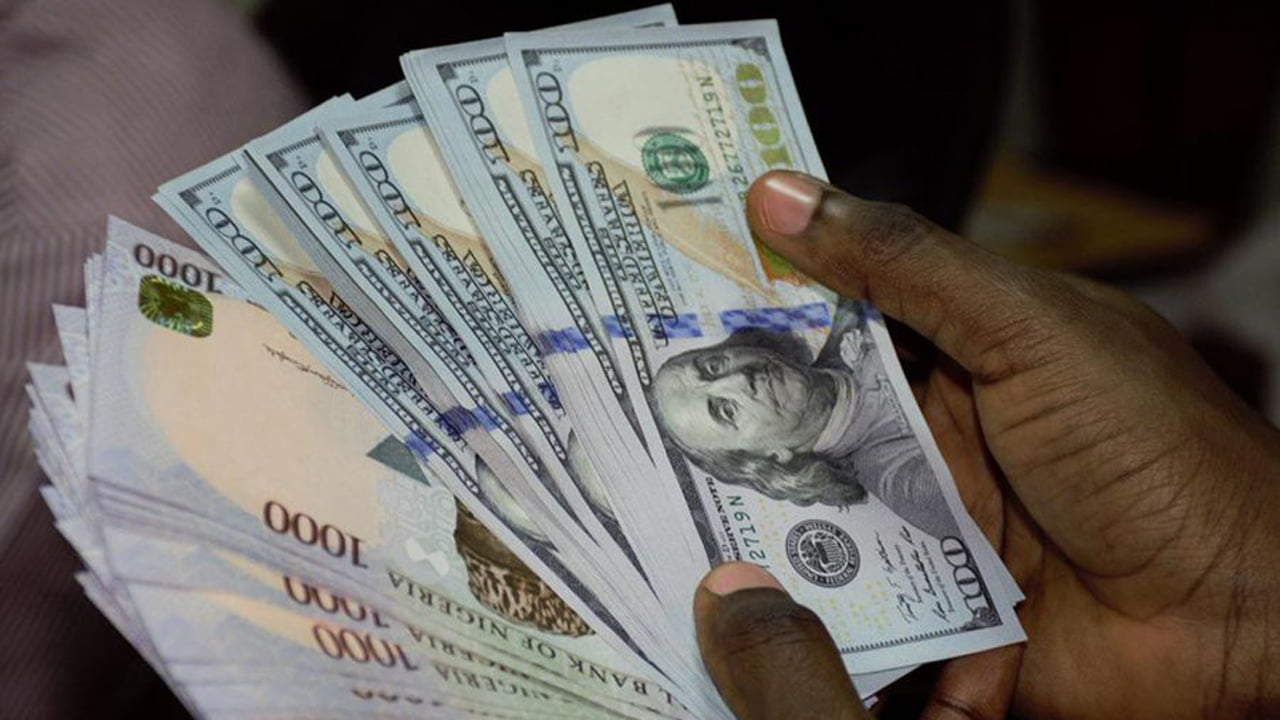
The Nigerian naira has depreciated further in the foreign exchange market, hitting N1,425 per dollar on Monday, March 9, amid rising demand for the U.S. dollar linked to the ongoing war in the Middle East.
Data from the Central Bank of Nigeria (CBN) showed the local currency fell from N1,398 per dollar last weekend, marking a N27 drop and reaching its lowest level in two months.
The naira had previously shown signs of appreciation in the official market since February 17, rising to N1,337 per dollar earlier last week before starting a gradual decline to N1,395 over the weekend. Over the past three weeks, the naira has cumulatively lost N88.
In the parallel market, the naira also weakened. A Bureau De Change trader, Abudullahi, reported that the dollar traded at N1,430 for sales and N1,407 for purchases on Tuesday, while the pound ranged between N1,845 and N1,880, and the euro between N1,600 and N1,630. The gap between the parallel and official markets widened to N15 per dollar, up from N7 last weekend.
Analysts attribute the depreciation to increased dollar demand from Foreign Portfolio Investors (FPIs) leaving the country amid heightened risk perceptions triggered by the U.S.–Israel–Iran conflict. A banking sector source disclosed that the CBN injected $500 million last week in an effort to stabilise the forex market.
Financial experts at Financial Derivatives Company noted, “The decline in the naira comes amid intensified demand for the U.S. dollar driven by escalating Middle East tensions.” Similarly, Cowry Asset Management confirmed that surging dollar demand amid geopolitical tensions is a major driver of the naira’s depreciation.
The CBN also released new exchange rates for other currencies: CFA: N2.45; Yuan/Renminbi: N201.40; Danish Krona: N215.75; Euro: N1,612.14; Yen: N8.80; Riyal: N371.10; South African Rand: N83.69; Swiss Franc: N1,788.75; Pounds Sterling: N1,863.06; UAE Dirham: N379.23; US Dollar: N1,393.26.
Meanwhile, Nigeria’s foreign exchange reserves recorded their first increase in five months, boosted by steady crude oil production and rising global oil prices. The CBN reiterated its commitment to intervene in the forex market to improve liquidity and support the naira.