
Makoko Residents Lament Ongoing Hardship as Lagos Assembly Orders Halt to Waterfront Demolitions
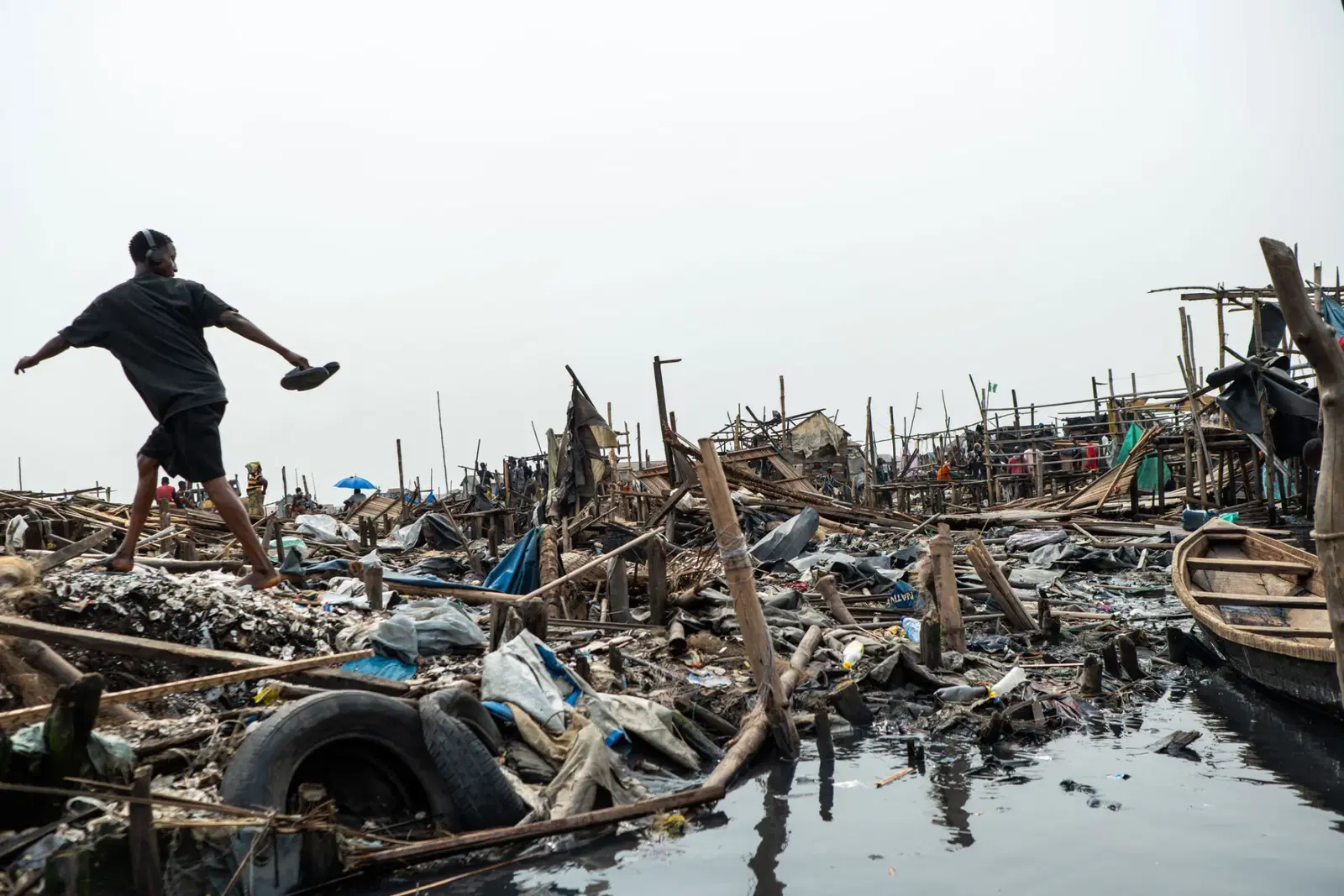
For residents of Makoko in Lagos Mainland Local Government Area, the pain of demolition has not faded weeks after their homes were pulled down, leaving many counting losses that extend beyond property to lives, livelihoods and children’s education.
Although the intervention of the Lagos State House of Assembly has helped to ease tensions, displaced residents say their suffering continues, with no immediate relief or resettlement in sight.
On Tuesday, the Assembly ordered the immediate suspension of the demolition of waterfront structures in Makoko, Oko-Agbon and Shogunro communities. The directive followed a stakeholders’ meeting between lawmakers and affected residents held at the Assembly complex in Alausa, Ikeja.
Several victims told Vanguard that since the demolition exercise carried out by a Lagos State Government taskforce, many families have been forced to sleep in boats, canoes and open spaces, exposed to harsh weather conditions.
Residents alleged that about 12 lives were lost during the demolition, while properties worth unquantifiable sums were destroyed.
A mother of 10, Mrs. Juliana, said her family has been living in a boat since their home was demolished, adding that two of her sons are currently hospitalised.
“The demolition left us with nothing. We couldn’t even recover a pin because it happened suddenly. Since then, we have been sleeping in boats, under a billboard,” she said tearfully.
Spokesman of the Eegu General Assembly, Prof. Senayo Olaoluwa, warned that continued demolition of riverine settlements could wipe out entire communities.
“These demolitions make us feel that Eegu people and other riverine communities are being targeted for extinction,” he said.
Another resident, Jude Ojo, recounted how a peaceful protest by residents degenerated into chaos, alleging that security operatives used tear gas on protesters.
“We came peacefully to seek dialogue, but we were met with tear gas,” he said, adding that one protester sustained a gunshot injury to the leg.
Ogunusi Adewale said his house was demolished on November 27, 2025, after a struggle that had lasted over six years.
“My home is gone and my family is scattered. Mothers with babies are now living in canoes. Schools, clinics and churches were destroyed,” he said.
Student Coordinator of the Makoko Waterfront Community, Israel Idowu, alleged that demolition continued despite assurances that it would stop, adding that livelihoods have been severely affected.
“Fishing has stopped, children are no longer in school, and small businesses have been destroyed,” he said, alleging that a pregnant woman died after access to medical care was restricted.
Beyond Makoko, demolitions also affected Owode Onirin, where Chairman of the Motor Spare Parts Market, Abiodun Ahmed, said traders lost businesses built over decades in a single day.
Chairman of the ad-hoc committee set up by the Speaker, Mudashiru Obasa, Mr. Noheem Adams, said the Assembly resolved that all demolition activities must stop until further notice.
“On behalf of the Speaker and all 40 members of the House, we are directing that all demolitions in Makoko, Oko-Agbon and Shogunro communities should stop immediately,” Adams said, assuring residents that compensation would be paid to those affected.
He also stressed that any taskforce set up to address the matter must involve community representatives and operate transparently.
Earlier, Lagos State Government explained that the demolition was carried out on safety grounds, noting that some structures were built under high-tension power cables.
Governor Babajide Sanwo-Olu’s Special Adviser on E-GIS and Urban Renewal, Dr. Babatunde Olajide, said the government would compensate affected residents, disclosing that $2 million had been set aside since 2021 for the redevelopment of the Makoko waterfront.
Reacting to the Assembly’s intervention, the Baale of Makoko Shogunro, Yusuf Sagra, said residents were satisfied with the outcome of the meeting, describing it as a step toward peace and dialogue.