
New Admission Policy Sparks Uproar as Lecturers Warn: “Removing Mathematics Weakens the Mind”
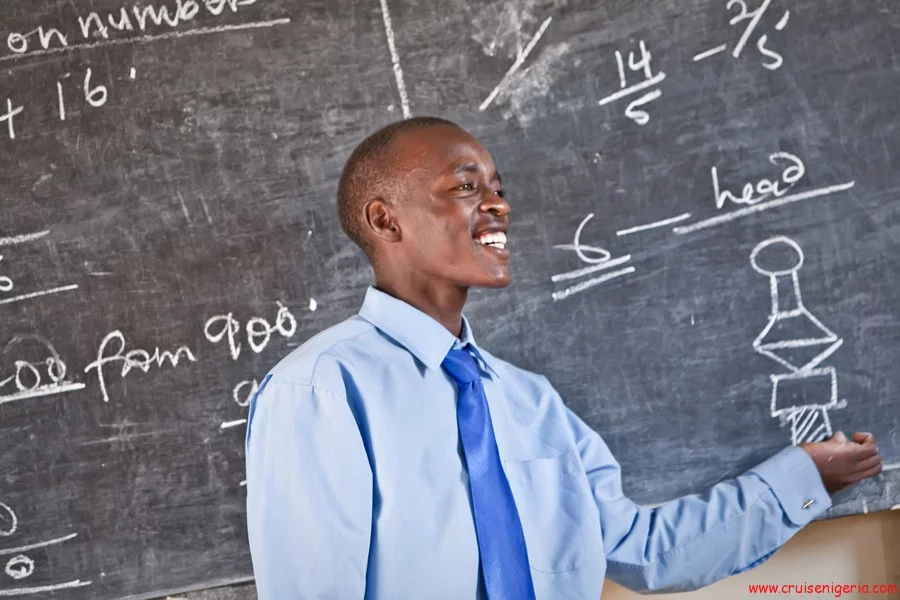
The Federal Government’s decision to remove Mathematics as a mandatory requirement for students seeking admission into arts and humanities programmes has ignited nationwide debate among lecturers, students, and education reform advocates.
For decades, a credit pass in both English and Mathematics has been the bedrock of university admissions in Nigeria. But on Tuesday, the Federal Ministry of Education, through spokesperson Folasade Boriowo, announced a new policy allowing Senior Secondary School students in the arts and humanities to gain tertiary admission without a credit in Mathematics.
The move, according to the Ministry, aims to promote inclusive access to higher education — but many academics argue it could erode Nigeria’s intellectual foundation.
“A Mistake That Encourages Mediocrity” — Dr. Ashir Inuwa
Dr. Ashir Tukur Inuwa, a lecturer in Mass Communication at Bayero University, Kano, described the policy as a “mistake that will deepen students’ fear of mathematics.”
“To be honest, it is not right. Art students already struggle with the subject, and now they will have no motivation to learn it. Mathematics is not as hard as they think; it just requires proper teaching,” he told Daily Post.
He warned that the decision could discourage problem-solving skills among students and send the wrong message that mathematics is irrelevant to everyday life.
“Mathematics is a life skill. Whether you are a writer, artist, or lawyer, it trains the mind to think clearly. It should never be discarded,” he added.
“Students Will Regret It Later” — Ibrahim Shittu
At Ahmadu Bello University, Zaria, Mr. Ibrahim Shittu echoed similar concerns, warning that the long-term effects of the policy could be disastrous.
“After graduation, these students will take jobs that require basic numerical reasoning. Then they’ll realise they’ve been cheated by not learning Mathematics,” he said.
Shittu argued that the reform could also create inconsistencies for Economics and Social Sciences, which often rely on mathematical foundations.
“Students should not see this as an escape route. Education is becoming multidisciplinary worldwide, and Nigeria should not be moving backward,” he cautioned.
“Removing Maths Is Like Cutting Off the Head to Cure a Headache” — Dr. Lawanti
Dr. Kabiru Danladi Lawanti, another senior lecturer at ABU Zaria, delivered the most philosophical critique, calling the decision “a quiet erosion of Nigeria’s capacity to think.”
Recalling his school days, he said good teaching once made Mathematics enjoyable and human, but poor classroom practices later turned it into a nightmare for many students.
“Many will celebrate this policy, but I’m worried. Mathematics is not about finding x and y; it’s about how to think. It’s the grammar of reasoning and the architecture of problem-solving.”
Lawanti warned that eliminating mathematics from arts education will weaken intellectual growth, separating emotion from logic.
“The artist balancing symmetry, the poet weaving rhythm, the lawyer building logical arguments — all use mathematical thinking,” he argued.
“Now, instead of fixing how we teach Mathematics, we’re abandoning it. That’s like treating a headache by cutting off the head.”
He urged the government to reform how Mathematics is taught rather than removing it, saying the subject, when taught imaginatively, “disciplines creativity without killing it.”
Students Celebrate the Reform
While academics express alarm, many students have welcomed the decision as long overdue.
Aliu Ibrahim, an arts student, told reporters, “How do we apply Maths in our field? We only need basic counting. The rest is a waste of time.”
But educationists insist such relief is short-term. As Dr. Lawanti put it, “No nation can grow by producing graduates who feel deeply but think shallowly. The goal should not be to make Mathematics optional — but to make it meaningful.”