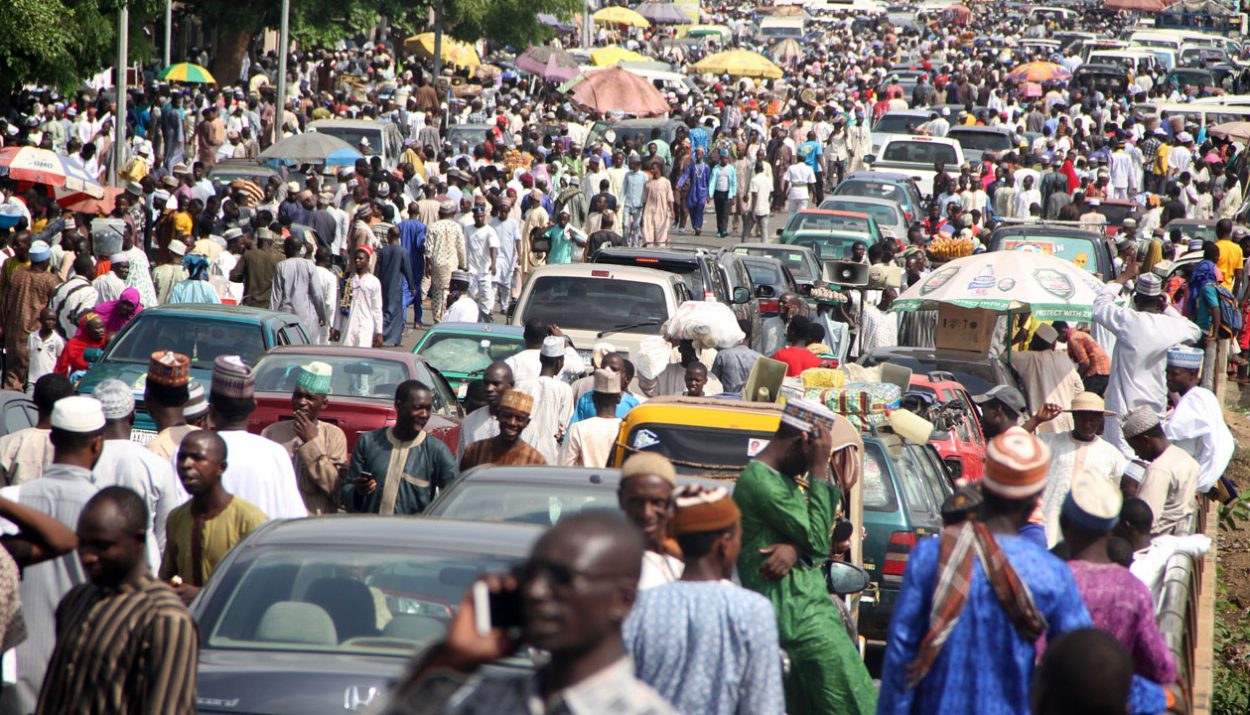
A respected Nigerian economist, Dr. Tijjani Ahmad, has affirmed the World Bank’s latest report that over 100 million Nigerians live below the poverty line, stressing that despite claims of economic stability, the reality for most citizens remains dire.
Dr. Ahmad, a senior lecturer at Hussaini Adamu Polytechnic, Kazaure, explained that the global poverty threshold — pegged at two dollars a day — translates to roughly ₦3,000 daily or ₦90,000 monthly, based on current exchange rates. “How many Nigerians earn ₦90,000 in a month? Even many government workers don’t make that much,” he said in an interview on Thursday, October 10, 2025. “That means about 60 percent of Nigerians are still below the poverty line.”
According to the World Bank’s 2025 Nigeria Development Update, inflation, fuel subsidy removal, and the floating of the naira have eroded household incomes, pushing millions deeper into poverty. The report revealed that inflation surged to 31.7% in September, food prices rose by over 45%, and the naira’s free fall to ₦1,550 per dollar has worsened living conditions for low-income earners.
Dr. Ahmad, who also serves as a Research Fellow at the African Centre for Tax and Governance, noted that while Nigeria’s GDP and macroeconomic indices appear stable, ordinary citizens have not felt the gains. “The figures show improvement — GDP is rising, unemployment seems lower — but those numbers don’t fill cooking pots. Growth must translate into real development before we can celebrate,” he stated.
He emphasized that the North remains poorer than the South, largely due to low literacy rates, limited industrialization, and cultural factors that increase dependency. “You find one man with three or four wives and up to twenty children, yet only one income sustains them,” he explained. “In the South, smaller families and a stronger formal sector make poverty less crushing.”
The economist further blamed harsh policies for deepening poverty, citing the removal of fuel subsidy and exchange rate liberalization as poorly managed decisions. “When subsidy was removed, there should have been immediate relief plans. The naira’s fall from ₦950 to over ₦1,500 worsened everything — transport, food, housing — all doubled in cost,” he said.
Despite the bleak outlook, Dr. Ahmad expressed cautious optimism about government reforms. “Subsidy cannot return; the nation cannot afford it. But the government can focus on production, agriculture, and energy to restore balance,” he said. “Economic growth only becomes meaningful when Nigerians can afford three meals a day and live with dignity.”