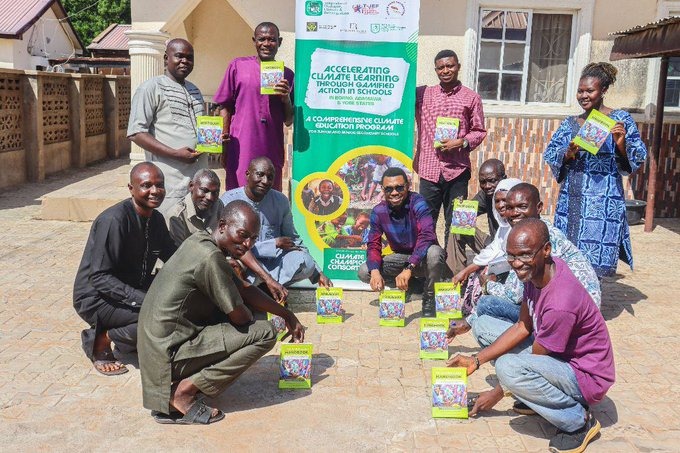

Teachers in Yola, Adamawa State, are now at the forefront of Nigeria’s fight against climate change, thanks to a bold grassroots education campaign launched by the Society of Planet and Prosperity (SPP). The campaign, which began last week, is designed to train educators in climate literacy and action, laying the groundwork for more climate-resilient communities across the country.
At the heart of the initiative is a specialized climate education manual developed by SPP in collaboration with national and international stakeholders, including the Federal Ministry of Environment (FMEnvng), Cleantech Hub Nigeria, SustyVibes, Glow Initiative, EcoCyclers, and the University of Bristol. The program is being implemented by the Climate Champion Consortium (CCC), led by DCR Ambassadors, and currently involves teachers from GSS Bekaji and Army Day Secondary School.
Prof. Chukwumerije Okereke, President of SPP and a leading global climate policy expert, emphasized that education is the bedrock of meaningful climate action. Echoing environmentalist David Suzuki’s quote on reconnecting children with nature, he stressed that only an empowered generation can reverse the climate crisis.
The weekly training sessions, held every Wednesday, aim to equip teachers with practical strategies to integrate climate science into their classrooms. Upon completion of the program, participants will be awarded climate education proficiency certificates—making them certified champions of environmental sustainability.
SPP stated that the long-term vision is to create a network of educators who can serve as catalysts for behavioral change in their schools and communities. It called on individuals, civil society organizations, and government actors to scale similar interventions nationwide.
The campaign’s success is already gaining traction on social media, with the organization’s official X (formerly Twitter) handle, @society_planet, actively documenting progress and rallying support under the call to “Join us in building climate-resilient communities through education!”
With climate disasters increasing across Nigeria—from flooding in the North to coastal erosion in the South—the move to prioritize climate education is being hailed by experts as both timely and urgent.