
Fubara, Wike & Amaewhule Reunited at Uncle’s Burial Days After Presidential Peace Talks
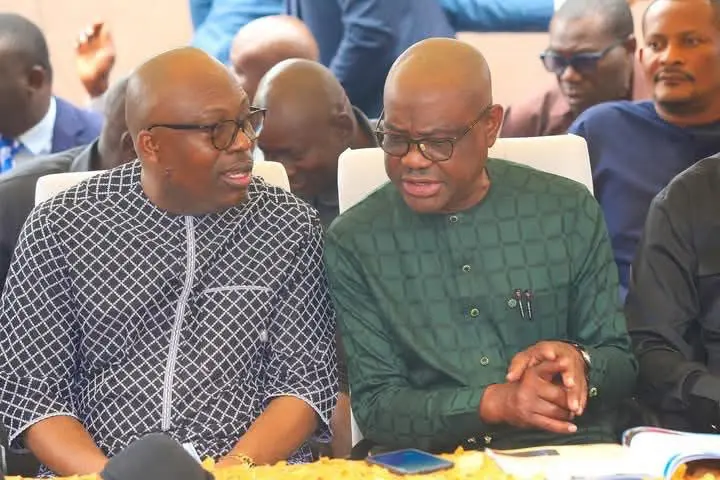
Governor Siminalayi Fubara, former Rivers State governor and Federal Capital Territory Minister Nyesom Wike, and suspended Rivers Speaker Martin Amaewhule appeared together at a burial ceremony in Rumuepirikom, Obio/Akpor LGA, Rivers State, on Saturday, June 28—just 48 hours after a high-stakes peace meeting at the Presidential Villa in Abuja brokered by President Bola Tinubu .
The ceremony, held for Elder Temple Omezurike Onuoha—Wike’s late uncle and a community leader—served as a rare public stage for reconciliation. Photos and videos shared by Wike’s media aide, Lere Olayinka, showed the trio seated together, projecting unity after nearly two years of public political battles .
Rivers has been mired in a political crisis since early 2024, marked by Fubara’s contentious relationship with Wike and a fractured Rivers State House of Assembly. President Tinubu declared a state of emergency in March 2025 to ease the deadlock, leading to last Thursday’s reconciliation push at Aso Rock .
During the Abuja negotiations, Tinubu urged both men to bury the past and commit to working together. Both Fubara and Wike reportedly agreed publicly to collaborate for the state’s development—a pledge confirmed at the funeral when they shook hands and shared a platform for public mourning .
Political heavyweights were also present, including Senators Allwell Onyesoh, George Thompson Sekibo, and Olaka Nwogu, alongside former Deputy Speaker Chibudom Nwuche, ex-house member Ken Chikere, South-South APC vice-chair Victor Giadom and ex-PDP deputy national chairman Sam Sam Jaja—highlighting the event’s political significance .
Following the event, sources say Fubara will convene a closed-door meeting with his key supporters to outline next steps based on the Abuja accords, aiming to mend internal party divisions ahead of the gubernatorial elections in 2027 .
Rumuepirikom’s gathering transcended traditional mourning, transforming into a high-profile signal: mature leadership, political realignment, and a possible end to one of Nigeria’s most closely watched state-level disputes. Attention now turns to whether this public détente will yield sustained governance and restore public confidence.