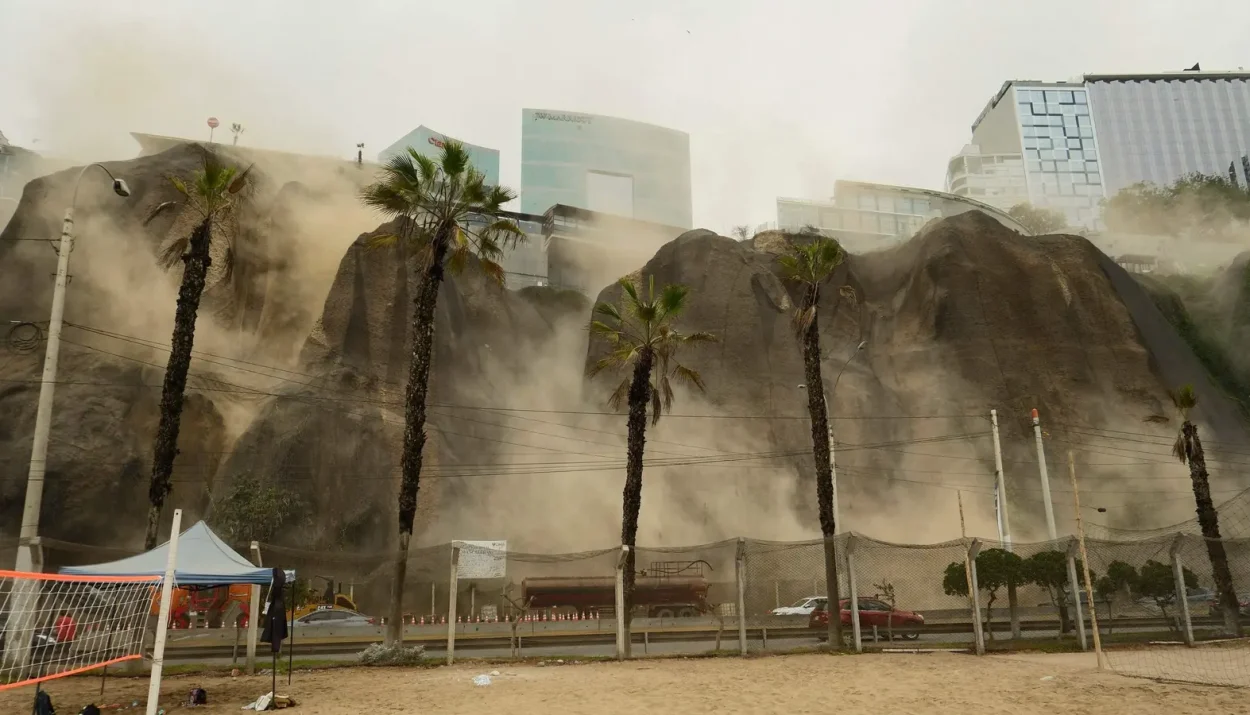

A devastating earthquake rattled Peru just before noon on Sunday, leaving one man dead and at least 36 others injured, as buildings cracked, landslides tumbled through Lima’s outskirts, and panic gripped the capital’s streets.
Authorities confirmed that the epicenter of the 6.1-magnitude quake was located roughly 30 kilometers from Callao, the bustling port city adjoining Lima. Although the U.S. Geological Survey recorded a slightly lower reading of 5.6, the intensity on the ground was unmistakable — sending tremors through homes, stadiums, and subway tunnels.
The National Police said a man in Lima was killed after a concrete wall collapsed onto his vehicle during the quake. Emergency officials reported that dozens of people sustained injuries from falling debris, stampedes, or structural damage across districts like San Juan de Lurigancho, Villa El Salvador, and Miraflores. Hospitals were placed on alert as minor aftershocks continued.
Public transportation in Lima was temporarily halted, with subway services suspended and flights briefly grounded at Jorge Chávez International Airport. A top-tier Peruvian football league match at Estadio Nacional was called off mid-game as terrified fans rushed to exits during the tremor.
President Dina Boluarte addressed the nation on Sunday evening, urging calm and confirming that no tsunami warning had been issued. “We are grateful this was not worse, but we mourn the life lost and remain vigilant as aftershocks may follow,” she said in a televised statement. Civil protection agencies are now assessing infrastructure for hidden damage.
Footage aired by Latina Noticias showed cliffsides crumbling and roads cracking in Lima’s hilly neighborhoods. Experts from the National Seismological Centre reminded citizens that Peru averages more than 100 earthquakes annually due to its position on the volatile Pacific “Ring of Fire.”
Sunday’s tremor was the most powerful since the November 2021 Amazon quake, which measured 7.5 and destroyed over 70 homes. The deadliest quake in Peru’s history struck in May 1970, killing nearly 67,000 in the Ancash region — a haunting reminder of the seismic threats the nation continues to face.