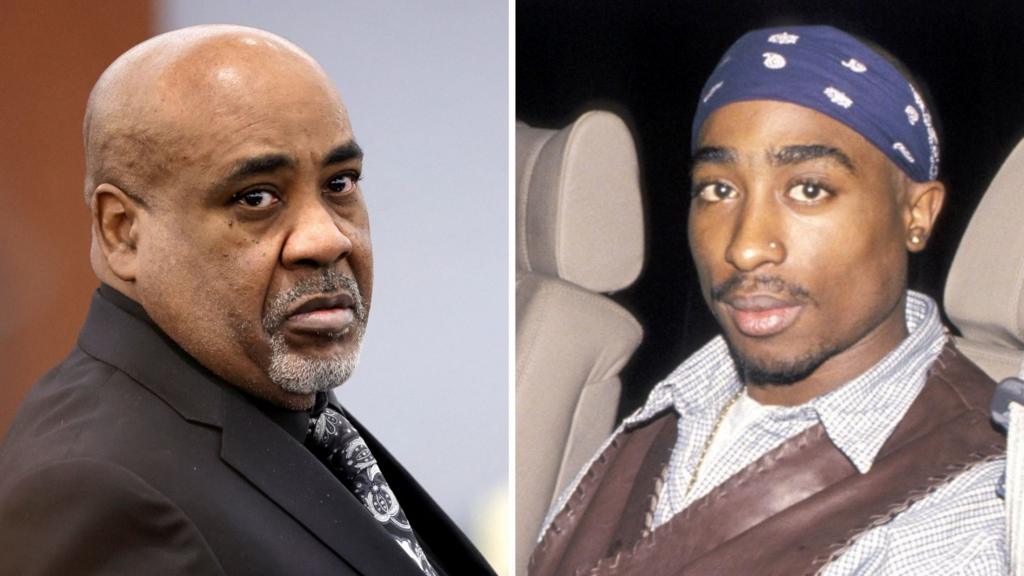
The long-running mystery surrounding the murder of rapper Tupac Shakur has reached a critical stage, with prosecutors and defence lawyers presenting closing arguments in the trial of former Los Angeles gang leader Duane “Keffe D” Davis.
Davis, 63, is accused of orchestrating the September 7, 1996, shooting that killed Shakur in Las Vegas. Prosecutors allege the attack was motivated by revenge after Davis’ nephew was beaten by members of Shakur’s entourage earlier that night.
Opening the prosecution’s closing argument, prosecutor Binu Palal told jurors that Davis responded to the confrontation by obtaining a firearm, gathering members of his group and searching for Shakur. Palal argued that Davis ultimately handed the weapon to a passenger in a white Cadillac and directed him to shoot the rapper.
Shakur was travelling in the front passenger seat of a BMW driven by Death Row Records co-founder Marion “Suge” Knight when the Cadillac pulled alongside them at a red light. Shakur was shot during the encounter, while Knight was also wounded. The rapper died six days later at the age of 25.
The killing became one of the most closely followed unsolved cases in American music history. For decades, investigators struggled to establish who was responsible, while Shakur’s death remained a major subject of debate among fans and within the hip-hop community.
Davis is the only person charged in connection with the killing. Prosecutors have pointed to statements he made over the years, including comments to law enforcement and the media, as well as claims contained in an autobiography published in 2019, which helped revive the investigation.
The defence has rejected the prosecution’s interpretation of Davis’ statements. His lawyer, Michael Sanft, has described the alleged confessions as lies and fiction, arguing that Davis exaggerated his involvement partly to generate publicity for his book.
Closing arguments will be followed by jury deliberations, with Davis facing the possibility of life imprisonment without parole if convicted. The case has drawn renewed attention to Shakur’s legacy, nearly three decades after the rapper became one of hip-hop’s most influential figures.