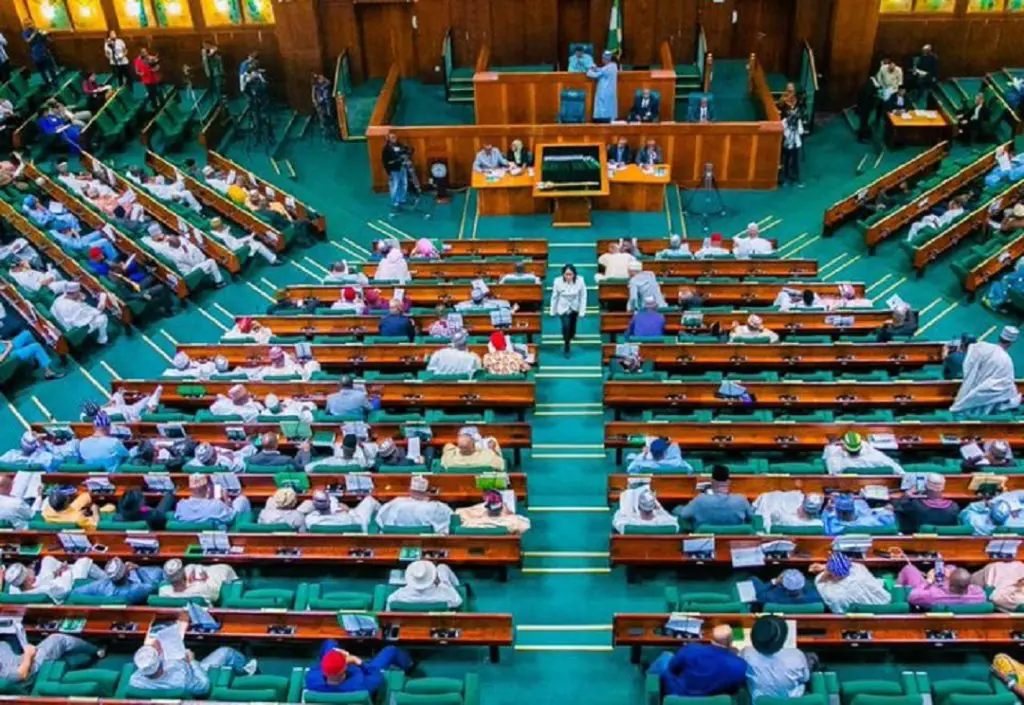

The House of Representatives has mounted a firm defence of the newly assented Electoral Act 2026, insisting that the law, though “imperfect,” was passed in full compliance with constitutional and parliamentary procedures and reflects the collective will of the National Assembly.
Speaking at a press conference in Abuja convened by civil society organisations, House Spokesman Hon. Akin Rotimi dismissed claims that lawmakers ignored public opinion, particularly on electronic transmission of results under Section 63 of the Act.
“Every single thing was done in keeping with the Constitution, the House Rules, and the Senate Rules. Democratisation is a process. What we have may be imperfect, but it was done in the best interest of Nigerians,” Rotimi said.
Electronic Transmission and Section 63
Rotimi clarified that the final wording of Section 63, which mandates the use of the IReV electronic transmission system for Form EC8A results, was a compromise outcome of a bipartisan conference committee, rather than a simple adoption of the Senate’s position.
“The presiding officer shall mandatorily transmit results. Only if that fails does the manual process come in as a fallback,” he explained, adding that dissent and walkouts by some lawmakers were part of normal democratic practice.
The spokesman defended the rapid presidential assent of the bill, noting that certainty in electoral timelines was critical ahead of the 2027 elections.
“With electoral timelines already announced by INEC, it was important to avoid gaps that could undermine the process,” he said.
Rotimi also expressed sympathy for protesters affected by tear-gas incidents at the National Assembly, describing the event as “regrettable and unconstitutional.”
Civil Society Voices Concerns
Hours after President Bola Tinubu assented to the law, a coalition of civil society organisations, including the Centre for Media and Society (CEMESO), The Kukah Centre, ElectHer, Nigerian Women Trust Fund, TAF Africa, and Yiaga Africa, criticised the process and content of the Act.
The groups described the adoption of the bill via voice vote, without prior distribution of the final text to all lawmakers, as a violation of informed legislative consent. They raised concerns over:
- Fallback clause in Section 63: Could allow manual collation to override electronic transmission, leaving room for abuse.
- ₦50 million party registration fee (Section 75): Seen as a barrier to youth-led and grassroots political participation.
- Mode of party primaries (Section 84): Restricting nomination methods may increase elite manipulation and vote-buying.
- Restricted result reviews (Section 65): Only INEC can trigger election result reviews, barring parties, candidates, and observers from initiating the process.
Despite criticism, the groups acknowledged improvements, such as downloadable voter cards (Section 18), a disability-inclusive register (Section 9), and stronger anti-fraud penalties (Sections 62, 71).
Calls for Implementation Oversight
Civil society urged INEC to:
- Publish a revised election timetable compliant with the 300-day notice requirement.
- Conduct nationwide simulations of the IReV electronic transmission system at all 176,866 polling units.
- Release independent technical reports identifying connectivity gaps.
The coalition also demanded that political parties publicly commit to defending electronic transmission and document communication failures in real time.
“While the Electoral Act 2026 is imperfect and incomplete, it remains the framework under which the 2027 elections will be conducted,” the groups said.
Rotimi, meanwhile, stressed that the 10th Assembly is youthful and reform-oriented, with over 50 members under 40 and more than 70% first-time legislators. He highlighted that over 2,400 bills have been introduced so far, covering areas such as independent candidacy, whistleblower protection, cybercrime reform, and Freedom of Information amendments.
“Trust and confidence in government, especially the legislature, may be low. We will continue to work to regain that trust. This is an investment in an ongoing conversation,” he said.
As Nigeria approaches the 2027 elections, the Electoral Act 2026 will face scrutiny not only from political actors but from citizens and civil society groups committed to ensuring credible, transparent, and inclusive elections.