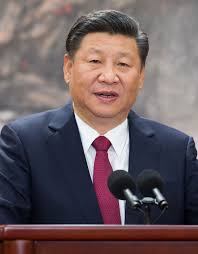

Chinese President Xi Jinping has called for stronger female representation in government and political leadership, saying that gender equality must be “truly internalised” within society to achieve national and global progress.
Speaking at the Global Women’s Summit 2025 in Beijing on Monday — an event jointly organised with UN Women — Xi said nations must “broaden channels for women to participate in political and decision-making” and ensure their “broad participation in national and social governance.”
The summit, attended by leaders from Iceland, Sri Lanka, Ghana, Dominica, and Mozambique, focuses on advancing global gender equality and empowering women in leadership and development.
Xi emphasised that “peace and stability” were essential for the full development of women, describing their advancement as critical to achieving “family harmony, social harmony, national development, and national progress.”
China has made notable progress in education and employment for women, who now make up around 50% of higher education students and 43% of the total workforce. However, the underrepresentation of women in senior political roles continues to draw international concern.
The United Nations in 2023 expressed alarm over the absence of women among China’s top leadership, urging the country to adopt statutory quotas and a gender parity system to accelerate inclusion in political offices.
Since Xi’s ascent as Communist Party General Secretary in 2012, the number of women in elite political and administrative roles has declined. China’s 2022 Politburo — the top decision-making body — included no women among its 24 members for the first time in two decades, and none on its seven-member Standing Committee.
Xi, however, has continued to promote traditional family and social values tied to women’s roles. In 2023, he stated that women “must establish a new trend of family” as the country faces a rapidly ageing population and a historic drop in birth rates.
He reiterated that “doing a good job in women’s work” goes beyond gender equality, calling it central to the stability and development of the nation.
The Beijing summit continues Tuesday, with sessions focused on policy innovation, leadership inclusion, and sustainable development goals for women.