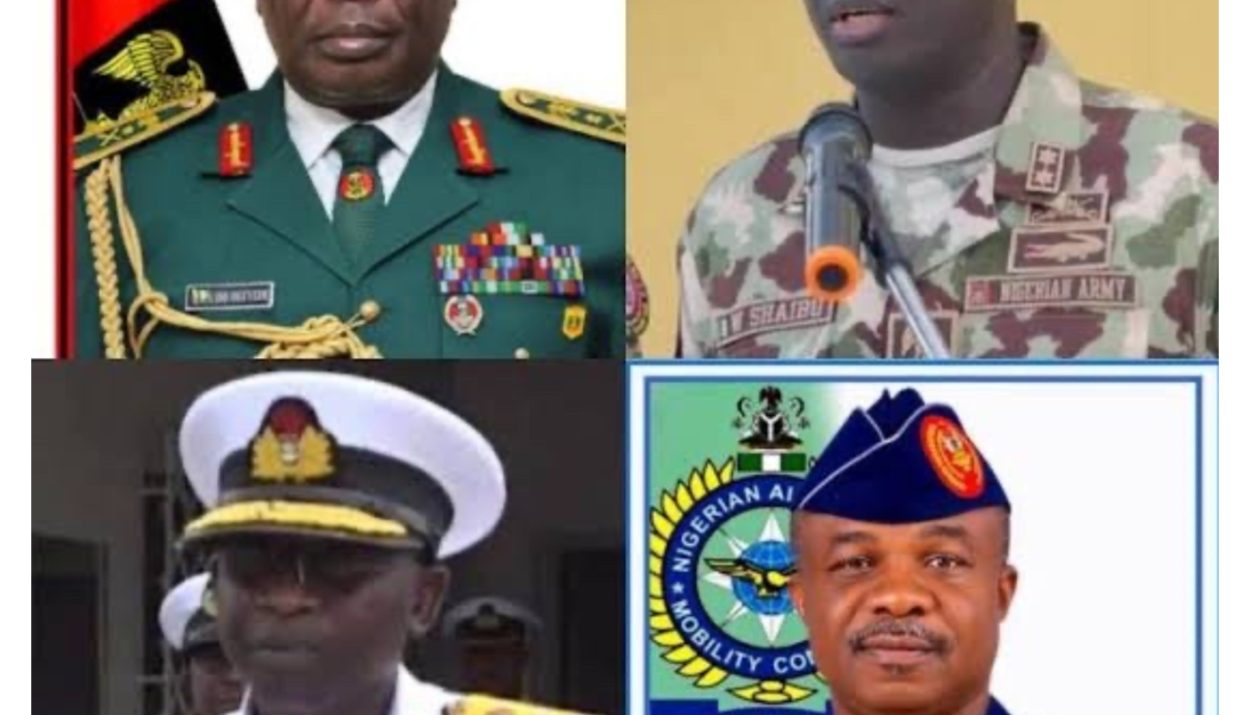

The Country Director of the International Human Rights Commission (IHRC), Ambassador Abdullahi Bokaji Adamu, says President Bola Tinubu’s recent dismissal of Nigeria’s service chiefs has triggered mixed reactions across northern Nigeria.
Adamu, a retired army captain, told Daily Post in an exclusive interview that while the move signals Tinubu’s willingness to make tough decisions, it also raises questions about political motives and internal power struggles within the military.
“The sack of the service chiefs may have been driven by several factors. Officially, it could be about improving performance and addressing insecurity, but politically, there are likely deeper undertones,” he said.
According to him, rumours of internal realignments and alleged coup plots — though unconfirmed — reflect the growing mistrust surrounding Nigeria’s security leadership.
Adamu warned that political considerations have long overshadowed merit in security appointments, undermining fairness and efficiency.
“Each administration tends to favour people from its own region or circle. That tradition breeds imbalance and weakens meritocracy,” he noted.
The IHRC chief said the decision has been met with cautious optimism in the North, where citizens are eager to see whether the replacements will reflect equity and national balance.
“Many northerners are watching closely. Thankfully, the new appointments seem regionally balanced — two of the four new service chiefs are from the North — which has helped reduce tension,” he added.
Adamu emphasized that northern confidence in the federal government now depends on tangible outcomes rather than promises.
“People are tired of rhetoric. They want safe roads, peace, and an end to banditry and kidnappings,” he stated.
He also criticized what he called the government’s “selective urgency” in responding to crises.
“The government often acts fast only when the elite are affected. Ordinary citizens deserve the same level of attention,” Adamu said.
While acknowledging that the former service chiefs operated under tough conditions, he highlighted the systemic limitations they faced — from inadequate funding to weak inter-agency coordination.
“Even the former Chief of Defence Staff once admitted that most of the solutions lie with the government, not just the military. That tells you the scale of institutional challenges,” he explained.
Adamu urged the newly appointed service chiefs to combine force with intelligence, dialogue, and community collaboration, noting that military strength alone cannot end insecurity.
“They should work with state governments, traditional rulers, and vigilantes to rebuild trust and cooperation,” he advised.
He warned, however, that progress would be slow unless the government grants them full autonomy and adequate resources.
Concluding, Adamu said the North — and indeed all Nigerians — want sincerity and inclusion, not politically motivated decisions.
“If handled fairly, this shake-up could bring real change. But if politics continues to override merit, insecurity will remain Nigeria’s greatest enemy,” he cautioned.
President Bola Tinubu had last week dismissed the service chiefs in what the presidency described as part of efforts to “strengthen national security.”