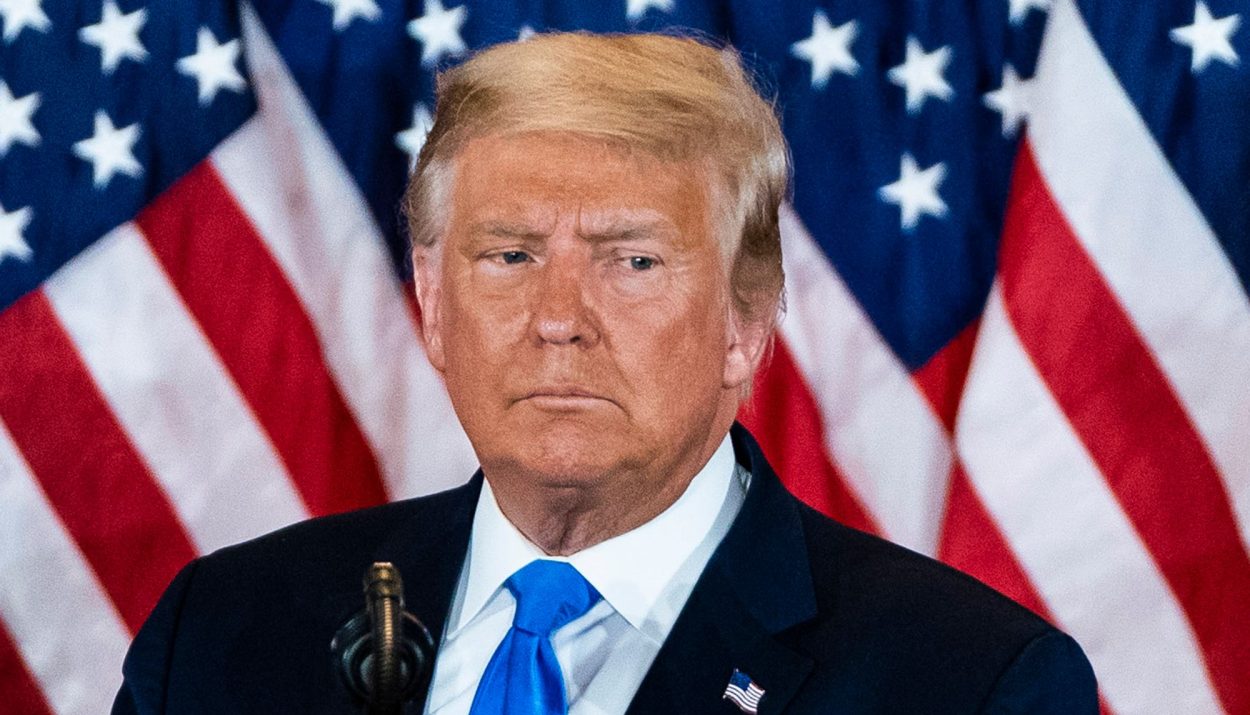

US President Donald Trump is expanding his reach on the world stage in ways that blur the line between national interest and personal ambition — transforming his trademark “America First” doctrine into what critics are calling “Trump First.”
In recent days, Trump has threatened to disarm Hamas if it refuses to surrender its weapons, boasted of US strikes on Venezuelan targets, and hinted at a $20 billion bailout for Argentina — a move widely seen as an attempt to boost his ally, President Javier Milei, ahead of local elections.
The offers, threats, and pronouncements come amid a domestic government shutdown, where Trump claims to have dismissed federal workers due to lack of funds. Yet he appears ready to pour billions into foreign ventures that align with his political and personal brand.
Trump’s foreign engagements suggest a president less interested in isolationism and more intent on exerting personalized power across the globe. While his “America First” slogan once implied retreat from global entanglements, his actions now show a willingness to deploy economic, political, and even military leverage in pursuit of influence.
Observers say the president’s worldview is increasingly shaped by his relationships with populist leaders such as Milei, Hungary’s Viktor Orbán, and Brazil’s Jair Bolsonaro, as well as his ambition for a Nobel Peace Prize and recognition as a global dealmaker.
Trump’s unpredictable approach — oscillating between hawkish intervention and nationalist protectionism — has unsettled allies and alarmed diplomats. During a meeting with Milei at the White House, Trump reportedly told reporters:
“If he wins, we’re staying with him. And if he doesn’t win, we’re gone.”
Critics argue that such statements reflect direct interference in foreign elections, reminiscent of the 2019 Ukraine scandal that led to his first impeachment.
Analysts note that Trump’s recent moves — from offering missile support to Ukraine to deploying force near Venezuela — reveal a pattern of impulsive hard power designed to project dominance rather than diplomacy.
Former State Department official Andrew Miller told CNN that Trump’s threats to intervene in Gaza contradict his long-standing vow to keep the US out of Middle East wars. “If we end up with US troops in Gaza, it will test the loyalty of his base,” Miller said.
Trump’s Argentina bailout proposal underscores a broader shift: his use of economic aid as political currency. The plan’s official justification — preventing regional economic contagion — has been overshadowed by Trump’s open endorsement of Milei’s populist agenda.
With China vying for South America’s lithium and copper markets, Trump’s “Make Argentina Great Again” slogan signals a renewed geopolitical contest in the Western Hemisphere — one that fuses nationalism with global opportunism.
From the Middle East to Latin America, Trump’s actions reflect a foreign policy that serves his image as much as his country’s interests. “America First,” once a rallying cry against global entanglement, is evolving into a campaign for personal power projection, where diplomacy and domestic politics collide.
As one diplomat put it: “Trump isn’t reshaping the world for America’s sake — he’s reshaping it for his own.”