
Israel has claimed responsibility for a dramatic airstrike on Hamas leaders in Doha, Qatar, in an operation that has shaken the Middle East and raised questions about U.S. involvement.
A joint statement from Prime Minister Benjamin Netanyahu and Defence Minister Israel Katz confirmed that Israeli security services were instructed to target Hamas leadership following the latest wave of violence, including last October’s unprecedented assault on Israel and a shooting in Jerusalem on Monday that left six people dead. According to the statement, Netanyahu and Katz gave the green light for the mission on Tuesday night, with the IDF and Shin Bet informed of operational details in advance.
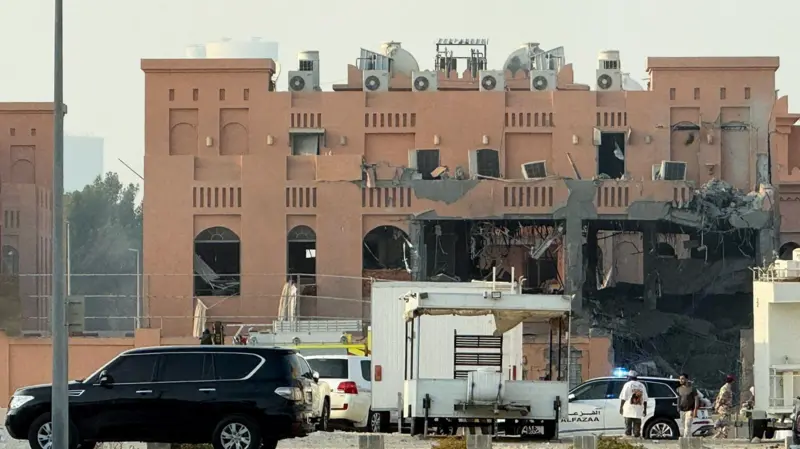
Reports from Doha described as many as eight separate explosions across a central residential district, sending plumes of smoke into the sky and leaving stunned residents scrambling for safety. Within minutes, Israel acknowledged responsibility. “Israel initiated it, conducted it and takes full responsibility,” Netanyahu posted on social media, calling it an independent Israeli operation. The move appeared to counter Israeli media reports suggesting Washington may have been informed and quietly approved.
Qatar reacted with fury, denouncing the strike as “reckless, cowardly and a blatant violation of international law.” The Qatari government said the attack deliberately endangered civilians in the capital, while regional powers including Turkey, Iran and the Arab League issued similar condemnations. UN Secretary-General António Guterres also weighed in, describing the strike as “a flagrant violation of the sovereignty and territorial integrity of Qatar.” He warned that it undermines ongoing ceasefire efforts, noting that Qatar has played a “very positive role” in mediation.
The United States has faced immediate scrutiny after a White House official confirmed Washington was “notified” of the strike beforehand, though President Trump’s administration has insisted Israel acted alone. With more than 10,000 American troops stationed in Qatar, critics are already questioning the risks of such a unilateral strike on the soil of a close U.S. ally. Press Secretary Karoline Leavitt is expected to brief reporters later today, with Trump himself scheduled to face questions during a televised event tonight.
The attack comes just two days after the Trump administration unveiled fresh proposals for a Gaza ceasefire. Analysts say Hamas leaders were likely meeting in Doha to discuss those plans when the strike hit. The fate of several senior officials—including Khaled Mashal, Khalil al-Hayya and Zaher Jabarin—remains unclear as reports from the ground continue to emerge.
Israel has a long history of targeting Hamas figures abroad. In 2010, Mossad operatives assassinated Mahmoud al-Mabhouh in a Dubai hotel, while a botched 1997 attempt in Jordan against Khaled Meshal nearly sparked a diplomatic crisis. But never before has such a high-profile strike been carried out inside Qatar, a Gulf state that plays a key mediating role in Middle East diplomacy.
For the second time this year, Doha has found itself drawn directly into the region’s violent fallout. In June, Iran fired missiles at a U.S. base near the capital in retaliation for an American strike. Now, Israel’s assault raises the stakes even further, threatening to derail ceasefire talks and inflame already fragile regional tensions.
As stunned residents of Doha recounted the blasts and the international community braced for the consequences, one reality was clear: the Gaza war, far from winding down, has spilled beyond borders once more—this time striking at the heart of a country long seen as a bridge for peace.