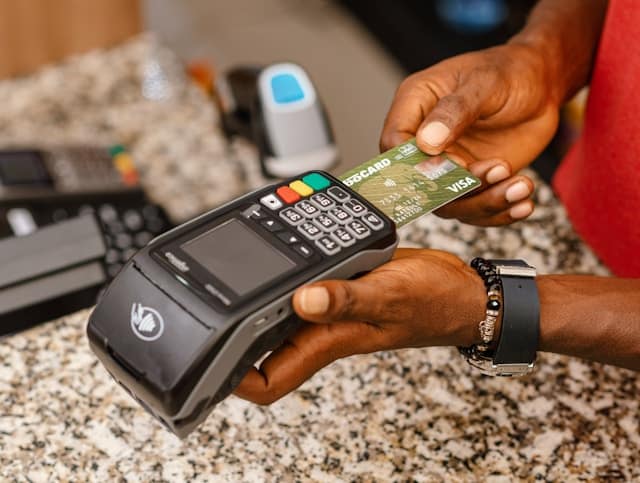

Nigeria’s booming Point-of-Sale (PoS) industry is set for a seismic shake-up as the Central Bank of Nigeria (CBN) has directed all operators — including Moniepoint, OPay, PalmPay, banks, and other fintechs — to geo-tag their PoS terminals within the next 60 days or risk losing access to the national payment system.
The directive, contained in a circular released on August 25, 2025, means every active PoS device in Nigeria — estimated at over 4.2 million — must now be digitally mapped with GPS coordinates tied to a registered business location. Any PoS found operating outside its designated 10-metre radius will be automatically shut down.
According to the apex bank, the move is designed to curb fraud, eliminate cloned or “ghost” terminals, and strengthen real-time monitoring of transactions. The system will be powered by a software development kit (SDK) connected to the National Central Switch, enabling regulators to track every PoS device across the country.
The CBN warned that any terminal not geo-tagged before the October 20, 2025 deadline will be deactivated. This applies to both new and existing machines. Newly deployed PoS devices must also be geo-tagged before activation, with Payment Terminal Service Providers (PTSPs) and mobile money operators bearing full responsibility for compliance across their networks.
Nigeria’s PoS industry has expanded at breakneck speed over the past five years. By 2023, there were 1.5 million registered PoS agents, roughly one agent for every 80 Nigerians, according to EFInA data. A Bloomberg report also estimated that Lagos alone has 1,600 PoS terminals per square kilometre, underscoring both the scale and risks of the sector.
This is not the first time the CBN has tightened regulations on the industry. In 2024, the apex bank mandated that all PoS operators register their businesses with the Corporate Affairs Commission (CAC), while insisting that transactions be routed exclusively through licensed Payment Terminal Service Aggregators (PTSA) for transparency.
Analysts say the latest geo-tagging policy reflects the CBN’s determination to rein in the chaotic growth of Nigeria’s PoS ecosystem, which, while boosting financial inclusion, has also fueled rising cases of fraud, money laundering, and untraceable transactions. For millions of small merchants and operators, the next two months could prove decisive — comply or shut down.