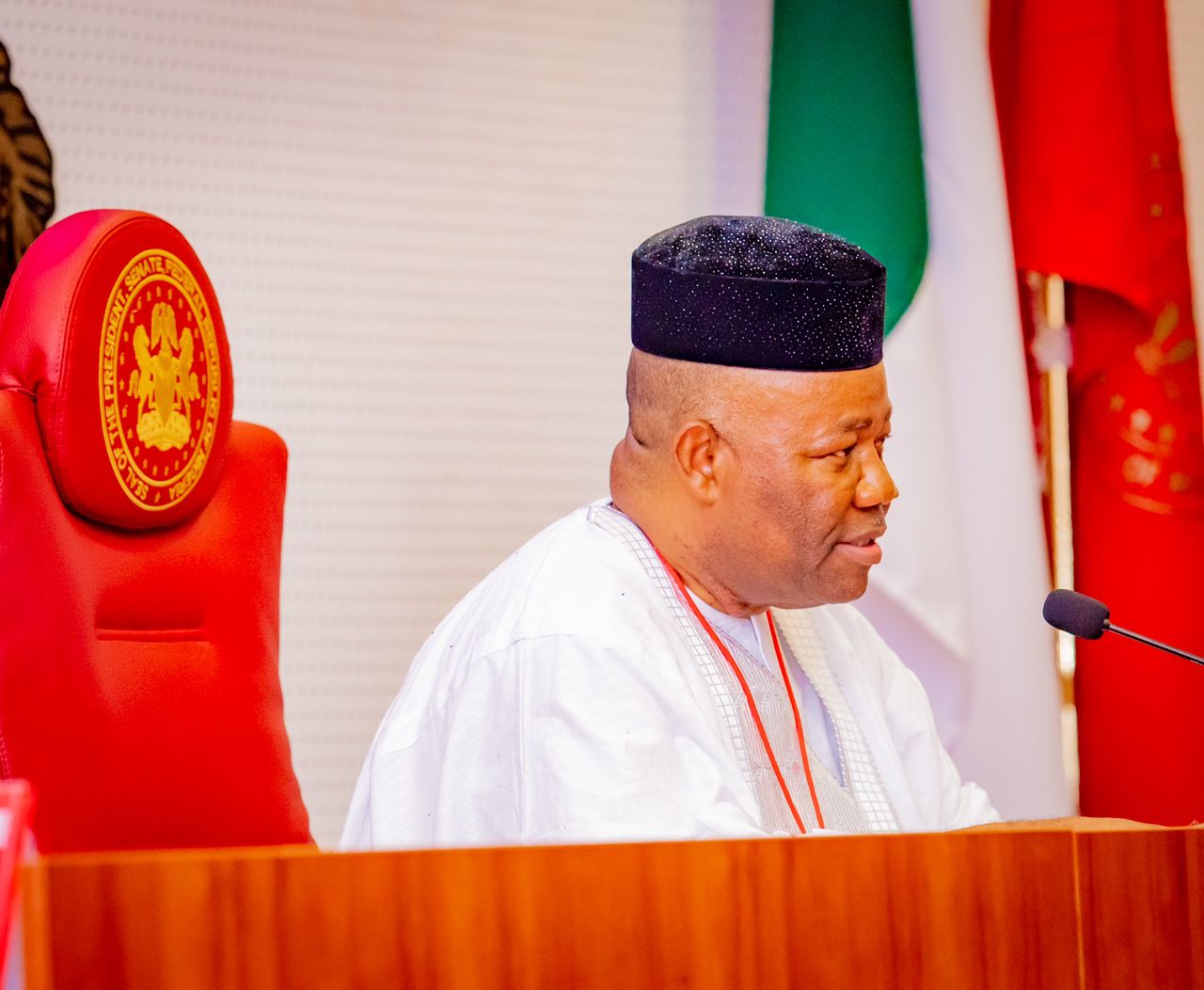

Senate President Godswill Akpabio has declared that members of the Nigerian Senate are not in office to accumulate wealth but to make critical sacrifices for the prosperity of unborn generations. He made this statement during a plenary session on Wednesday, July 10, in Abuja, amid growing public concern over the rising cost of governance and lawmakers’ privileges.
Addressing critics who often accuse legislators of prioritizing personal gain, Akpabio emphasized that the role of the National Assembly is often misunderstood. According to him, senators work under immense pressure and scrutiny, often making personal and political sacrifices that are never fully appreciated by the public.
Akpabio stated, “This is not a profit-making venture. We are not in the Senate to make money. We are here to sacrifice comfort, time, and even popularity to shape policies that will impact generations yet unborn. That is the weight of public service.”
The Senate President’s remarks come amid public debates over budget allocations for the legislature, including controversies around allowances and the cost of running both chambers of the National Assembly. Recent data shows that the National Assembly’s 2024 budget was pegged at ₦344 billion—sparking backlash from civil society and youth-led movements.
Despite the criticism, Akpabio insists that public perceptions are often fueled by misinformation and that many Nigerians do not grasp the legislative workload and oversight responsibilities handled daily. He added that transparency measures were being introduced to make Senate proceedings more accessible and accountable to Nigerians.
The Senate under Akpabio has passed over 30 bills in the past year, including major reforms on electoral integrity, digital economy, and oil sector transparency. The Senate President noted that lawmakers must look beyond applause and focus on legislative legacies.
Akpabio concluded by urging citizens to participate actively in governance through civic education and constructive engagement, rather than resorting to cynicism. “History will judge us not by allowances, but by the future we helped build.”