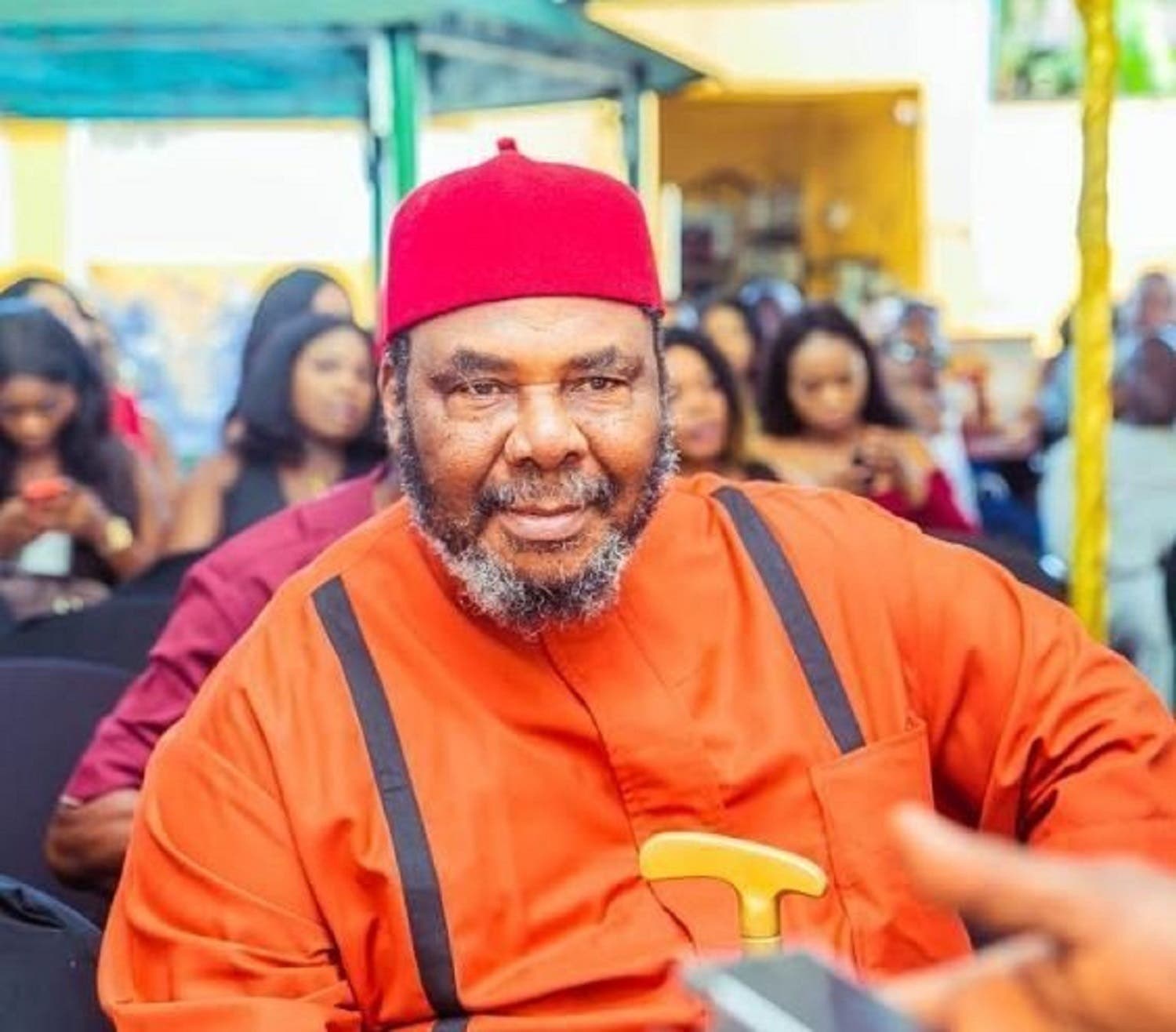

Nollywood legend Pete Edochie has stirred strong reactions with a bold claim that Igbo men are not wired for politics, arguing that their cultural values reject the type of betrayal often tolerated in the political arena. The revered actor, speaking in an exclusive interview with Afia TV on July 23, 2025, described the average Igbo politician as someone who cannot endure repeated political deceit—a trait he believes has hindered their success in Nigeria’s cutthroat political landscape.
Edochie, who is widely respected across Nigeria and beyond for his deep cultural insight and philosophical takes, noted that many Igbo leaders often sever ties permanently after experiencing political betrayal. According to him, this pattern has repeatedly disrupted long-term strategic alliances and left the region politically fragmented.
“The Igbo man is not constituted to condone treachery twice,” he said. “Once you deceive him politically, that’s it—he walks away. And that’s not how long games are played in Nigerian politics.” He further explained that political survival in Nigeria often requires tolerance, maneuvering, and sometimes re-engagement with former foes—traits that do not sit well with the cultural pride of most Igbos.
The comments have generated heated responses online, with some agreeing that the Igbo political class lacks cohesion and others accusing Edochie of reinforcing a divisive stereotype. Political analysts say the remarks raise a deeper issue about trust, forgiveness, and the inability of some ethnic blocs to form lasting political coalitions.
Historically, the Southeast has struggled to produce a national consensus candidate, often fractured by internal rivalries and mistrust. Edochie’s critics, however, argue that political marginalization is more systemic than cultural, citing past political efforts like the Biafran war, the rise of Igbo presidential candidates, and the consistent demand for restructuring.
Supporters of Edochie argue that his comments are not meant to shame the region but to provoke introspection. “What he said reflects why we don’t see long-term strategy in Igbo politics,” said a user on Threads. “We burn bridges too quickly and lose opportunities.”
The Afia TV interview clip has since gone viral, drawing massive engagement across X (formerly Twitter), Facebook, and Instagram, reigniting debates on ethnic politics, unity, and leadership in Nigeria.