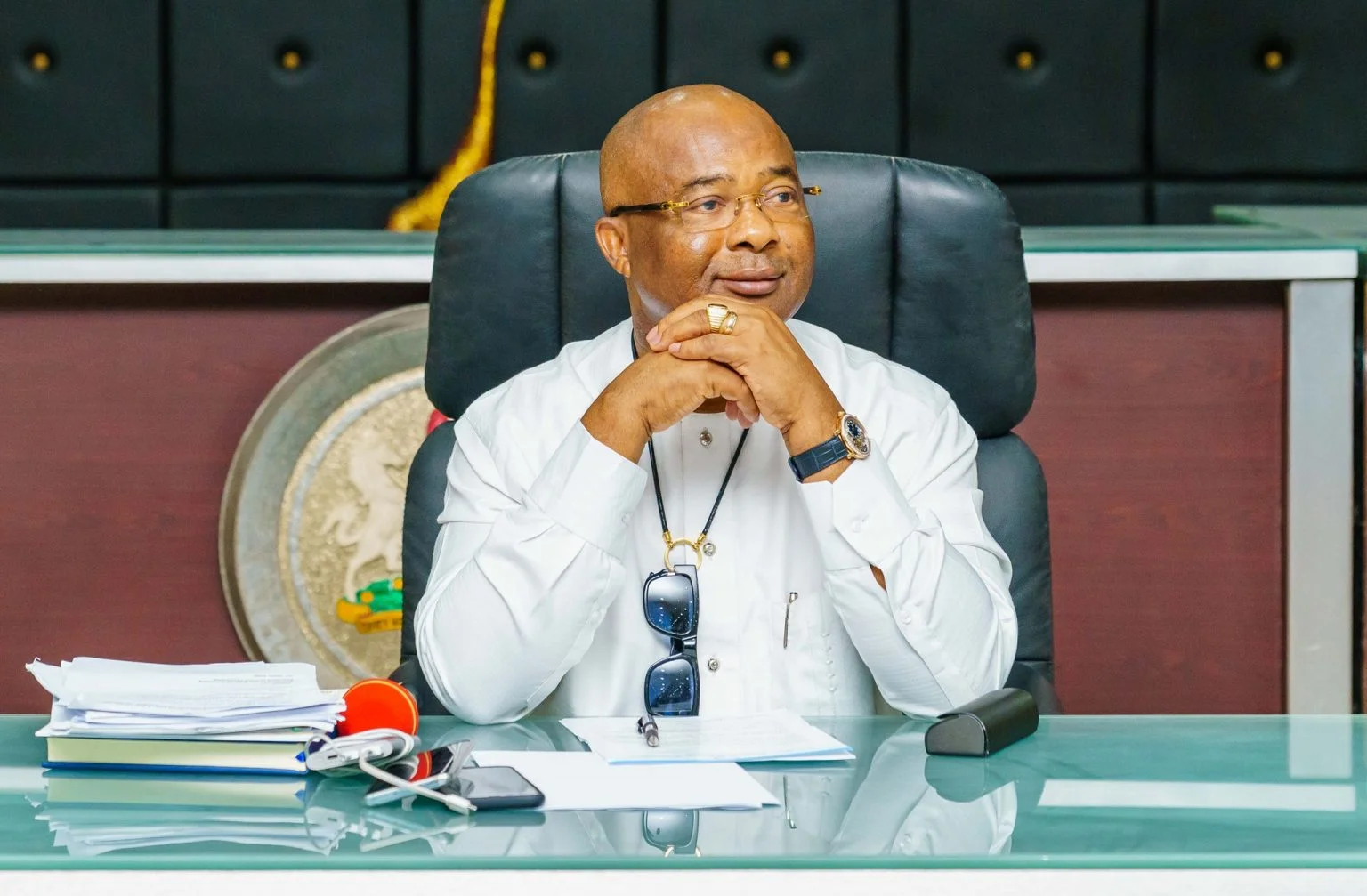

A constitutional crisis is brewing in Imo State as legal practitioner Victor Nwadike has taken Governor Hope Uzodimma to court for defying the National Judicial Council’s (NJC) directive on the appointment of an acting Chief Judge. The suit, filed on July 2 at the Federal High Court in Abuja, demands an immediate reversal of Uzodimma’s appointment of Justice Theophilus Nzeukwu, urging the court to compel the governor to appoint the most senior judge of the Imo High Court in line with Section 271(4) of the 1999 Constitution.
Tension escalated after Governor Uzodimma bypassed the top three most senior judges in April and handpicked Nzeukwu for the position, a move the NJC deemed unconstitutional. In a strongly worded response dated April 30, the NJC not only rejected the appointment but reminded the governor that the law leaves no room for discretion in such matters. The Council also issued a query to Nzeukwu for accepting the appointment and subsequently recommended his compulsory retirement in June.
Appearing before Justice Mohammed Umar on Wednesday, July 16, Nwadike requested leave to initiate a judicial review via an order of mandamus, a legal mechanism designed to compel a public official to perform a statutory duty. He argued that the NJC had clearly stated its position and that Uzodimma’s continued refusal to comply undermines constitutional authority and judicial independence.
Judge Umar raised questions on the issue of jurisdiction, particularly concerning the inclusion of the NJC as a respondent in the suit. Nwadike maintained that the NJC was joined due to its critical role and constitutional standing in the appointment process. The judge subsequently adjourned the case to September 22, 2025, and instructed the lawyer to address the jurisdictional concerns in the next hearing.
The NJC’s firm stance has become a rallying point for legal experts and civil society groups advocating for respect for constitutional provisions. Observers have warned that Uzodimma’s defiance, if unchecked, could set a dangerous precedent for executive overreach into the judiciary—threatening the principle of separation of powers.
Legal commentators have described the case as a landmark moment that will test the judiciary’s ability to defend its independence. They argue that if the court rules in favor of the governor, it may embolden similar breaches across other states, effectively weakening one of the pillars of democracy.
Public sentiment is shifting as Nigerians increasingly demand transparency and constitutional fidelity from public officials. Should the court grant the order of mandamus, it will not only restore credibility to the judiciary in Imo but also send a strong message that constitutional violations by any arm of government will not go unchallenged.