
Middle Belt Delegation’s Visit to Tinubu Sparks Religious Representation Controversy
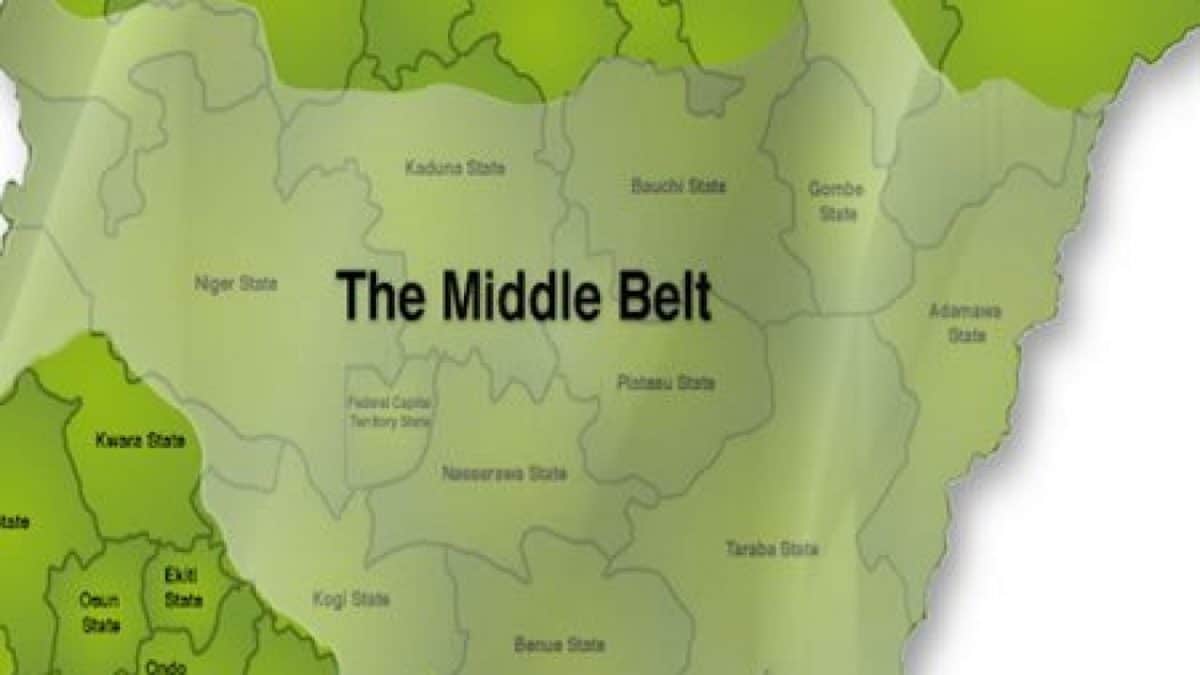
Concerns have emerged over the religious and political composition of a delegation of Middle Belt leaders who met President Bola Tinubu in Abuja, with critics questioning whether the group adequately represented the region’s diverse communities.
The controversy centres on the absence of Muslim representatives and the exclusion of several prominent political figures from the region, including former and serving governors, National Assembly members and retired public officials.
The delegation was led by former Defence Minister, General Theophilus Danjuma, and included Plateau State Governor Caleb Mutfwang, Taraba State Governor Agbu Kefas, former House of Representatives Speaker Yakubu Dogara, former Chief of Army Staff General Ishaya Bamaiyi, Defence Minister General Christopher Musa, businessman Thomas Etuh and President of the Middle Belt Forum, Dr Poju Bitrus.
The meeting reportedly focused on the region’s political alignment ahead of the 2027 general election. Several members of the delegation have openly expressed support for Tinubu’s re-election.
The development has raised questions about whether the delegation represented the wider Middle Belt or a particular political and religious interest within the region.
Middle Belt Forum distances itself from selection process
A source within the Middle Belt Forum said the delegation was personally selected by Danjuma and that the forum did not participate in choosing those who attended the meeting.
The forum’s spokesperson, Luka Binniyat, confirmed that its president, Bitrus Pogu, was invited to join the delegation but was not involved in selecting its members.
Binniyat said Danjuma, who chairs the forum’s board of trustees, had his own circle of trusted associates.
He acknowledged the absence of Muslims from the delegation but stressed that Muslims remained an integral part of the organisation, citing its national vice-president, Al-Hajji Idi Waziri, and women’s leader, Hajja Amina Saidu, as examples.
According to him, Pogu was informed about the meeting only a few hours before it took place.
Binniyat also argued that a delegation seeking to represent every ethnic group in the Middle Belt would require hundreds of participants, making such a meeting difficult to organise.
He maintained that the delegation presented a charter of demands covering the interests of the region’s ethnic nationalities, including insecurity, the rising cost of living and declining agricultural production.
He added that the group urged Tinubu to restructure Nigeria in line with the recommendations of the 2014 National Conference.
Danjuma backs Tinubu’s re-election
Danjuma has also publicly called on Nigerians to support Tinubu’s re-election, arguing that another term would allow the President to consolidate projects and programmes already initiated by his administration.
He made the appeal at the 20th anniversary and fundraising ceremony of the Adamawa State Government House chapel in Yola, where he was represented by Bamaiyi.
Danjuma reportedly argued that Tinubu’s first term would not be sufficient to complete programmes he considered beneficial to Nigerians.
He also cited the appointment of Christians to government positions as evidence of the President’s fairness and religious tolerance, urging Nigerians, particularly those in the Middle Belt, to support his return to office.
ACF questions the delegation’s inclusiveness
The Arewa Consultative Forum (ACF) said the meeting was within the rights of those involved but questioned whether the delegation was sufficiently broad-based, given the region’s ethnic and religious diversity.
The forum’s spokesperson, Professor Tukur Baba, said the composition appeared to reflect particular political and religious interests.
He warned that such engagements could raise concerns about the use of religious identity in political mobilisation ahead of the 2027 elections.
Baba, however, acknowledged that the issues reportedly presented to the President, including economic development, education, security, agriculture and infrastructure, were important to Nigerians regardless of their religious or ethnic backgrounds.
He also identified divisions among political elites as one of the challenges affecting national development.
JIBWIS describes visit as divisive
The Jama’atu Izalatil Bid’a Wa’ikamatis Sunnah (JIBWIS) also criticised the delegation’s composition, describing the visit as potentially divisive.
Its National Publicity Secretary, Sheikh Ahmad Ashir, said the North-Central region comprises both Muslims and Christians and questioned why Muslim leaders were absent if the delegation presented itself as representing the entire region.
Ashir said the region’s political and development interests should be pursued through inclusive engagement rather than arrangements that could deepen religious divisions.
Analyst warns of political consequences
Political analyst and Bayero University Kano lecturer, Dr Sa’idu Ahmad Dukawa, said the implications of the meeting would depend on how the delegation presented itself to the President.
He argued that there would be nothing inherently wrong with a group of Christian leaders from the Middle Belt meeting Tinubu, provided they did not claim to represent the entire region.
However, he warned that presenting an exclusively Christian delegation as the voice of the wider Middle Belt could create suspicion and intensify religious tensions.
Dukawa recalled the controversy surrounding the Muslim-Muslim presidential ticket in the 2023 election, arguing that religious considerations influenced political mobilisation and voting patterns.
He cautioned that Tinubu could face political consequences if he is perceived as identifying exclusively with one religious bloc ahead of the 2027 election.
According to the analyst, religious organisations and groups have the right to engage political leaders, but broader representation becomes important when a delegation claims to speak for a religiously and ethnically diverse population.
He warned that similar developments could deepen divisions within the North and across Nigeria, stressing the need for political engagement that promotes national unity.
The controversy comes after a Convocation of Middle Belt Nations held in Kafanchan, Kaduna State, from October 15 to 17, 2026. Participants at the gathering called for regional restructuring, additional states, improved security, stronger political representation and greater accountability from elected officials.
They also urged political parties seeking support ahead of the 2027 elections to present clear programmes addressing insecurity, education, healthcare, infrastructure and economic development.