
Obasanjo Urges Action on Insecurity, Unemployment and Poverty, Blames Leadership Failures
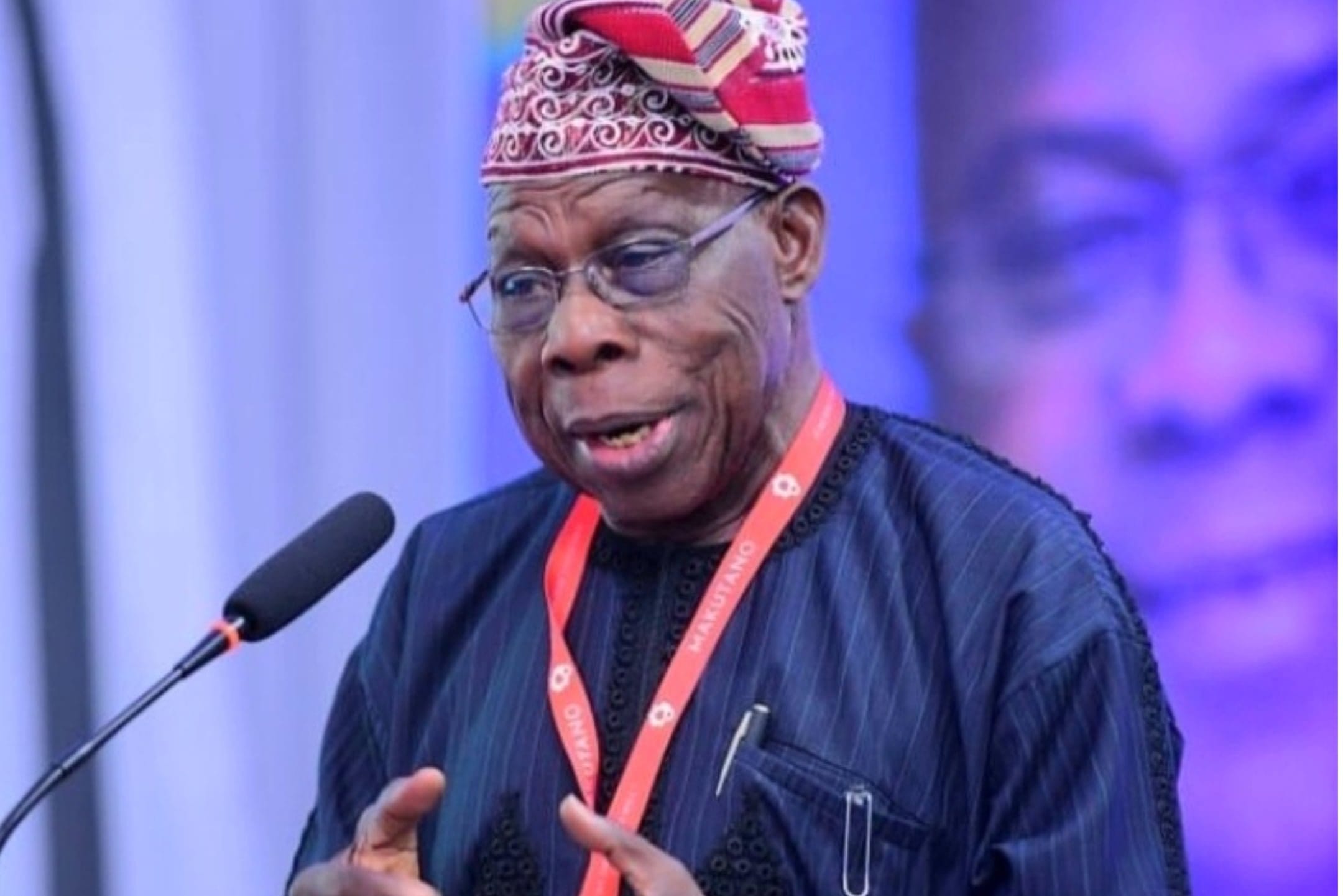
Former President Olusegun Obasanjo has called for urgent action to tackle insecurity, unemployment and poverty in Nigeria, warning that leadership failures are pushing citizens to seek opportunities abroad through increasingly dangerous migration routes.
Obasanjo spoke during a panel session titled “Lest We Forget” at the Creative Africa Nexus Weekend 2026, organised by the African Export-Import Bank in Lagos State.
Reflecting on Nigeria’s security situation since independence, the former president said the country must address the governance failures contributing to declining public safety, limited economic opportunities and rising hardship.
“We just have to do what we should do to provide job opportunities, to stem the tide of impunity, to stem the tide of poverty, to stem the tide of kidnapping and insecurity,” he said.
Obasanjo recalled returning to Nigeria in 1959 after completing his military training in Britain. He said he could travel freely across the country, including the northern region where he was posted, without fearing attacks or kidnapping.
“I came back to this country after my commission as an officer in Britain in 1959. And I could go anywhere; I was posted to the north; I could go anywhere in the north, by myself alone, by day, by night,” he recalled.
Comparing that experience with the current security situation, Obasanjo questioned how the country had deteriorated to the point where travelling safely across several parts of Nigeria had become a concern.
“Now, if you can’t do that, what has gone wrong? We have to correct what has gone wrong,” he said.
The former president also identified unemployment, particularly among university graduates, as a major contributor to economic frustration and the growing desire among young Africans to leave the continent.
He argued that governments cannot continue producing graduates without creating sufficient employment opportunities and expect them to remain economically productive.
Obasanjo illustrated the consequences of economic hardship by recalling an encounter with Nigerians arrested over drug-related offences. He said one of the suspects attributed his involvement in illegal activities to losing legitimate employment.
He maintained that while economic hardship could explain the desperation behind some decisions, it did not justify criminal conduct.
On irregular migration, Obasanjo described the experiences of Africans attempting to reach Europe through the Sahara Desert and the Mediterranean Sea as distressing, noting that some die during the journeys.
“I have got those people who have attempted to cross, and the story they told me is pathetic. Some die in the Sahara, some die in the Mediterranean,” he said.
He argued that improved leadership and greater economic opportunities would reduce the pressure on Africans to undertake dangerous journeys in search of better living conditions.
“We have to improve on our leadership to deliver, and once our leadership delivers, what does any man want in the world?” he asked.
“But if they have nothing here, they will look for whatever they can get anywhere else, and you can’t blame them.”
Obasanjo also placed substantial responsibility for Africa’s development challenges on its political leaders, arguing that poor leadership has prevented the continent from reaching its potential.
“Africa is not where it should be, and that Africa is not where it should be is substantially the responsibility of our leaders. It’s as simple as that,” he declared.
Beyond Nigeria’s domestic challenges, the former president advocated greater freedom of movement across Africa. He disclosed discussions with Ghanaian President John Mahama on a proposal to eliminate visa requirements among approximately 25 African countries.
According to Obasanjo, the initiative would initially involve countries that already operate visa-on-arrival arrangements, with the possibility of expanding the framework across the continent.
“These countries should eliminate visas among themselves, about 25 of them, and if they are able to do it successfully, then maybe in a matter of a few years, the whole of Africa will be able to move,” he said.
He also criticised the limited recognition of the African passport and urged governments across the continent to grant citizenship to people of African descent who wish to return to Africa.
“I believe that all African states should have such a policy. That anybody from the diaspora who wants to be a national of any African country should automatically be given,” he said.
Obasanjo concluded by calling for greater unity among Africans and people of African descent worldwide, arguing that stronger leadership, expanded economic opportunities and deeper continental integration were necessary to address the challenges confronting the continent.