
FG MDAs Budget Nearly ₦400bn for Community Halls, Palaces, Mosques and Market Projects in 2026
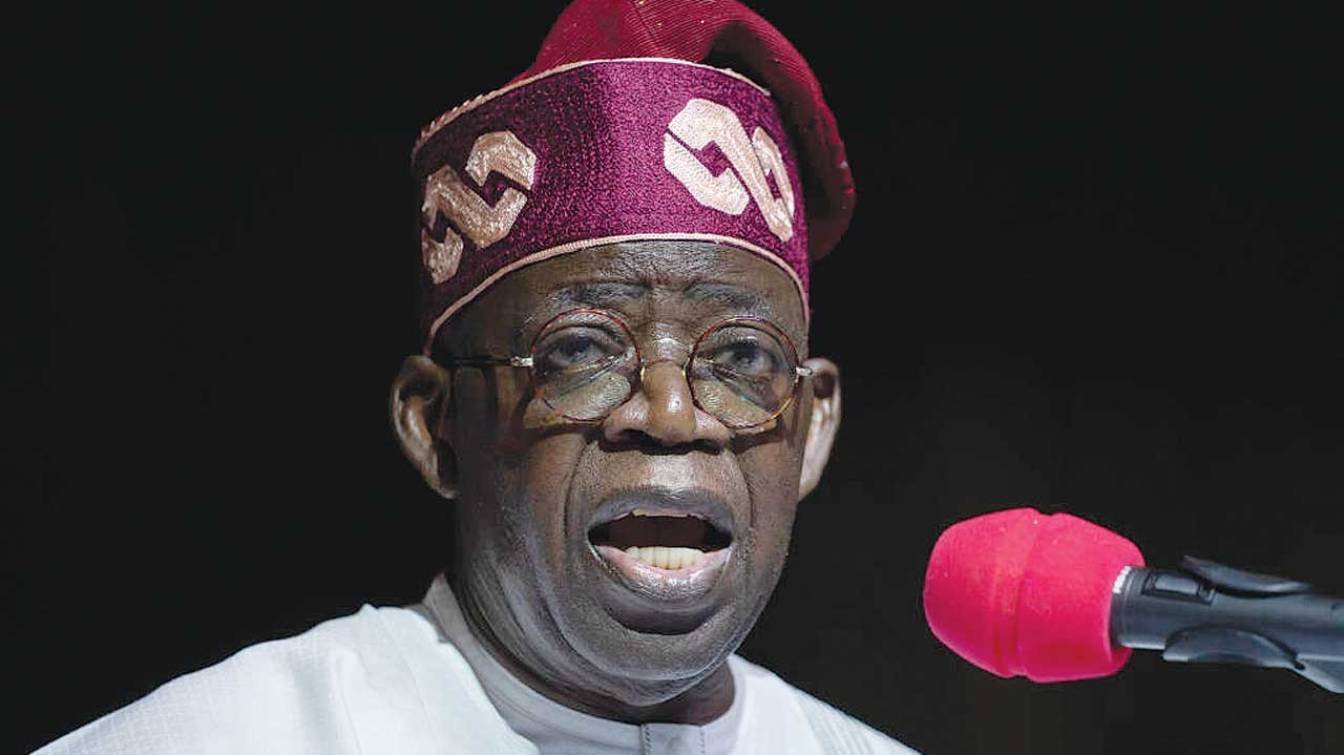
Nearly 78 Ministries, Departments and Agencies (MDAs) of the Federal Government have collectively earmarked close to ₦400 billion in the 2026 budget for the construction and rehabilitation of community halls, traditional rulers’ palaces, mosques, village market squares and civic centres, according to an analysis of the approved budget.
The allocations have sparked fresh debate over government spending priorities, with economists and policy analysts questioning whether such projects should take precedence over critical sectors such as healthcare, education, security, electricity and road infrastructure amid Nigeria’s fiscal challenges.
A review of the budget indicates that more than half of the allocations are dedicated to projects widely considered non-developmental. These include the supply of grains, motorcycles and tricycles, sponsorship of community thrift societies, construction of museums and mini-stadia, and other constituency-style interventions spread across various federal agencies.
The projects are distributed across dozens of MDAs whose statutory mandates appear unrelated to many of the items in their budgets. Among the agencies identified are the Defence Headquarters, Nigerian Air Force, Nigerian Defence Academy, Technical Aid Corps, Federal Ministry of Information and National Orientation, Federal College of Land Resources, Owerri, National Building and Road Research Institute (NBRRI), National Productivity Centre and several research institutes.
One of the most notable examples is the National Building and Road Research Institute, whose 2026 budget reportedly includes the construction of village halls in Anambra State, an international market in Jigawa State, traditional rulers’ palaces in Rivers and Kogi states, market stalls in Borno State, a multipurpose hall in Kaduna State and the renovation of mosques in Kebbi, Ekiti and Jigawa states. The projects are estimated to cost more than ₦4 billion.
Similarly, the National Productivity Centre is budgeted to fund projects including support for Ijaw musicians, the construction of an Emir’s palace in Yobe State, an econometrics laboratory in Ekiti State, traditional rulers’ palaces in Ogun State and an abattoir in Gombe State.
The National Mathematical Centre, Nigeria’s leading institution for mathematical research and training, also attracted attention after allocating funds for the construction of a Sociology Department building at Ahmadu Bello University, Zaria—an item critics argue falls outside the agency’s core mandate.
Economic experts say the proliferation of such projects weakens fiscal discipline and diverts scarce public funds from strategic national investments capable of delivering broader economic and social benefits. They also argue that many of the projects traditionally fall within the responsibilities of state and local governments rather than federal agencies.
Consultant economist and former central banker Chukwunonso Ihuma blamed the National Assembly for many of the questionable insertions, alleging that lawmakers often increase budgets submitted by MDAs and include projects with little connection to the agencies’ statutory responsibilities.
He called for a return to zero-based budgeting, where every expenditure must be justified from scratch rather than carried over from previous budgets. According to him, the Budget Office should be empowered to reject projects that do not align with national priorities or the mandates of government agencies.
The controversy comes as Nigeria continues implementing aspects of the 2025 Appropriation Act following multiple extensions. While President Bola Tinubu signed the ₦68.32 trillion 2026 Appropriation Bill into law in April, the Senate later approved an extension of the capital component of the 2025 budget until September 30, 2026, to allow ongoing projects to be completed.
Analysts have also questioned the assumptions underpinning the 2026 budget, including projected revenues of ₦36.87 trillion, an oil benchmark price of $75 per barrel, oil production of 1.84 million barrels per day, and debt servicing obligations estimated at ₦15.81 trillion. They warn that unrealistic projections, combined with spending on low-impact projects, could further strain public finances and reduce confidence in the budgeting process.