
China has pushed back against US criticism of its proposed trade agreement with Canada, insisting the deal is not directed at Washington, after the United States warned it could impose sweeping 100-percent tariffs on Canadian goods if the pact is finalised.
Beijing made the clarification on Monday following sharp remarks from US officials, who accused the agreement of potentially allowing China to “dump” goods into North America through Canada.
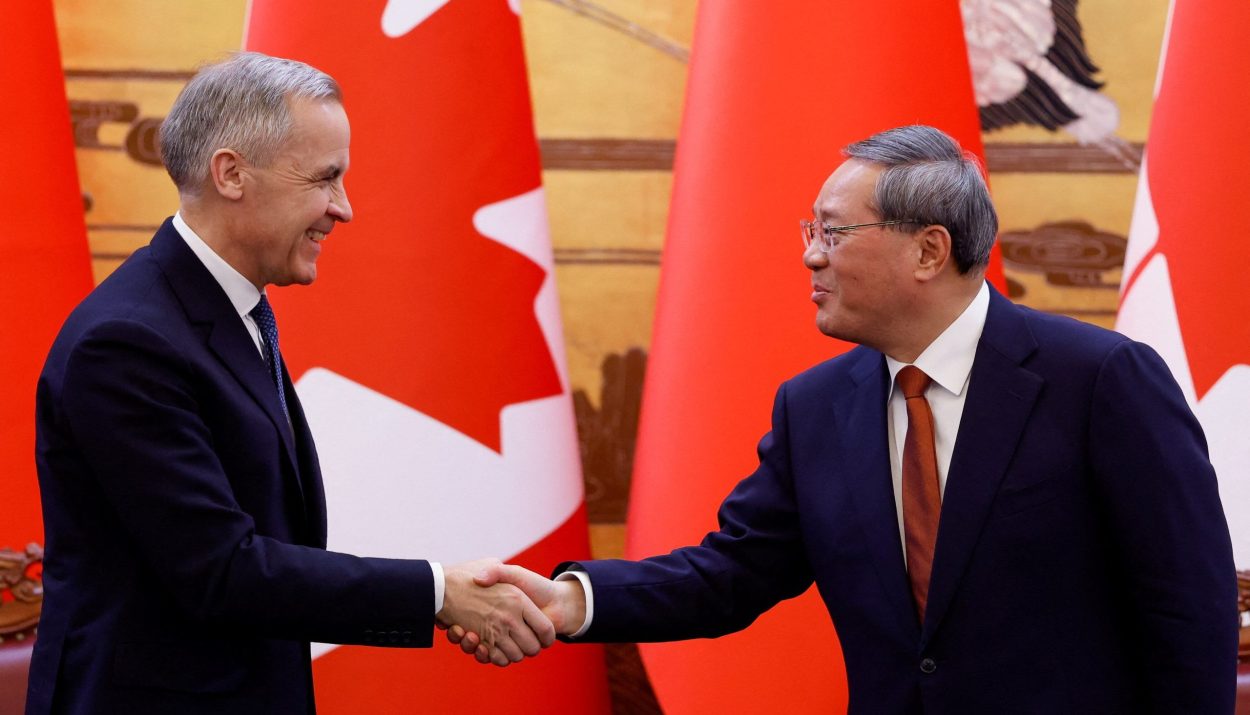
Under the preliminary deal, announced earlier this month, China is expected to cut tariffs on Canadian canola imports while also extending visa-free travel privileges to Canadian citizens.
However, the agreement has triggered strong reactions from the United States, Canada’s long-standing ally. Over the weekend, Washington warned it would respond with punitive tariffs if the deal goes ahead, arguing it could undermine US trade interests.
China’s Foreign Ministry spokesman, Guo Jiakun, dismissed those concerns, stressing that the agreement was not aimed at any third country.
“China and Canada have established a new type of strategic partnership. It does not target any third party,” Guo said during a regular press briefing in Beijing.
He added that China favours cooperation over confrontation, saying international relations should be guided by “a win-win rather than a zero-sum mindset.”
The trade arrangement was unveiled during Canadian Prime Minister Mark Carney’s visit to Beijing this month, a move widely seen as part of efforts to recalibrate Canada’s foreign and economic ties amid growing uncertainty in its relationship with the United States under President Donald Trump.
Canada and the US have remained locked in a tense trade dispute since the Trump administration imposed import duties on Canadian products, straining bilateral relations.
On Sunday, President Trump escalated the rhetoric, claiming on social media that talks between Ottawa and Beijing amounted to China “successfully and completely taking over the once Great Country of Canada.”
Echoing the president’s concerns, US Treasury Secretary Scott Bessent later told American media that Washington could not allow Canada to become “an opening that the Chinese pour their cheap goods into the US.”
The standoff highlights deepening global trade tensions, as major economies reposition alliances and economic strategies in an increasingly fragmented global market.