Niger State Commissioner for Environment and Climate Change, Hon. Yakubu Kolo, has urged the Federal Government and development partners to make climate financing under Nigeria’s Nationally Determined Contributions (NDC 3.0) practical and directly accessible to states, warning that subnationals are the frontline actors in both design and implementation.
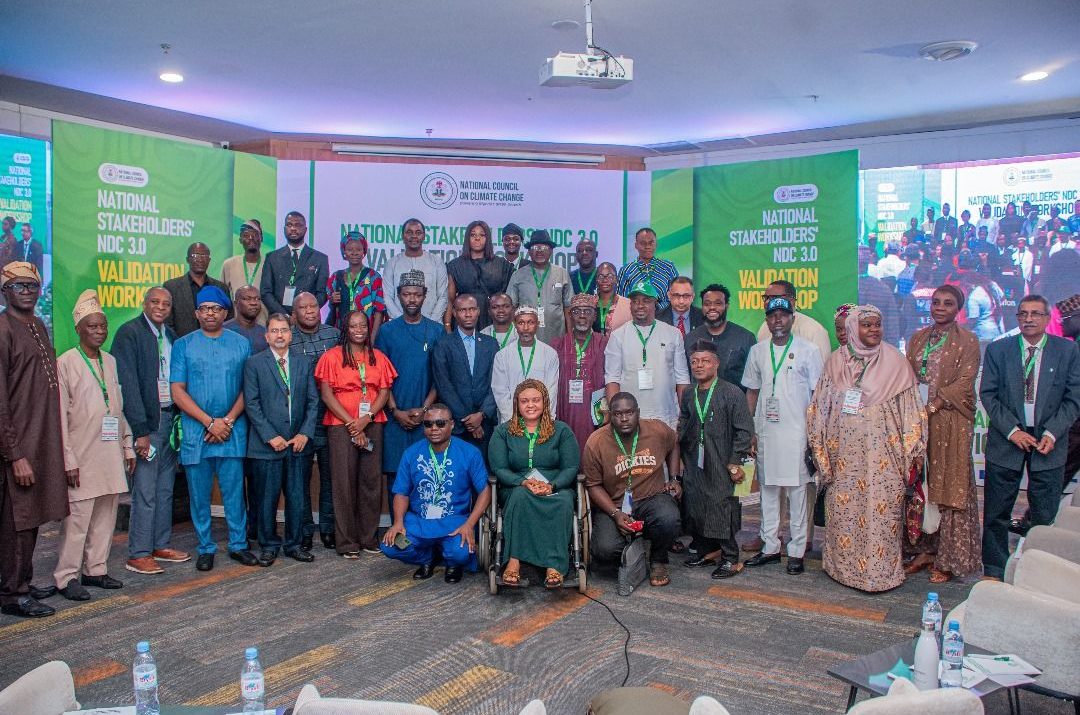
Kolo made the call on August 27, 2025, at the National Stakeholders’ NDC 3.0 Validation Workshop in Abuja, organised by the National Council on Climate Change (NCCC) with participation from the UNDP, AfDB, UNICEF, GIZ, UN Women, ILO, FCDO, civil society groups, youth, and private sector players. The workshop reviewed Nigeria’s draft NDC 3.0 ahead of its planned submission to the UNFCCC in September.
While commending the participatory process that enabled states to contribute, Kolo cautioned against tokenism. “States were given the opportunity to provide input, which we gladly participated in. But it must go beyond the rituals of collecting input without reflecting them in the final document,” he warned, stressing that credibility depends on how much state-level realities shape the final text.
He emphasised that the new NDC must set clear, ambitious, and implementable targets that strengthen adaptation measures and create transparent financing channels that state governments can access without bottlenecks. “Ambition must align with implementation. Targets should not only look impressive on paper but must deliver resilience in our communities,” he said.
Kolo argued that financing remains the Achilles’ heel of Nigeria’s climate response. Despite bold pledges in NDC 2.0, several states struggled to access funding due to technical requirements and bureaucratic hurdles. With less than a month to the UN deadline, he said the credibility of NDC 3.0 will rest on whether it empowers states with practical tools to translate climate policy into real projects on the ground.
Speaking on behalf of subnational governments, the commissioner declared that states must be placed at the centre of implementation. “Our communities face the floods, the droughts, the displacements. Anything less than an ambitious, inclusive, and state-driven NDC would betray our people’s yearnings and squander Nigeria’s chance to lead Africa toward a climate-resilient future,” he stated.
The validation session ended with consensus that Nigeria’s NDC 3.0 must balance ambition, inclusivity, and financing clarity, ensuring that the billions pledged for climate action do not remain trapped at the federal or donor level but flow directly to states, communities, and grassroots actors who bear the brunt of climate change impacts.