
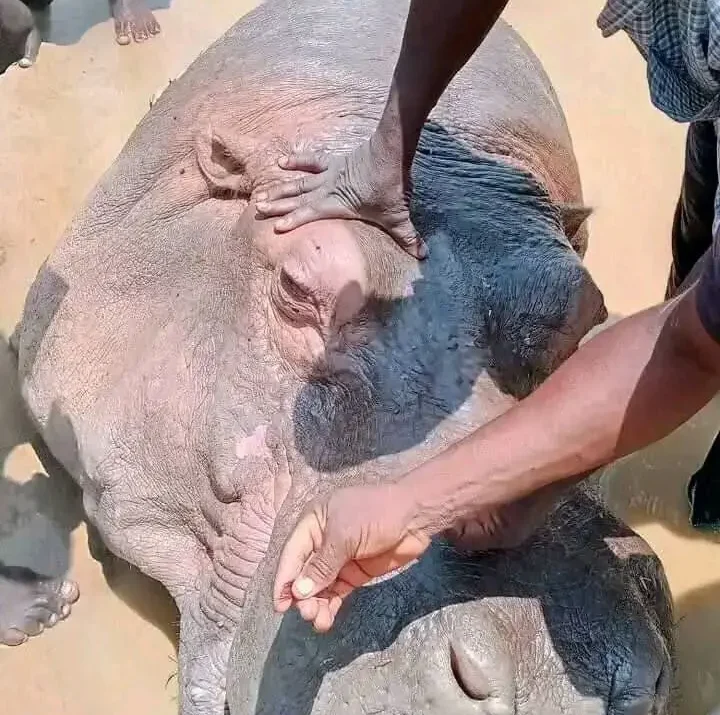
Fear gripped communities in southern Adamawa State after a rogue hippopotamus killed a young man in Banjiram village, Guyuk Local Government Area, before straying into Shelleng LGA where it was eventually captured by local youths. The deadly encounter occurred on Sunday, July 28, 2025, triggering panic across the flood-ravaged region.
The animal, believed to have been displaced from its natural habitat near the Kiri Dam in Shelleng, wandered into nearby settlements after days of torrential rain caused rivers to overflow, displacing both residents and wildlife. The deadly intrusion disrupted community life and exposed the urgent ecological imbalance caused by flooding.
Eyewitnesses reported that the young man who was killed had gone to fetch water from a flooded area when the hippo attacked. His remains were recovered after villagers heard distress calls and rushed to the scene, only to find the lifeless body and the massive beast still lurking.
Security volunteers and hunters from Shelleng were mobilized after repeated sightings and reports of the hippo near residential areas. Working under high risk and with support from alarmed residents, the team managed to subdue and capture the creature on Monday evening, preventing further casualties.
Locals described the operation as dangerous and heroic, with many insisting the state government must act swiftly to mitigate further conflict between humans and displaced wildlife. Community leaders are now calling for urgent environmental assessments and relocation of vulnerable animal populations near flood-prone zones.
Experts say hippopotamuses, though herbivorous, are among the most dangerous animals in Africa due to their territorial aggression and speed, especially when stressed or removed from familiar ecosystems. Wildlife authorities in Adamawa have yet to issue an official statement regarding the animal’s fate or plans to prevent recurrence.
As flooding continues to destabilize ecosystems across Nigeria’s riverine regions, this latest tragedy highlights the growing threat posed by climate-induced displacement—not just to people, but to wildlife pushed into survival-mode conflict with humans.