
Delta Prosecutes Over 15 Human Trafficking Cases Under New State Law
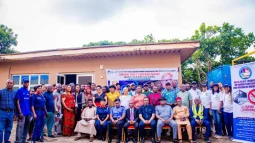
The Delta State Government says it is prosecuting more than 15 human trafficking cases before the state High Court as part of efforts to combat exploitation, illegal migration and fraudulent overseas employment schemes.
The state Attorney-General and Commissioner for Justice, Ekemejero Ohwovoriole, disclosed this on Thursday during a sensitisation programme on human trafficking, smuggling and irregular migration in Agbor, Ika South Local Government Area.
Ohwovoriole, who chairs the Delta State Task Force Against Human Trafficking and Irregular Migration, said the Department of Public Prosecutions was handling the cases under the Delta State Human Trafficking (Prohibition) Law, 2024.
He explained that the law, signed by Governor Sheriff Oborevwori, was introduced to strengthen the state’s response to human trafficking and provide a legal framework for prosecuting offenders.
The Attorney-General added that the National Agency for the Prohibition of Trafficking in Persons (NAPTIP) was also pursuing trafficking-related cases before the Federal High Courts in the state.
“The state government remains committed to ensuring that anyone involved in human trafficking and related offences faces the full weight of the law,” he said.
Ohwovoriole warned that traffickers were increasingly exploiting social media platforms, fraudulent job advertisements and promises of lucrative employment abroad to lure unsuspecting Nigerians.
He said security agencies, the judiciary and other relevant institutions were working together to dismantle trafficking networks, prosecute suspects and rescue victims.
However, he stressed that government interventions alone would not be enough without the cooperation of residents and community leaders. He urged the public to verify overseas employment offers and report suspected trafficking activities to the appropriate authorities.
Speaking through the NAPTIP Zonal Commander, Stephen Selowo, the agency’s representative, Sam Offiah, described human trafficking as a growing global crime requiring coordinated action.
Offiah warned that educated young Nigerians and others seeking better opportunities abroad were increasingly vulnerable to trafficking networks disguising their operations as legitimate recruitment agencies.
“Human trafficking is not only a moral crime but a growing global business that feeds on desperation,” he said.
He also cautioned that the popular expression “Japa” could conceal the risks associated with unsafe migration when the desire to relocate made people vulnerable to fraudulent agents.
Offiah commended the Delta State Government for organising the awareness programme and encouraged other states to introduce similar initiatives to discourage human trafficking and irregular migration.
In a lecture at the event, the Secretary of the state task force, Ijeoma Nwanze, described human trafficking as modern-day slavery and called for a collective response to the crime.
She said the growing desire among Nigerians to seek better opportunities abroad had exposed many people to fraudulent migration agents and trafficking syndicates.
Nwanze explained that human trafficking could involve movement, exploitation, deception, coercion and the exchange of payments or benefits to gain control over victims.
She urged participants to take the information back to their communities and educate residents about the dangers of irregular migration and deceptive overseas job offers.
“Together, we can build a Delta where no dream is trafficked, and no ambition is enslaved,” she said.
Delta State has maintained an institutional response to human trafficking through its task force and Ministry of Justice.
The state inaugurated its Task Force Against Human Trafficking and Irregular Migration in March 2019, while the Ministry of Justice established an Anti-Human Trafficking Unit in October 2021 to coordinate awareness campaigns, investigations, prosecutions, victim support and collaboration among relevant agencies.
The 2024 law further provides a framework for preventing trafficking, protecting victims and prosecuting offenders.