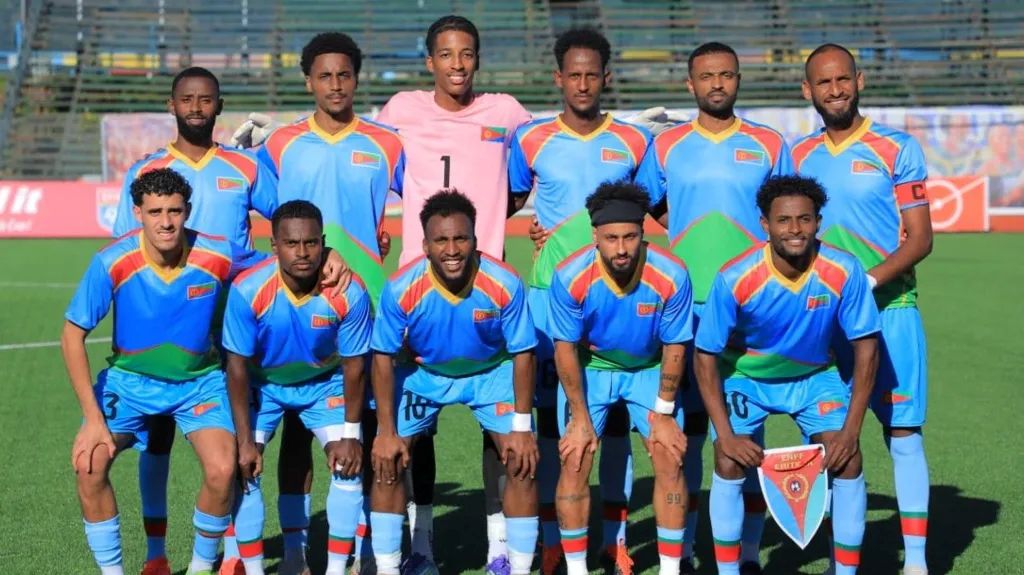

A historic victory has quickly turned into controversy after seven players from Eritrea’s national football team failed to return home following their win over Eswatini.
The players reportedly disappeared after travelling through South Africa, choosing not to board the return journey with the rest of the squad, according to sources close to the team.
Their absence comes just days after Eritrea secured a major milestone—a 2-1 win in Eswatini and a 4-1 aggregate result that sent them into the Africa Cup of Nations qualifying group stage for the first time in 19 years.
What should have been a moment of national celebration is now overshadowed by a familiar pattern.
Only 10 players in the 24-man squad were based in Eritrea, and just three of them— including captain Ablelom Teklezghi—have returned home so far, raising further concerns about the scale of the situation.
Reports suggest some of the missing players have been sighted in South Africa, although their exact whereabouts remain unclear.
Among those who reportedly absconded are goalkeeper Kubrom Solomon and experienced winger Medhanie Redie—key figures in the team’s recent success.
The Eritrean government has not issued an official statement, but state media has remained unusually silent on the team’s return—an unusual break from past celebrations following international victories.
Behind this incident lies a deeper issue.
Eritrea has long faced criticism from human rights groups over its governance, with many citizens seeking asylum abroad. Authorities, however, reject those claims.
In football, the pattern is hard to ignore.
Over the past two decades, Eritrean teams have repeatedly lost players during international tournaments. In some cases, entire squads have disappeared while abroad, seeking opportunities outside the country.
In 2019, seven under-20 players went missing in Uganda. In 2015, 10 senior players refused to return after a match in Botswana. Even earlier, in 2009, nearly the entire national team vanished after a trip to Kenya.
This latest case follows the same script.
For fans, the victory over Eswatini was supposed to signal a revival of Eritrean football.
Instead, it has reopened old questions—about player welfare, national conditions, and why representing the country sometimes ends with players choosing not to go back.