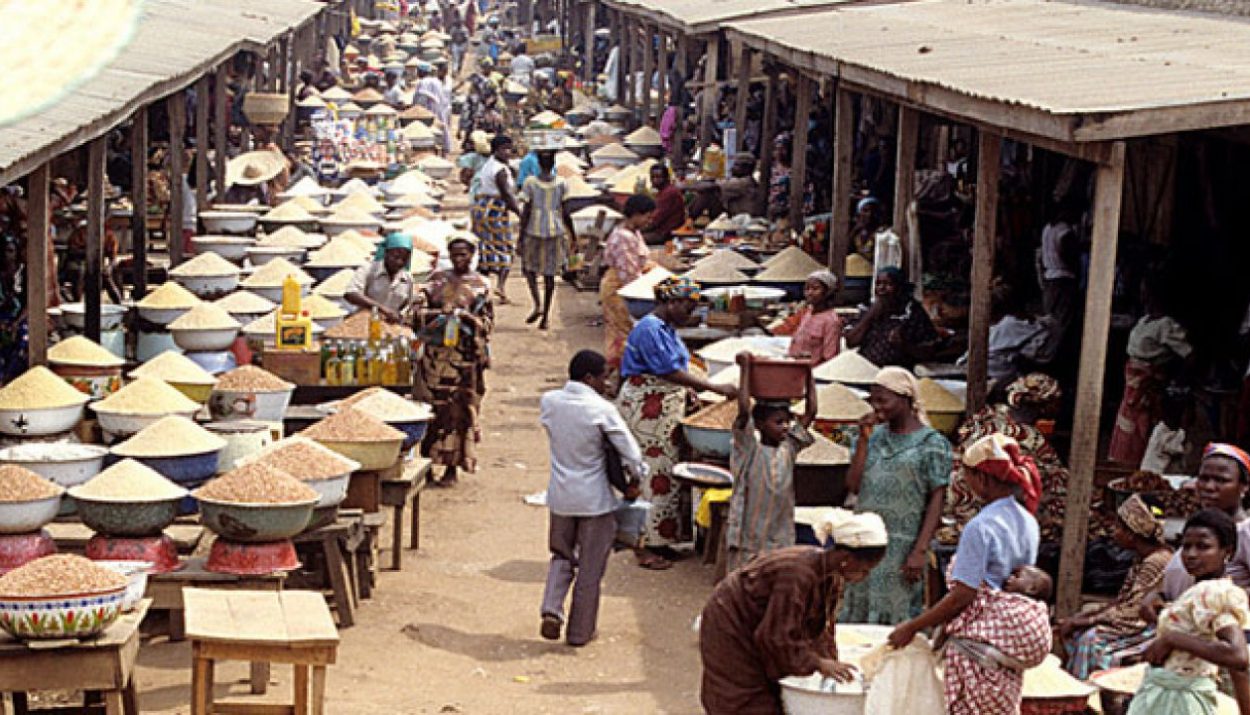

Nigerians are facing growing pressure on household budgets as food inflation climbs alongside rising fuel and energy prices, coinciding with President Bola Ahmed Tinubu’s visit to the United Kingdom at the invitation of King Charles III.
Data from the National Bureau of Statistics shows food inflation increased to 12.12 percent in February 2026, up from 8.89 percent in January. Key drivers include higher prices for beans, carrots, okazi leaf, cassava tubers, crayfish, millet flour, yam flour, snails, ogbono, and cowpeas.
Headline inflation fell slightly by 0.04 percent to 15.06 percent, but monthly increases indicate faster rising costs, with February’s inflation rate at 2.01 percent compared to -2.88 percent in January.
Petrol prices across Nigeria have surged to as high as N1,330 per litre, up from N875–N900 per litre before the escalation of the US-Iran-Israel conflict. Dangote Refinery raised gantry prices to N1,175 per litre, prompting retail hikes of N50–N100 by several filling stations. NNPC, MRS, Optima, Raniol, Empire Energy, NIPCO, and Shema now sell petrol between N1,261 and N1,330 per litre. The increase has pushed up transportation fares nationwide.
Economist Ayo Teriba of Economic Associates said seasonal factors and post-holiday economic activity partly explain February’s food price surge. He noted that while January saw moderation, prices typically increase in February as economic activity picks up. Teriba also flagged inconsistencies in NBS data, suggesting short-term volatility rather than a long-term inflation trend.
Professor Godwin Oyedokun of Lead City University said the small decline in headline inflation offers little relief, noting that rising food prices directly impact household purchasing power. He highlighted structural challenges including high energy costs, insecurity in farming regions, logistics bottlenecks, and post-harvest losses, all contributing to cost-push inflation.
Oyedokun called for targeted interventions, such as improved security in agricultural regions, investments in infrastructure and storage, and energy and logistics support for farmers. He stressed that addressing supply-side issues is essential to curb rising costs.
“While headline inflation appears slightly stable, rising food prices underscore the persistent hardship faced by Nigerians and the need for stronger social protection and supply-side policies,” Oyedokun said.