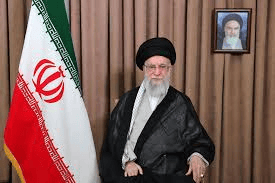

Tehran is facing an unprecedented crisis as Iran’s Supreme Leader, Ayatollah Ali Khamenei, has been confirmed dead following joint United States–Israeli military strikes, plunging the Islamic Republic into a tense and uncertain period.
Three-Member Interim Leadership Council Takes Charge
In line with Article 111 of Iran’s constitution, a three-member interim leadership council has assumed authority, temporarily replacing the late Supreme Leader. The council includes:
- President Masoud Pezeshkian
- Judiciary Chief Gholamhossein Mohseni Ejei
- Senior cleric Ayatollah Alireza Arafi
All three now wield the powers of the Supreme Leader until a permanent successor is chosen.
“A new chapter has begun in Tehran. After the death of its Supreme Leader, Iran is now run by a three‑member interim leadership council, not a single ruler,” officials stated.
Khamenei’s Death and Retaliatory Strikes
Khamenei, who ruled Iran for 37 years after succeeding Ayatollah Ruhollah Khomeini in 1989, was killed in an early-morning strike on 28 February 2026 that targeted his office in Tehran. State media confirmed his death the following day, and the nation has entered a 40-day mourning period.
Immediately following the strikes, Iran launched retaliatory missile attacks across eight countries, including Qatar, the UAE, Kuwait, Bahrain, Jordan, Saudi Arabia, Iraq, and Oman, targeting US and allied military installations.
“The strikes have sent shockwaves throughout the Middle East. Civilians report panic, emergency alerts, and widespread damage,” a UN statement warned.
Global Repercussions and Tense Future
Israel claims it successfully neutralised key figures in Iran’s nuclear and military programs. The United States has hinted that further strikes could be launched. Analysts suggest the interim leadership council is directing Iran’s responses, but uncertainty looms large.
“With missile launches and leadership changes unfolding together, the world watches closely. Can diplomacy hold, or is the Middle East on the brink of something far bigger?” experts ask.
The international community, including the UN Secretary-General, has called for urgent de-escalation to prevent a wider regional crisis.