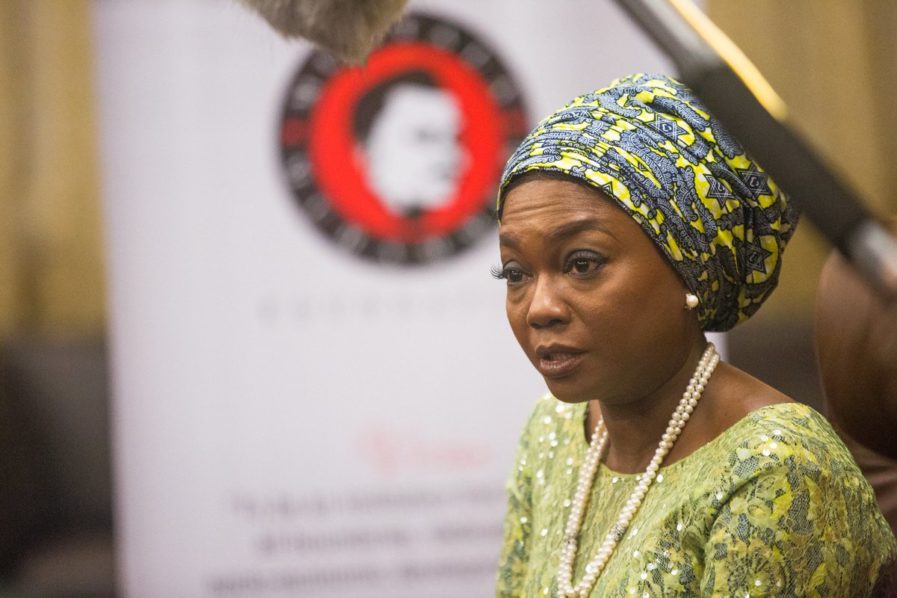

Aisha Muhammed, daughter of former Nigerian Head of State General Murtala Ramat Muhammed, has recalled her father’s disciplined leadership and simple lifestyle, saying these values both defined his enduring legacy and contributed to his assassination.
Speaking on ARISE News’ Morning Show to mark the 50th anniversary of his death, Aisha, who is also CEO of the Murtala Muhammed Foundation, described her father as a leader committed to accountability, responsibility, and fighting corruption. She said General Muhammed viewed corruption as a “cankerworm” capable of destroying society and lived by example, demonstrating integrity in both public and private life.
Highlighting his modesty, Aisha explained that General Muhammed rejected motorcades, sirens, and heavy security details, preferring to live like an ordinary Nigerian. She said this simplicity made him vulnerable on February 13, 1976, when coup plotters intercepted his vehicle in traffic and assassinated him.
“If you know, my father didn’t go around with motorcades and sirens and a lot of security. Now, there are people who say to me, 50 years later, it must have been quite painful because of the loss, but that was what he embodied,” she said.
She added, “That was why it was actually easy to assassinate him, because he didn’t have a whole slew of security with him. He was in traffic just like everybody else. In fact, the traffic wardens stopped them, and they stopped, just like everybody else, and that was when the coup plotters came out from behind the sectarian barricade, and then he was shot.”
General Murtala Muhammed assumed power in July 1975 after overthrowing General Yakubu Gowon in a bloodless coup. His 200-day tenure, though brief, was transformative. He dismissed over 10,000 public officials accused of corruption, created seven new states, and initiated plans for Nigeria’s transition to civilian rule. His administration also laid the groundwork for relocating the nation’s capital from Lagos to Abuja.
Aisha Muhammed’s reflections offer a personal perspective on a leader whose life and principles continue to shape Nigerian political discourse half a century after his death.