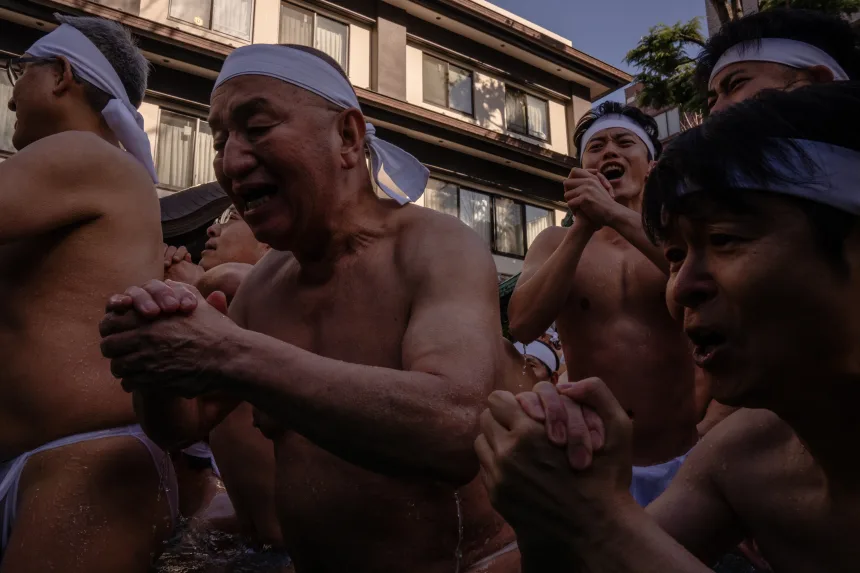

Chanting prayers and steeling their nerves against the cold, dozens of worshippers plunged into ice-filled water at a Tokyo shrine as Japan marked the New Year with one of its most striking spiritual traditions.
Around 100 participants gathered on Sunday at Teppozu Inari Shrine to take part in Kanchu Misogi, a centuries-old Shinto purification ritual believed to cleanse the soul and bring good health for the year ahead.
Clad largely in traditional white loincloths, with several women dressed in flowing white robes, the worshippers faced a knee-deep pool packed with chunks of ice. The ceremony unfolded to the rhythmic sound of drums and flutes, setting a solemn tone in the shrine’s courtyard.
With hands clasped before their chests, participants chanted “Haraedo-no-Okami” — invoking the Shinto goddess of purification — as prayers were offered for spiritual cleansing and protection from misfortune.
Before entering the water, the group jogged through nearby streets and performed warm-up exercises to prepare for the freezing plunge. One by one, they stepped into the pool, scooping icy water over their bodies with wooden buckets and shouting “ai” to summon courage, while fellow worshippers cheered them on.
This year marked the 71st time the ritual has been held at Teppozu Inari Shrine. Rooted in Shinto belief, purification rites are considered essential to warding off evil spirits and restoring spiritual balance.
Shinto, Japan’s indigenous religion, is based on the belief that sacred spirits inhabit nature and all living things. Although Japan is a constitutional monarchy with Emperor Naruhito as its symbolic head, the emperor is regarded as the highest authority in Shinto traditions, despite having no governing power.
Once reserved solely for rituals honouring local deities, the New Year purification ceremony is now open to the public through an application process. Organisers said registration closed earlier than usual this year due to overwhelming interest.
Japan’s Shinto New Year, known as Shōgatsu, is celebrated on January 1 in line with the Gregorian calendar, blending ancient religious customs with modern cultural practices — a balance vividly reflected in the icy waters of Teppozu Inari Shrine.