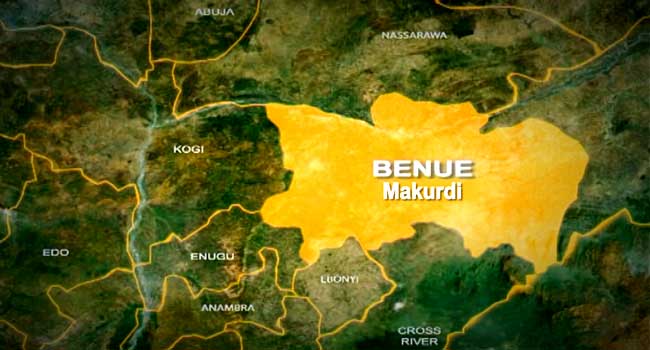

The Benue State Government has issued a firm warning to private school owners, declaring that it will no longer tolerate what it describes as excessive school fees and unauthorised levies that place unbearable financial strain on parents across the state.
The move forms part of the state’s broader effort to ease the cost of education for families while tightening oversight and enforcing standards within the education sector.
The warning was delivered by the Executive Secretary of the Benue State Education Quality Assurance and Examinations Board (BEQAEB), Dr Terna Francis, amid growing criticism from the National Association of Proprietors of Private Schools (NAPPS), which accused the board of excessive regulation.
Dr Francis dismissed the allegations, insisting that fee regulation is a statutory requirement tied to the approval process for establishing private schools. He stressed that proprietors are not permitted to review or increase fees without formal approval from the board, noting that the policy is designed to ensure fairness and accountability.
He raised ethical concerns over what he described as a widening gap between school fees charged to parents and the salaries paid to teachers. According to him, some schools charge parents up to N300,000 per term while paying teachers as little as N30,000 monthly, a situation he said raises serious questions about equity and justice in the system.
Dr Francis said the enforcement drive aligns directly with Governor Hyacinth Alia’s directive to reduce the financial burden of education on parents, adding that the administration has made affordability a key priority.
He maintained that all actions taken by BEQAEB are supported by law, explaining that the board is legally empowered to monitor, regulate, accredit and sanction schools operating in the state. He acknowledged that resistance from school owners is often inevitable when regulations are enforced, but said the government remains resolute.
According to him, the decision by the governor to strengthen the Quality Assurance Board as an independent body, separate from the Ministry of Education, was aimed at creating a more effective and rigorous oversight framework. He cited the enabling law, which authorises BEQAEB to inspect schools and enforce compliance with approved standards.
Dr Francis also highlighted significant government investment in the education sector, including the construction of new primary schools, the renovation of existing facilities and the recruitment of more than 9,000 teachers through the State Universal Basic Education Board (SUBEB).
He revealed that education received over 15 per cent of the state budget in 2025, a figure that rose sharply to 25.29 per cent in the 2026 budget, describing the increase as clear evidence of the administration’s commitment to reform and improved standards.
Beyond fee regulation, the reforms extend to policy enforcement measures such as the reuse of textbooks, the ban on graduation ceremonies for non-certification classes and the prohibition of compulsory lessons for kindergarten and lower basic education pupils.
On examination fees, Dr Francis cited the Revenue Administration Law and the 2026 budget estimates, pointing to cases where schools charged as much as N35,000 for the Basic Education Certificate Examination (BECE), far above the approved N10,250, and up to N100,000 for WAEC instead of the official N27,500. He vowed that such practices would be stopped.
He acknowledged challenges inherited by the board, including delays in releasing results and shortages of examination materials, attributing them to poor planning and neglect of statutory duties by some school principals.
To address these issues, BEQAEB introduced an electronic dossier system that allows schools to upload continuous assessment and examination scores in real time. Dr Francis said the system automatically flags irregular student movements, effectively shutting down so-called “miracle centres” where students change schools shortly before external examinations.
He reassured parents and educators that the board will continue enforcing approved fees, limiting handling charges to a maximum of N5,000, and ensuring the timely release of BECE and mock SSCE results.
“We are committed to protecting learners and parents while restoring discipline, credibility and standardisation in Benue State’s education system,” he said.