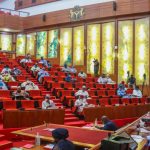

President Bola Tinubu has asked the Nigerian Senate to authorise the deployment of troops to neighbouring Benin Republic as the country battles an attempted coup in its commercial hub, Cotonou. The request follows growing regional concern over the attack on President Patrice Talon’s residence in the Le Guézo area on Sunday.
Sources confirmed that Tinubu’s letter to the Senate outlined plans for a peace-support mission aimed at stabilising Benin and preventing further escalation. The move aligns with Nigeria’s long-standing role in regional security, especially within the Economic Community of West African States (ECOWAS).
The attempted coup has unsettled the region, with early reports indicating that armed assailants targeted the Beninese president’s home before security forces repelled the attack. The situation remains tense, prompting neighbouring nations to heighten surveillance and intelligence coordination.
Nigeria has already taken steps to support Benin’s government. The Nigerian Air Force (NAF) conducted a joint operation with Beninese authorities shortly after the incident, attempting to disrupt advancing coup elements and restore control. Military insiders described the mission as “swift and coordinated.”
Tinubu’s request to the Senate comes as diplomats and security analysts warn of a potential ripple effect across West Africa, where a series of military coups since 2020 have heightened fears of democratic backsliding. The president is expected to argue that early intervention could prevent further instability.
Senators are set to deliberate on the request as questions continue to swirl over the scale of Nigeria’s involvement and the duration of the proposed mission. Lawmakers will weigh both regional obligations and domestic concerns as insecurity persists in parts of Nigeria.
If approved, the deployment would mark Nigeria’s latest peacekeeping effort in the sub-region, reinforcing its position as a key stabilising force at a time when democratic institutions in West Africa face renewed threats.