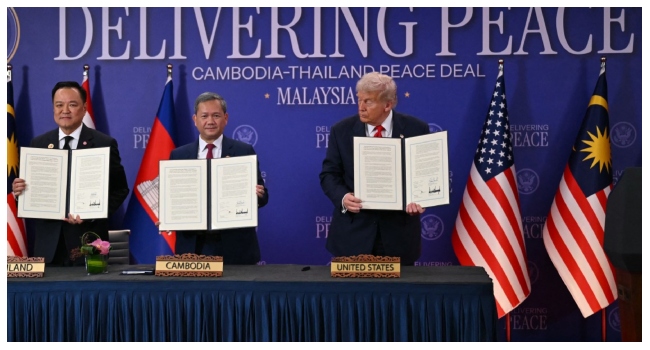

Tension is rising along the Thailand–Cambodia frontier as tens of thousands displaced by renewed fighting voice mixed feelings about US President Donald Trump’s attempts to mediate a fresh ceasefire. The border clashes, which reignited this week, have forced around 600,000 people from their homes and left at least 20 dead.
Trump has said he expects to speak with both governments to demand an immediate halt to the violence. A similar intervention earlier in the year led to a temporary pause in fighting — a success he later celebrated as proof of his diplomatic strength — but the truce soon collapsed.
In Cambodia’s Oddar Meanchey province, 73-year-old evacuee Het Soeung said she welcomed another attempt from Washington, describing Trump as “the power, the lord of the world”. Several others in makeshift shelters echoed her confidence, with one retired soldier insisting he was “95 percent sure” the president could secure a lasting deal.
The long-running dispute stems from a murky colonial-era demarcation of the 800-kilometre border, an issue that has repeatedly triggered military flare-ups. A July ceasefire jointly brokered by the United States, China and Malaysia reduced tensions, and a follow-on agreement in October was praised as a diplomatic breakthrough. But Thailand suspended the pact in November, accusing Cambodia of laying new landmines — a claim Phnom Penh denies.
Across the border in Thailand’s Surin province, evacuees expressed frustration with foreign mediation. Farmer Mala Klumya said she had little faith in outside negotiators, insisting the conflict had gone on too long for “third countries” to understand its impact. “The time for talks is over,” she said, calling for Thailand and Cambodia to settle the dispute directly.
Some displaced families said their patience had run out after being forced to flee twice in five months. “I don’t want any more negotiations,” said 73-year-old Thai farmer Eia Torkaew. “I just want this to end.”
Thai Prime Minister Anutin Charnvirakul said he had received “no coordination” on any scheduled call with Trump but would answer if contacted. His firm stance against further talks earned praise among evacuees in Surin, though some warned their support would vanish if he returned to the negotiating table.