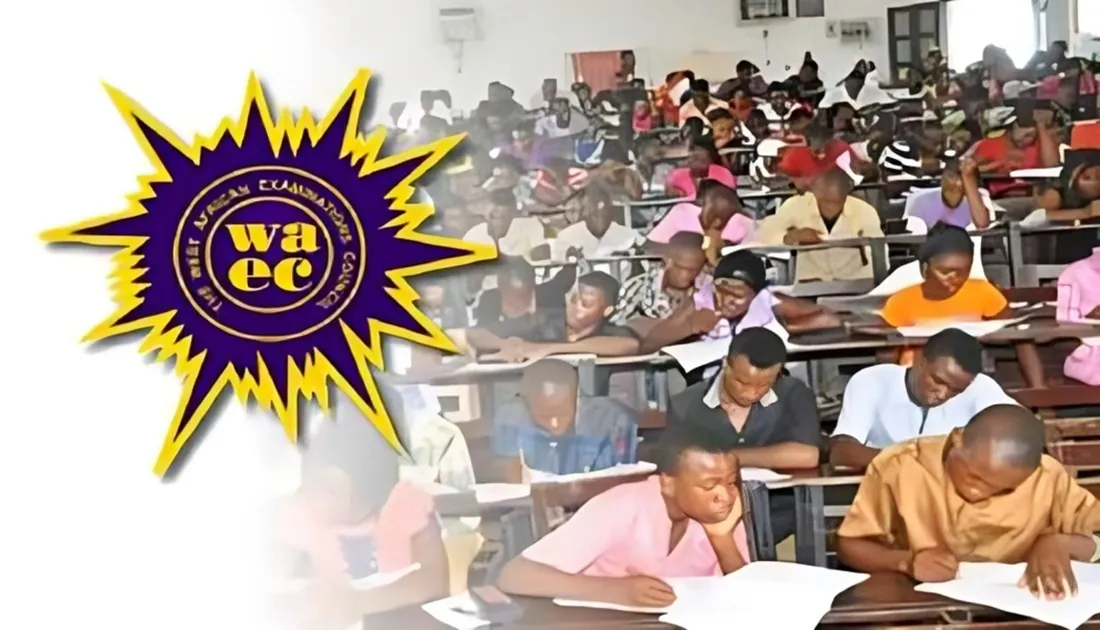

The West African Examinations Council (WAEC) has released fresh guidance on the compulsory subjects candidates must register for ahead of the May/June 2026 West African Senior School Certificate Examination (WASSCE), as Nigeria prepares for a restructured curriculum rollout. The update also confirms that science students remain free to take Economics as an elective, contrary to widespread assumptions.
Briefing journalists after the 63rd Annual Meeting of WAEC’s Nigeria National Committee in Umuahia, the Head of Nigeria’s WAEC office, Dr Amos Dangut, said the council would not restrict candidates from selecting subjects across different fields. He urged school counsellors to guide students properly, noting that the revised subject structure aligns with federal directives.
Dangut said the new framework groups subjects into five areas — core, science, humanities, business and trade — with five subjects now classified as compulsory. These include English Language, General Mathematics, Citizenship and Heritage Studies Education, Digital Technologies, and a vocational trade subject. However, candidates in 2026 and 2027 will only be examined in English, Mathematics and one trade subject, as the other two compulsory subjects will not be tested until 2028.
Under the updated rules, students must choose an additional five or six subjects, bringing the total registered subjects to a minimum of eight and a maximum of nine. Trade subjects have been reduced from 26 to six, though WAEC says renamed courses retain their original curriculum and syllabi.
Dangut stressed that curriculum development is the government’s sole responsibility and warned against attributing syllabus changes to WAEC. He also revealed that schools have now been categorised to support WAEC’s transition into full computer-based testing, with some rural schools continuing with pen-and-paper while others adopt a hybrid or full CBT model.
Despite the transition, he assured parents and students that every candidate will be accommodated in 2026 and will not be posted more than two kilometres from their homes for examinations. He encouraged schools to conduct at least three Continuous Assessment Tests per student, as WAEC has extended the deadline for uploading assessment scores to ensure credibility and compliance.
The 2026 WASSCE will be the first major test of the revised subject policy, setting the stage for broader reforms expected to reshape secondary education across the country.