
Nigeria’s financial markets are reeling following U.S. President Donald Trump’s threat to take military action against the country and his decision to label it a “Country of Particular Concern.”
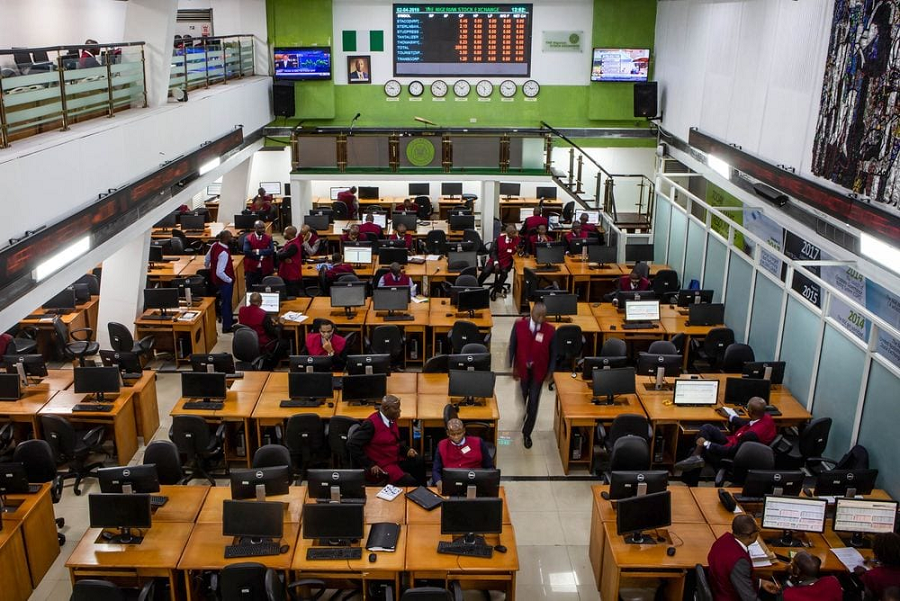
The move has sparked widespread investor anxiety, wiping out over ₦2.8 trillion from the Nigerian Exchange (NGX) in just one week and sending the Naira tumbling to ₦1,437.29 per dollar across official and black markets.
Economists say the crisis reflects shaken investor confidence and fears of potential diplomatic fallout between Washington and Abuja.
Dr Muda Yusuf, Chief Executive Officer of the Centre for the Promotion of Private Enterprise, had earlier predicted that Trump’s remarks would weaken investor sentiment—a warning now playing out across Nigeria’s capital markets.
Mazi Okechukwu Unegbu, a former president of the Chartered Institute of Bankers of Nigeria (CIBN), told DAILY POST that the U.S. president’s statement was always likely to unsettle investors.
“When Trump made the statement, there was fear in the air, which has affected investors’ confidence. People have started to hold their investment plans for the NGX,” Unegbu said.
He added that the comment sent shockwaves through every sector of the economy, as investors paused to assess the risk of potential U.S. sanctions or instability.
However, Unegbu argued that the current downturn may offer a buying opportunity for bold investors. He stressed that Nigeria must focus on boosting local production, improving security, and reducing its dependence on imports if it hopes to stabilise the Naira and rebuild market trust
Economist and university don, Professor Godwin Oyedokun, described Trump’s move as a serious diplomatic signal that has rattled the global investment community.
“The sudden depreciation of the Naira and a plunge of over ₦2.8 trillion in equities reflect shaken investor confidence and fears of sanctions or capital flight,” he said.
According to Oyedokun, the U.S. designation of Nigeria as a “Country of Particular Concern” often points to worries about governance, security, or human rights, issues that typically trigger nervous reactions from global investors.
He warned that panic-driven responses—such as rushing to buy dollars or pulling investments—could worsen volatility in both currency and capital markets.
Instead, he urged the Nigerian government to engage diplomatically with Washington to clarify the concerns behind the designation and to communicate policy stability that can reassure both domestic and foreign investors.
“This is a moment for calm but strategic leadership,” Oyedokun advised. “Confidence, not just capital, drives markets. Nigeria must act transparently, reform governance, and rebuild its global image.”
He added that improving human rights protections, strengthening the rule of law, and deepening economic diversification would enhance Nigeria’s resilience against foreign shocks.