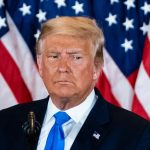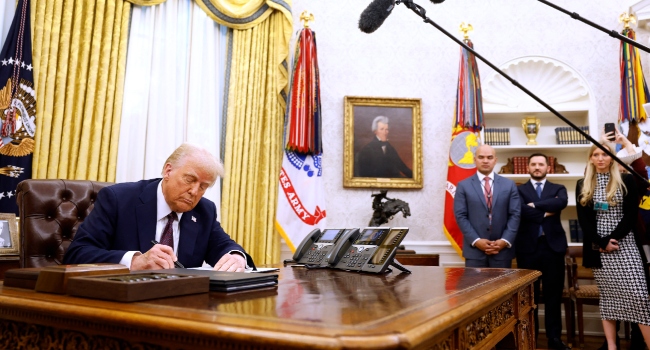

Former U.S. President Donald Trump has launched a defamation lawsuit against the BBC, accusing the broadcaster of intentionally editing a 2024 documentary to make him appear as if he called for violence during his infamous January 6 speech.
The controversy has rocked Britain’s most respected media institution, prompting the resignations of BBC Director-General Tim Davie and BBC News Chief Deborah Turness. BBC Chair Samir Shah has since issued a formal apology, describing the documentary’s edit as an “error of judgment.”
Trump’s legal team claims the BBC’s broadcast was deliberately manipulated to interfere in the 2024 U.S. presidential election, arguing the former president suffered “overwhelming financial and reputational harm.” The lawsuit follows Trump’s ongoing legal battles with The Wall Street Journal, The New York Times, and The Des Moines Register.
The uproar began after The Telegraph revealed an internal BBC report detailing how editors spliced together portions of Trump’s January 6, 2021, speech — making it sound as though he told his supporters to “fight like hell” and march with him to the Capitol. In reality, Trump’s call to “fight” was made separately from his remark about walking to the Capitol to “cheer on our brave senators.”
In a letter to Parliament, Shah admitted the documentary’s editing “gave the impression of a direct call for violent action,” but insisted the error was not politically motivated and that neither Davie nor Turness were aware of the mistake before broadcast.
The scandal has reignited political attacks on the BBC by conservative politicians and media critics who accuse the broadcaster of long-standing editorial bias. Former Prime Minister Liz Truss wrote on Sunday that the controversy exposed the BBC’s “failure to tell the truth on everything from transgender ideology to economics to Gaza,” calling for an end to publicly funded broadcasting.
With the government reviewing the BBC’s Royal Charter and license fee model ahead of its 2027 renewal, critics see this as a pivotal moment to reshape or defund the broadcaster.
Meanwhile, senior BBC insiders and veteran journalists have rallied to defend the organization. Veteran correspondent John Simpson warned that “public service broadcasting is under threat,” while Alan Rusbridger, former Guardian editor, said the BBC now faces “a fight for its survival.”
Political commentator Robert Shrimsley of the Financial Times added that “a real and concerted right-wing media campaign” was exploiting the scandal to weaken the BBC, even though its editorial failings were serious.
Responding to the backlash, Shah said the BBC has taken corrective measures — from editorial reforms and leadership changes to disciplinary actions — while urging the public to remember the corporation’s “thousands of hours of outstanding journalism.”
Amid the storm, BBC diplomatic correspondent James Landale, reporting from Kyiv, wrote on X: “We are not perfect; we must always strive to be better. But in a darkening world, we remain a shaft of light.”