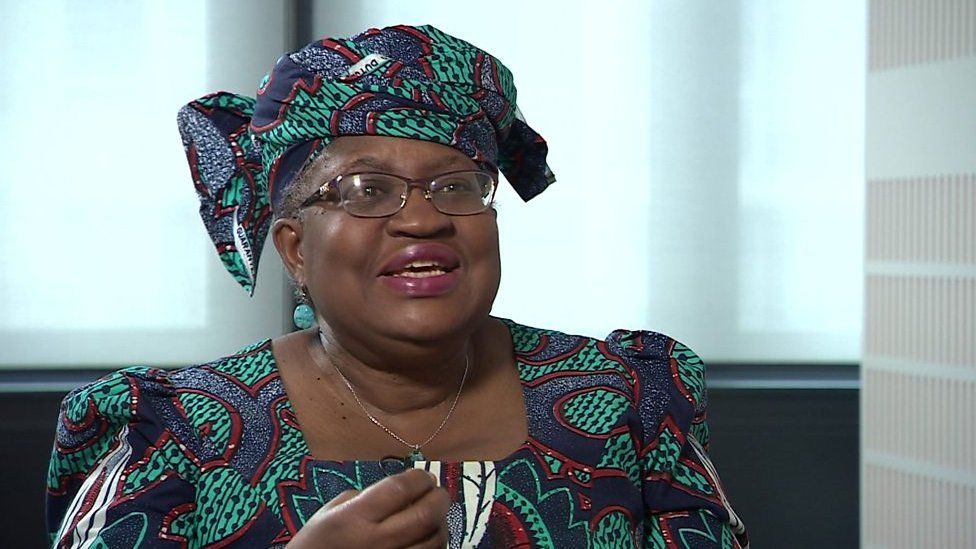

Dr. Ngozi Okonjo-Iweala has launched a blistering critique of the judicial process that led to the controversial conviction of Nnamdi Kanu, demanding full clarity on the legal basis for his sentencing. She questioned why the IPOB leader was never shown the law he was accused of breaking, calling the ruling “judicial darkness.”
Speaking out publicly, Okonjo-Iweala pressed for transparency, asking pointedly: which written law did Kanu violate, and why was the alleged offence not clearly defined to him? She insisted that no one should be punished under vague or undocumented statutes.
“She cannot accept a conviction based on invisible laws,” Okonjo-Iweala said, stressing that justice must be “open and undeniable.” She warned that sentencing without a concrete legal foundation undermines the legitimacy of the judiciary.
Describing Kanu as her “brother,” she called for immediate action: “Give him the exact law he allegedly broke, or set him free at once.” To her, the lack of a clear legal basis undermines both his freedom and the rule of law in Nigeria.
Her remarks come amid growing national debate over Kanu’s trial, which has faced repeated criticism from human rights advocates, clerics, and political figures demanding that the process be fair and transparent.
Okonjo-Iweala’s challenge adds to the mounting pressure on the justice system, with calls from several quarters for more openness and accountability in how terrorism and related cases are handled.
Her demand underscores a fundamental principle: if a court cannot cite a clear, documented offence, then its ruling lacks moral and legal weight. The call for Kanu’s release or a re-evaluation of his case reflects deeper concerns about the integrity of the legal process in high-stakes political trials.