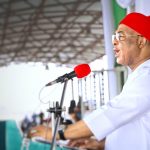

Former Deputy Speaker of the House of Representatives, Ahmed Idris Wase, has raised alarm over a serious security lapse, claiming that Boko Haram members were once identified on the Nigerian Army recruitment roster. The revelation came during a special plenary session convened to evaluate Nigeria’s worsening security situation.
Wase, who lost both a brother and a cousin to terrorist attacks, said the breach highlights major weaknesses in recruitment processes, allowing individuals with criminal affiliations to infiltrate critical security institutions. He noted that the former Chairman of the House Committee on Defence, Muktar Betara, could corroborate his claim.
Speaking emotionally, Wase explained that insecurity has reached such a level that even his surviving younger brother requested to be relocated from their community for safety reasons. “My brother, former chairman of defense, and my very good friend, Betara, will bear with me that we have moments when we found names of criminals, including Boko Haram members, in the Army recruitment list,” he stated.
He urged that recruitment procedures be thoroughly overhauled, stressing that politicians recommending candidates must ensure the individuals possess integrity and meet high standards. Wase warned that failing to do so allows criminals to operate unchecked, undermining the nation’s security framework.
The former deputy speaker also highlighted the politicisation of indigeneship and citizenship as contributing to national division and insecurity. He called for constitutional reforms to address these systemic issues and reduce the exploitation of disorder by individuals who profit from criminal activity.
Wase provided alarming statistics, noting that kidnapping has become routine, with roughly N5 billion paid in ransom in a single year. He further stated that Boko Haram-related attacks have claimed over 30,000 lives, underscoring the gravity of the country’s security crisis.
He concluded by urging legislators to adopt a comprehensive strategy to tackle insecurity, emphasizing that the scale of the threat in Nigeria is far greater than publicly acknowledged and requires immediate, coordinated action.