
Nigeria’s democracy faces a critical test as the 2027 general elections approach, former governors Seriake Dickson and Rotimi Amaechi have warned, citing voter apathy, political manipulation, and systemic fraud as major threats.
The warnings came during the fifth anniversary lecture of First Daily Newspaper held on Monday in Abuja, themed: “2027: How Can We Make Our Votes Count?” The event drew politicians, diplomats, and media leaders.
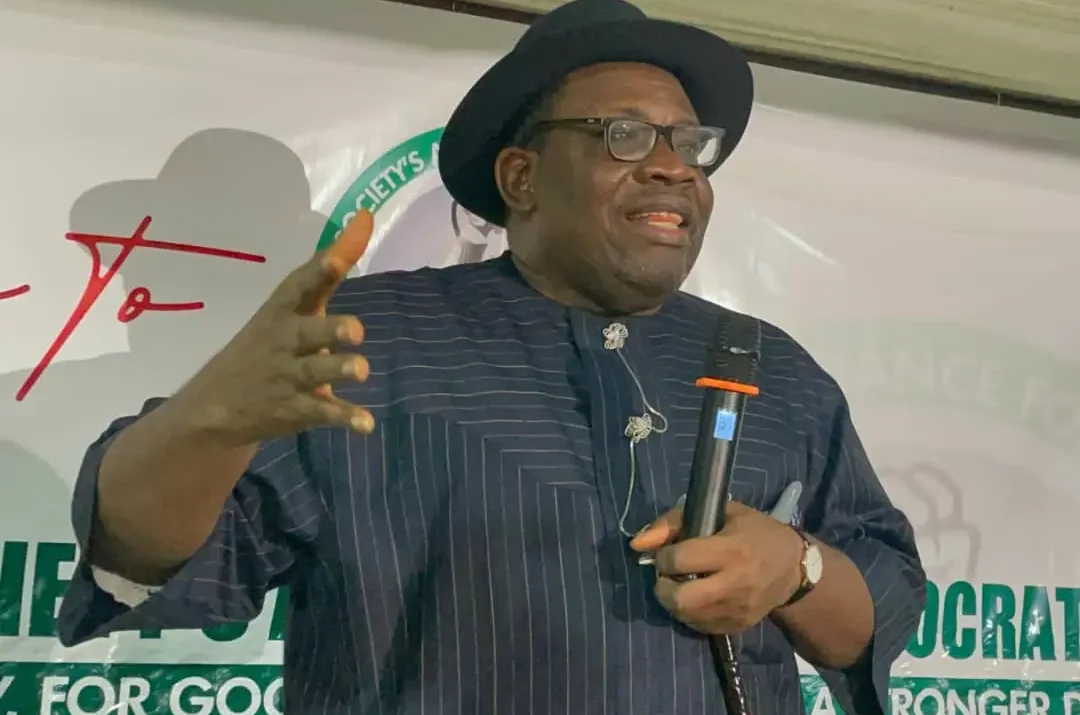
Chairman of the occasion, Senator Dickson, described election rigging as “the worst coup” against the people’s sovereignty, arguing that collusion between politicians, government officials, security agencies, and the electoral commission undermines democracy more than any violent act.
“Falsifying results or declaring outcomes not based on actual votes is a coup against democracy and the country,” Dickson said. He called on the National Assembly to strengthen electoral laws to protect citizens’ mandates.
Former Minister of Transportation, Rotimi Amaechi, added that Nigeria’s history of failed electoral reforms is largely due to a lack of political will from incumbent governments.
“The problem with elections in Nigeria is that there is no incumbent government that can achieve electoral reform. None. We already tried it and failed,” Amaechi said, highlighting entrenched interests and weak opposition parties as factors that allow manipulation to persist.
He also warned that growing voter apathy only makes electoral fraud easier to sustain, emphasizing the urgent need for citizen engagement.
Delivering the keynote address, Dr. Sam Amadi, Director of the Abuja School of Social and Political Thought, said Nigeria’s elections remain flawed because those managing the process are often politically connected to the ruling powers.
“Everyone who has something to do with the management of elections is connected to the president,” Amadi noted, adding that the lack of neutrality has transformed elections into contests of influence rather than genuine expressions of the people’s will.
The lecture underscored the need for comprehensive electoral reforms, enhanced civic education, and greater accountability to safeguard Nigeria’s democracy ahead of the next general elections.