
Nigeria and Germany are strengthening their longstanding economic ties, with a renewed focus on vocational training, institutional development, and private sector cooperation, officials have announced.
The Chamber of Industry and Commerce (IHK) Giessen-Friedberg in Germany reaffirmed its commitment on Thursday to advancing youth empowerment, entrepreneurship, and business collaboration in Nigeria. The partnership, which spans over two decades, has been instrumental in promoting skills development and bilateral investment.
Dr. Matthias Leder, Chief Executive Officer of IHK Giessen-Friedberg, said during a virtual press briefing that the cooperation between both countries has expanded significantly in recent years, deepening mutual understanding and paving the way for new trade and investment opportunities.
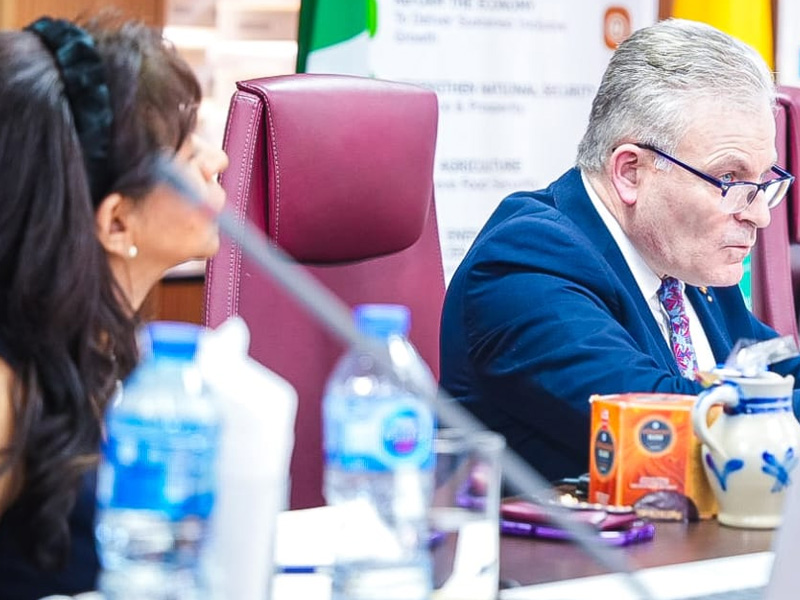
He revealed that a German delegation is currently visiting Nigeria to consolidate progress made and explore new areas of partnership. The team will meet with Nigeria’s Ministers of Labour and Employment, Youth Development, Education, Foreign Affairs, Budget and Economic Planning, and Industry, Trade and Investment to discuss strategic collaboration.
Former Minister of Information, Alhaji Lai Mohammed, who delivered the keynote address in 2024 on “The Event Industry as an Emerging Sector in Nigeria,” is set to participate again this year as a panelist, underscoring the growing importance of the creative and service industries in Nigeria’s economy.
Leder, however, emphasized the need for stronger institutional support within Nigerian chambers of commerce to make vocational training sustainable. He explained that while German chambers successfully run dual vocational training (DVT) programmes, Nigerian companies are yet to embrace similar models due to lack of funding and perception that such initiatives are public goods.
He suggested that empowering chambers to provide DVT services—while allowing them to levy moderate fees on registered companies—could lead to better-skilled workers, reduced unemployment, increased tax revenue, and greater social stability across Nigeria.