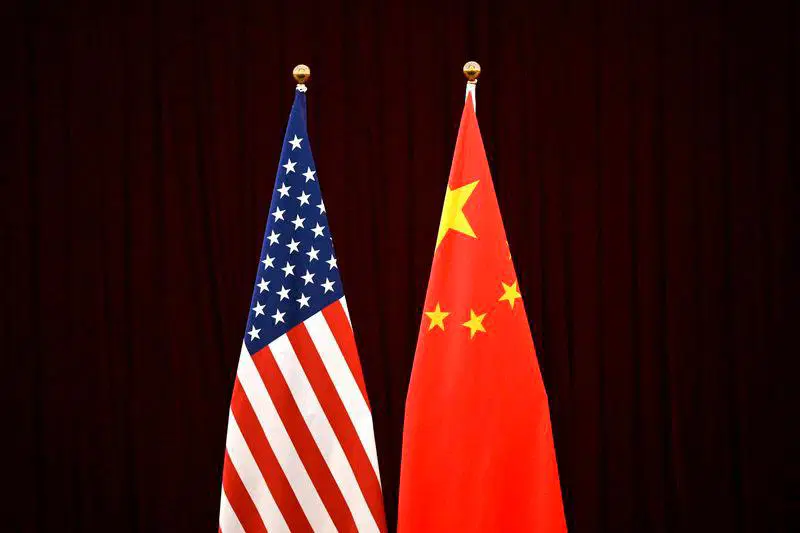

China has vowed to “fight to the end” in its escalating trade dispute with the United States after former President Donald Trump announced plans to impose 100% tariffs on Chinese goods, deepening tensions between the world’s two largest economies.
The latest round of tariffs, revealed in a Friday social media post, came as a response to Beijing’s recent move to enforce sweeping export controls on rare earth minerals, a strategic sector where China remains the global leader.
Trump also said that beginning November 1, Washington would introduce export restrictions on all critical software — a move analysts warn could further strain global supply chains and technological cooperation.
In a statement issued Tuesday, a spokesperson for China’s Ministry of Commerce condemned the U.S. decision and reaffirmed Beijing’s readiness for confrontation or dialogue.
“If you wish to fight, we shall fight to the end; if you wish to negotiate, our door remains open,” the ministry said. “The United States cannot simultaneously seek dialogue while threatening new restrictive measures. This is not the proper way to engage with China.”
The remarks underscore Beijing’s hardening stance amid rising geopolitical and economic friction, as markets brace for volatility and the possibility of retaliatory measures.
The escalation has cast doubt over a planned meeting between Trump and Chinese President Xi Jinping in South Korea, while rattling global markets already uneasy about rising protectionism.
Despite the mounting dispute, China’s export sector appears resilient. Newly released trade data for September showed overseas shipments rising 8.3% year-on-year, the fastest growth since March. Exports to the United States surged to $34.3 billion, defying expectations of a slowdown.
Currently, Chinese products face U.S. tariffs of at least 30%, imposed during Trump’s previous tenure as part of a broader crackdown on what he described as “unfair trade practices and fentanyl-related activities.” Beijing’s retaliatory tariffs stand at around 10%, though officials have hinted at possible revisions.
The renewed tariff threats come as the International Monetary Fund (IMF) and World Bank convene in Washington this week, with economists warning that prolonged trade hostilities could weaken global recovery efforts.
While the White House insists tariffs will yield “long-term benefits” for the U.S., many analysts argue the measures risk driving up prices and destabilizing international trade.
Trump, attempting to soften his rhetoric in a later post, said the situation “will be fine,” adding that the U.S. wants to “help China.” But with both sides digging in, the prospect of reconciliation appears increasingly remote.
As one Chinese analyst told Global Times, “The trade war has entered a stage where both countries are fighting not just for economics — but for dominance in the new world order.”