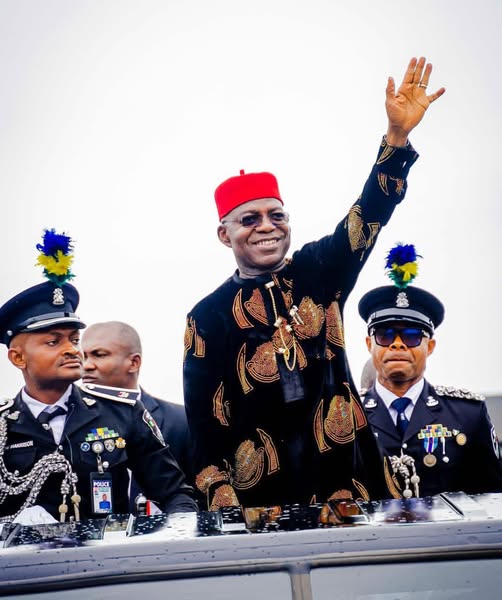

Abia State Governor, Dr. Alex Otti, has approved a new cultural dress code for public officials, declaring that members of the State Executive Council, including himself, will now appear in traditional attire every first Monday of the month, while civil servants across the state will follow suit every Friday.
The directive, announced on Thursday, September 4, 2025, by the Commissioner for Information and Culture, Prince Okey Kanu, marks a significant shift in how Abia blends governance with cultural preservation. Kanu stressed that the initiative goes beyond aesthetics, calling it a deliberate effort to showcase indigenous craftsmanship, promote locally made outfits, and deepen pride in Igbo identity.
“This is not just fashion; it is cultural diplomacy,” Kanu explained. “It is about supporting our tailors, weavers, and bead makers, and ensuring that government itself becomes the biggest ambassador for made-in-Abia and made-in-Igbo attire.”
The new dress policy is expected to create ripple effects across Abia’s creative economy, injecting fresh demand into the work of thousands of local artisans who design, sew, and sell traditional garments. Analysts say the move could boost the textile industry, encourage younger generations to embrace indigenous wear, and reduce dependence on imported fashion.
Governor Otti has long championed homegrown solutions to economic challenges, and this initiative mirrors his broader agenda of promoting self-reliance and cultural renaissance. He is expected to debut the dress code at the upcoming State Executive Council meeting on Monday, September 8, 2025, where all EXCO members will appear in traditional Igbo attire.
The policy has already sparked conversations in Aba, the state’s commercial hub, with traders and artisans expressing optimism that the governor’s decision will translate into real economic gains. “When the government wears what we make, others will follow,” said Nnamdi Okorie, a tailor at Ariaria Market. “It means pride for us, and it means business.”
Observers also see the move as symbolic, bridging the gap between modern governance and Igbo cultural heritage. With traditional attire set to become a regular sight in ministries and offices, Abia may be charting a model other states in the South-East—and indeed across Nigeria—could soon adopt.