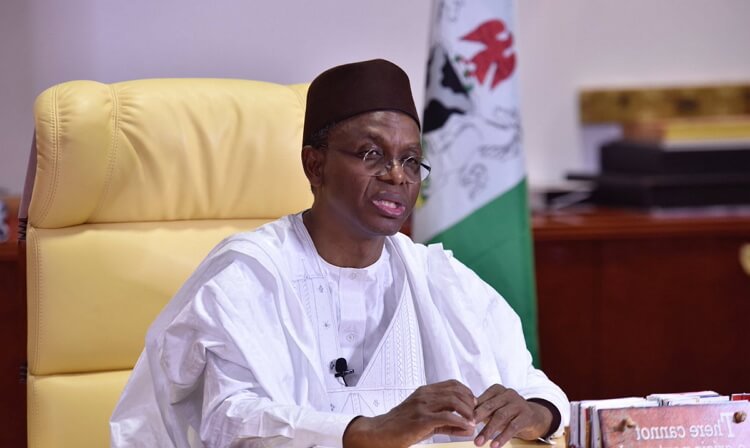

Former Kaduna State governor Nasir El-Rufai has ignited a storm of political controversy after warning that President Bola Tinubu could attempt to remain in power for life, drawing comparisons to Cameroon’s long-ruling leader, Paul Biya.
El-Rufai, now a chieftain of the African Democratic Congress (ADC), accused Tinubu of abandoning his long-proclaimed fight for democracy and federalism, instead centralising power at the federal level. He alleged that Nigeria risked sliding into authoritarianism if citizens failed to resist in 2027.
“All those years of claiming to fight for democracy were lies,” El-Rufai declared. “We are now facing an evil of such a large proportion. If we do not come together to stop this administration in 2027, Tinubu will try to stay in power permanently. He will be president for life.”
Presidency dismisses claims as ‘delusion’
The presidency swiftly hit back, branding El-Rufai’s comments “alarmist” and “ridiculous.” Presidential adviser Bayo Onanuga insisted Tinubu remains committed to Nigeria’s constitutional two-term limit.
“President Tinubu is a democrat who does not intend to stay in office beyond May 28, 2031, when re-elected in 2027,” Onanuga said, adding that El-Rufai’s remarks reflected “political delusion” and frustration over the President’s enduring popularity in the North.
The All Progressives Congress (APC) also rejected the claims as “mischievous and reckless.” Its Lagos chapter pointed to Tinubu’s history with NADECO and his opposition to past tenure-elongation bids as proof of his democratic credentials.
Supporters say El-Rufai is ‘voicing public fears’
Despite denials from the presidency and APC, El-Rufai’s warning has struck a chord among some Nigerians who argue that democratic institutions under Tinubu are being weakened.
Dr. Sabiu Ibrahim, a Katsina-based educationist, alleged that the National Assembly and judiciary have become subservient to the executive, warning that such capture could embolden any attempt to extend presidential tenure.
Lagos lawyer Kayode Adenuga said the absence of mass protests despite economic hardship suggested Nigerians had been “captured” by the current system. “With fuel above ₦1,000 per litre and rice at ₦80,000 a bag, the silence of the people shows Tinubu’s grip,” he argued.
Others, however, defended Tinubu, pointing to his support for state police and local government autonomy as evidence against centralisation. Social scientist Clement Olaniyi said El-Rufai’s claims were partly valid but exaggerated.
A polarising debate ahead of 2027
El-Rufai’s intervention has deepened Nigeria’s already polarised political landscape. While critics accuse Tinubu of consolidating power at the expense of democratic freedoms, his allies insist the President remains committed to constitutional governance.
As Nigeria edges closer to the 2027 elections, the debate underscores both the fragility of trust in state institutions and the enduring suspicion of political leaders seeking to entrench themselves in power.