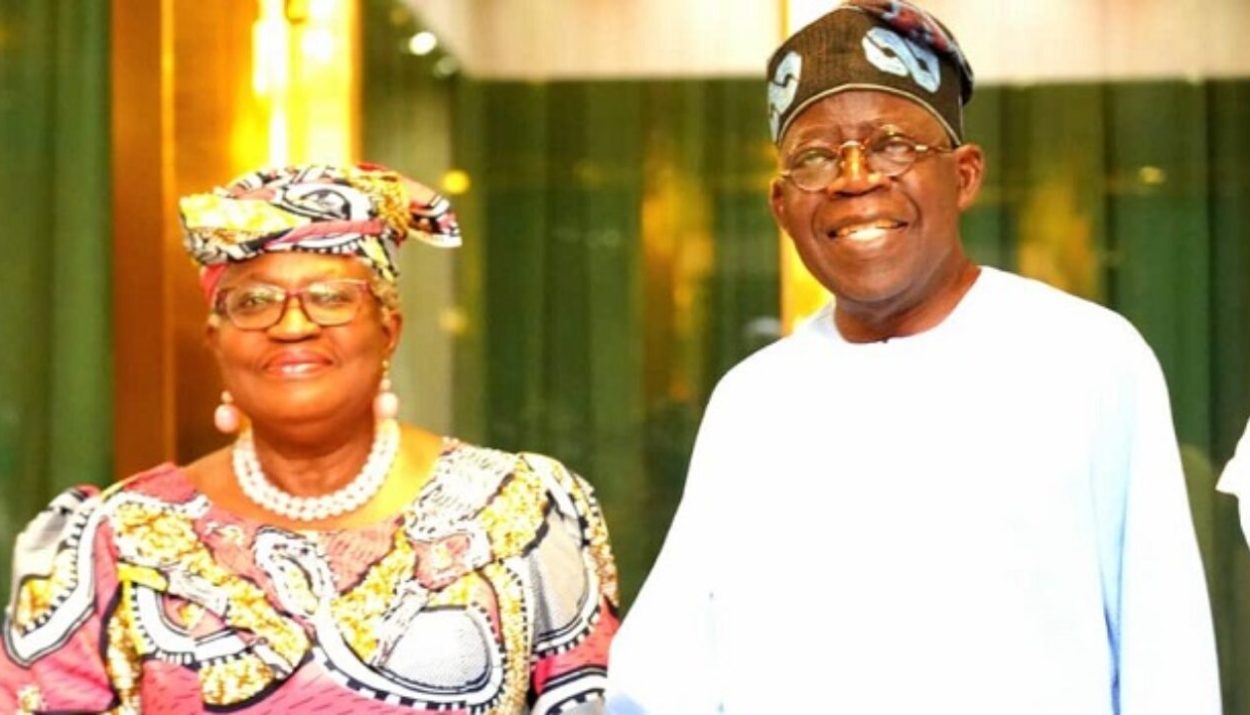

World Trade Organisation Director-General and former Nigerian finance minister, Dr. Ngozi Okonjo-Iweala, has outlined two urgent priorities for President Bola Ahmed Tinubu as his economic reforms enter their third year — accelerate economic growth and create a strong social safety net to shield vulnerable Nigerians from the painful impact of policy changes.
Speaking to journalists after a closed-door meeting with the president at the Aso Villa, Abuja, on Thursday, August 14, 2025, Okonjo-Iweala acknowledged that Tinubu’s administration had succeeded in stabilising Nigeria’s economy after inheriting severe fiscal and monetary crises in 2023. However, she stressed that stability alone is not enough to improve lives.
“Credit must be given for stabilising the economy and making reforms in the right direction,” she said. “But the next step is to grow the economy in a way that puts more money in people’s pockets, while ensuring that those who are suffering from the immediate effects of these reforms are protected.”
The call comes amid soaring inflation — currently hovering around 32% according to the National Bureau of Statistics — and unemployment rates that continue to pressure household incomes. Analysts warn that without targeted relief programs, the removal of fuel subsidies and currency liberalisation could widen the poverty gap in Africa’s largest economy.
Okonjo-Iweala, who played a key role in negotiating Nigeria’s historic debt relief in 2005, emphasised that social protection programs such as conditional cash transfers, subsidised healthcare, and targeted food support must be prioritised alongside economic growth strategies like infrastructure investment, export diversification, and SME financing.
She noted that her discussions with President Tinubu also explored strategies to boost productivity in agriculture, attract more foreign investment into manufacturing, and improve the ease of doing business. “If we can combine growth with a genuine safety net, we will begin to see inclusive development,” she stated.
With Nigeria’s GDP projected by the IMF to grow by 3.1% in 2025, the challenge for Tinubu’s government will be translating macroeconomic stability into tangible benefits for ordinary Nigerians. Okonjo-Iweala’s message was clear — reforms must now evolve from painful adjustments to visible prosperity for millions struggling to survive.