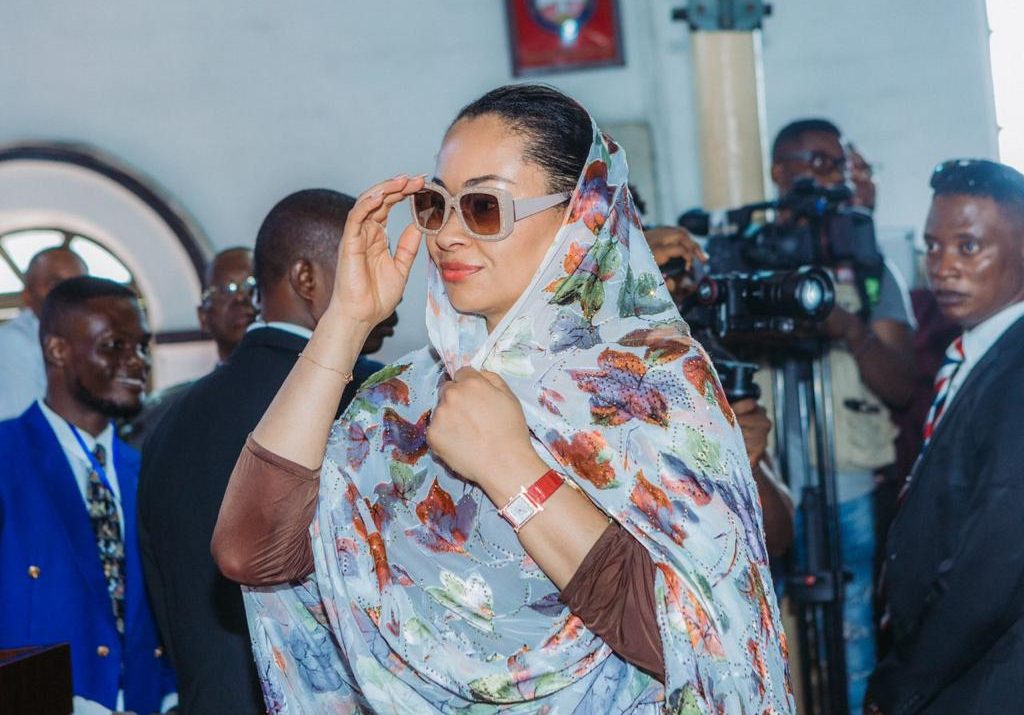

Tensions flared at the Nnamdi Azikiwe International Airport, Abuja, on Thursday, July 24, 2025, after immigration officials reportedly stopped Senator Natasha Akpoti-Uduaghan from boarding a flight to the United Kingdom. The lawmaker, who represents Kogi Central Senatorial District, was said to be traveling with her husband to attend her stepson’s graduation when she was informed she could not proceed due to her name being flagged on a watchlist.
Eyewitnesses at the airport confirmed that Natasha was momentarily delayed at the immigration desk before being allowed to proceed after a brief back-and-forth. The incident has since sparked outrage online, with many questioning whether the travel restriction was politically motivated, given her recent legal battles with the leadership of the Nigerian Senate.
This comes barely two days after Natasha attempted to resume plenary at the National Assembly following a six-month suspension. Despite a Federal High Court ruling in her favour, she was blocked by security officials at the second gate of the Assembly complex, prompting widespread media coverage and civil society reactions.
The Senator’s suspension had stemmed from a confrontation over her change of seat on the Senate floor and her public accusation of sexual harassment against Senate President Godswill Akpabio. While Akpabio denied the allegations, the fallout from the incident has continued to dominate political discourse in Abuja.
Sources close to Natasha revealed that the airport delay left her “visibly shaken but defiant.” She reportedly vowed to get legal clarity on why her name was placed on a travel watchlist despite holding no known criminal record or travel ban ruling.
The Nigeria Immigration Service has yet to issue an official statement regarding the watchlist status. However, legal experts have noted that unless backed by a court order or national security advisory, such actions may be deemed unconstitutional and could amount to abuse of executive power.
Civil rights groups have condemned the incident, warning that it may set a dangerous precedent for democratic suppression. The situation adds to the mounting tension surrounding Natasha’s suspension case, which many now see as more than just a parliamentary dispute—but a full-blown battle over freedom, power, and institutional accountability.