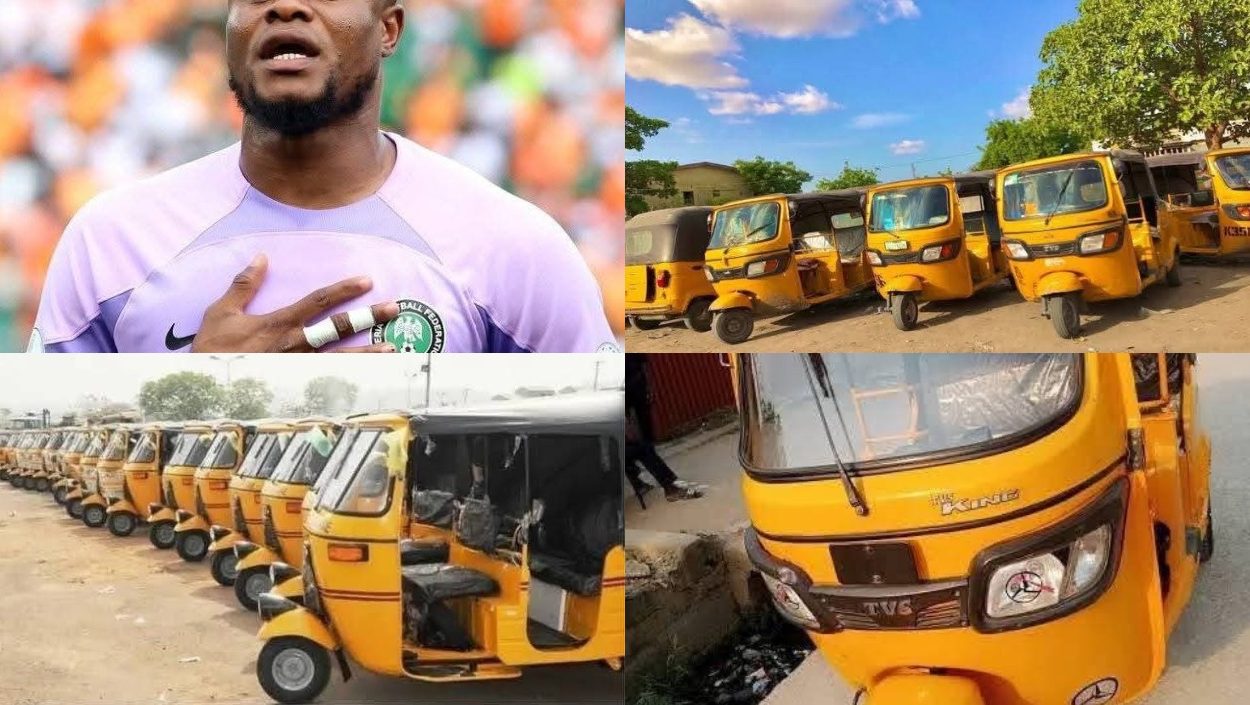

Stanley Nwabali, Nigeria’s first-choice goalkeeper and hero of the 2023 AFCON tournament, has extended a remarkable gesture of generosity to his hometown by donating 50 tricycles (Keke Napep) to empower young people in his community. The initiative, which took place in Ogba–Egbema–Ndoni LGA of Rivers State, is already being celebrated as one of the most impactful youth empowerment efforts by a Nigerian footballer in recent years.
The Super Eagles star, currently signed to South African club Chippa United, said the project was born out of his desire to give back to the society that raised him. “I know what it feels like to struggle for daily survival. This is my way of helping young men and women create something for themselves,” Nwabali said while addressing the crowd during the official handover ceremony.
Each tricycle was handed directly to beneficiaries selected through a transparent community-based process. The footballer emphasized that the goal was to fight unemployment and reduce youth involvement in crime by creating opportunities for financial independence.
Leaders and elders of the community praised Nwabali’s gesture, describing him as a rare example of a celebrity who never forgot his roots. Chief Emmanuel Uzo, a traditional leader in the area, said, “What Stanley has done today is beyond football—it is about legacy, about uplifting lives. We are proud of him.”
Social media has erupted in praise for the goalkeeper, with fans lauding him for backing up his on-field heroics with off-field compassion. The hashtag #NwabaliEmpowers began trending within hours, with thousands calling on other celebrities to emulate his example.
This move comes months after Nwabali’s standout performance at AFCON 2023, where he helped Nigeria reach the final and earned a place in the Team of the Tournament. Many believe this latest act solidifies his status not only as a national sports icon but also as a role model for the younger generation.
With Nigeria’s youth unemployment rate still high, especially in the southern oil-rich states, Nwabali’s intervention is seen as timely and symbolic. “It’s more than just Keke,” one recipient said. “It’s about hope, and the belief that someone out there still cares.”